


How to Train Tennis at Home Without Losing Your Edge on Court
How to Train Tennis at Home Without Losing Your Edge on Court
Most players only improve when they're on court. That's the assumption, anyway. But if you're waiting for court time, a hitting partner, or your next coaching session to get better, you're leaving a significant amount of development on the table.
The truth is, some of the most important physical qualities in tennis, things like footwork, balance, rotation, and racket feel, can be trained at home. Not as a substitute for court time, but as the foundation that makes every hour on court more productive.
Here's how to build a home training habit that actually translates to better performance when it matters.
Why Home Training Works for Tennis Players
Tennis is a sport built on repeatable movement patterns. Your split-step, your stance width, your hip turn into a groundstroke. These are motor patterns, and motor patterns are trained through repetition, not just match play.
When you reinforce the right positions and movements at home, you're essentially pre-loading your nervous system before you ever step on court. Players who do this consistently arrive at practice with better movement habits already in place. Coaches notice it. Results follow.
The challenge is knowing what to focus on. Random fitness work won't help your tennis. Structured, sport-specific training will.
Movement and Footwork: The Foundation You Can Build at Home
Footwork is not just about speed. It's about body position. The best movers in tennis are the ones who arrive at the ball early, with their weight loaded, ready to strike. That quality comes from training your athletic base, not from running more.
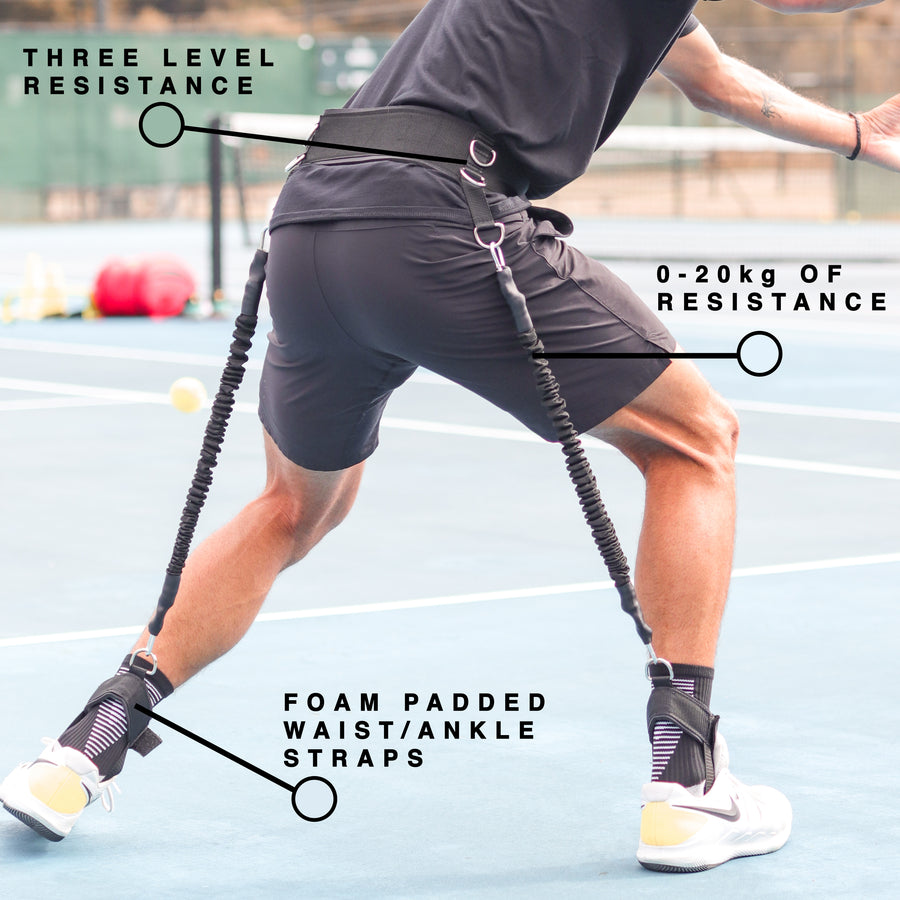
One of the most effective tools for this is the Gravity Belt 2.0. It uses Reactive Neuromuscular Training to create gentle resistance that pulls you out of your ideal athletic position. Your body learns to fight back, to stay low, to maintain a stable base through every movement. Over time, that low, balanced stance becomes your default. It becomes automatic.
You don't need a court to work on this. A living room, a garage, a garden path. Practice your split-step timing, your lateral shuffle, your recovery steps. Do it with the belt on. Ten minutes a day builds more movement intelligence than most players realise.
Add simple cone or marker work if you have the space. The goal isn't cardio. It's reinforcing the positions that make you fast and stable under pressure.
Racket Skills and Hand Feel You Can Develop Indoors
Ball control work is underused by club players. Rallying without a wall or a partner feels pointless to many people, but there's a category of skill work that doesn't require either.
Juggling a ball on your strings, alternating forehand and backhand faces, controlling a ball against a wall at close range, shadow swinging with focus on contact point and follow-through. These are not warm-up drills. They are precision training activities that sharpen the feel between your hand, your racket, and the ball.
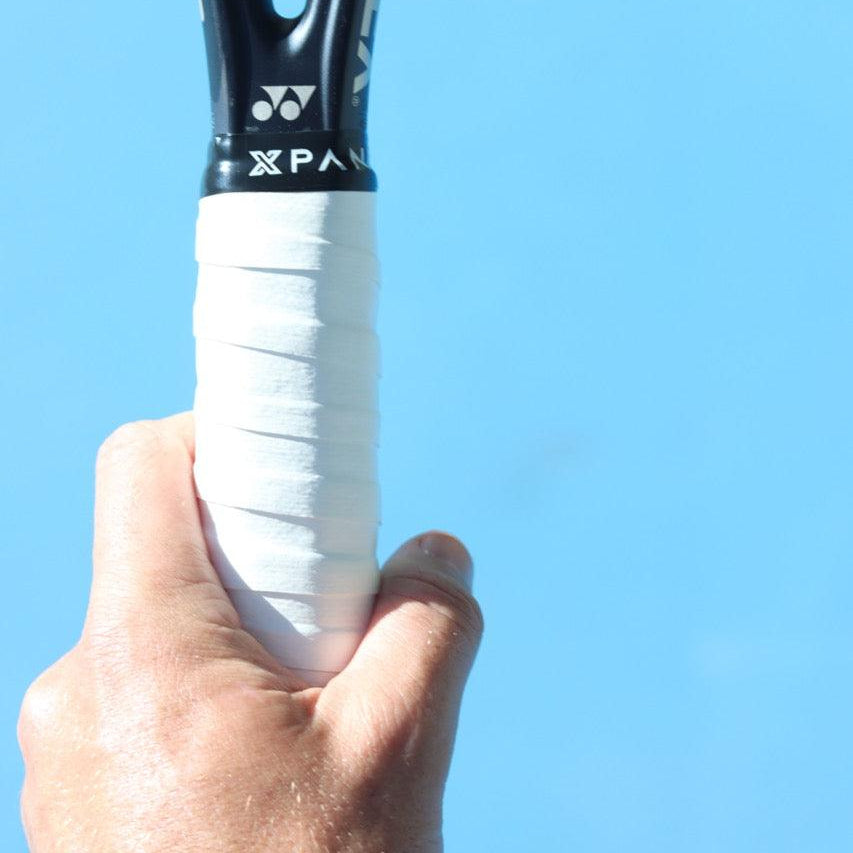
If your grip gets sweaty during these sessions, that's worth addressing. Slipping grip changes your contact point more than most players realise. Good finger protection and grip security during training is a small detail that protects a lot of work.
Shadow swinging deserves more credit than it gets. Stand in front of a mirror if you can. Work through your full groundstroke motion in slow motion. Pause at contact. Check your wrist position, your elbow height, your shoulder turn. You will find things your coach has been trying to fix for months.
Strength and Rotation: Building Power Away from the Court
Power in tennis doesn't come from the arm. It comes from the kinetic chain, the sequence of rotation from the ground up through the hips, core, and shoulder into the racket. If any link in that chain is weak or restricted, you lose pace. You also lose consistency.
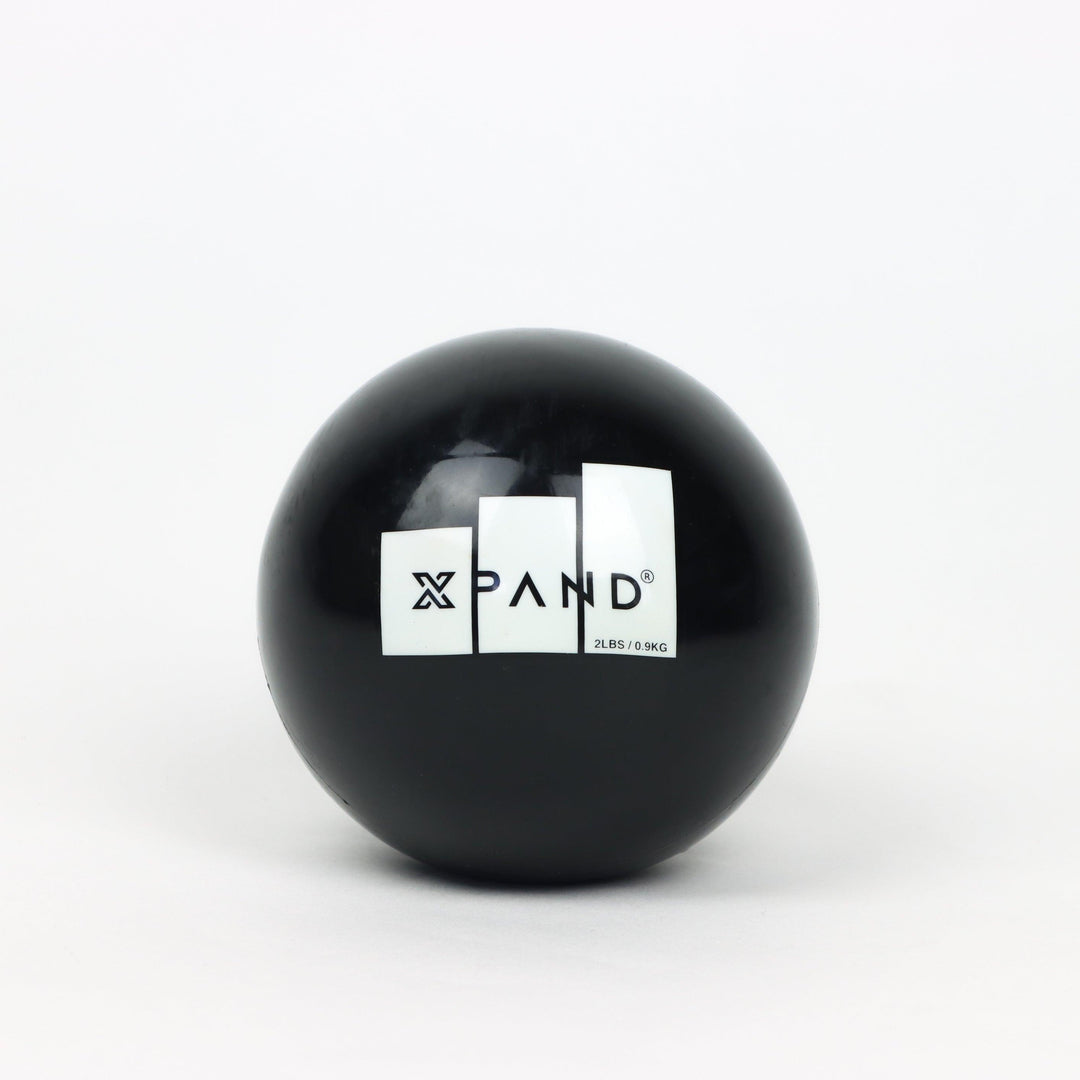
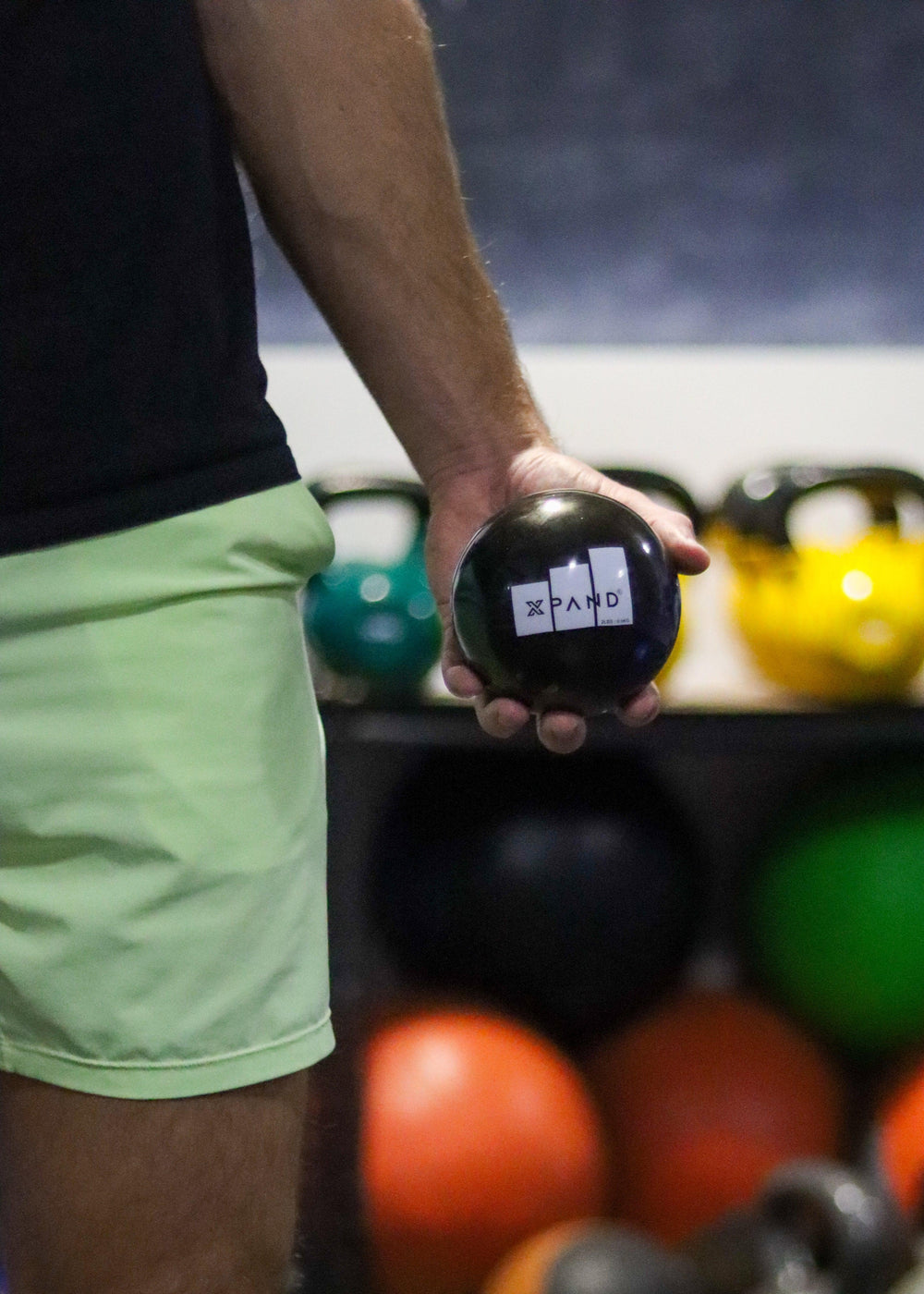
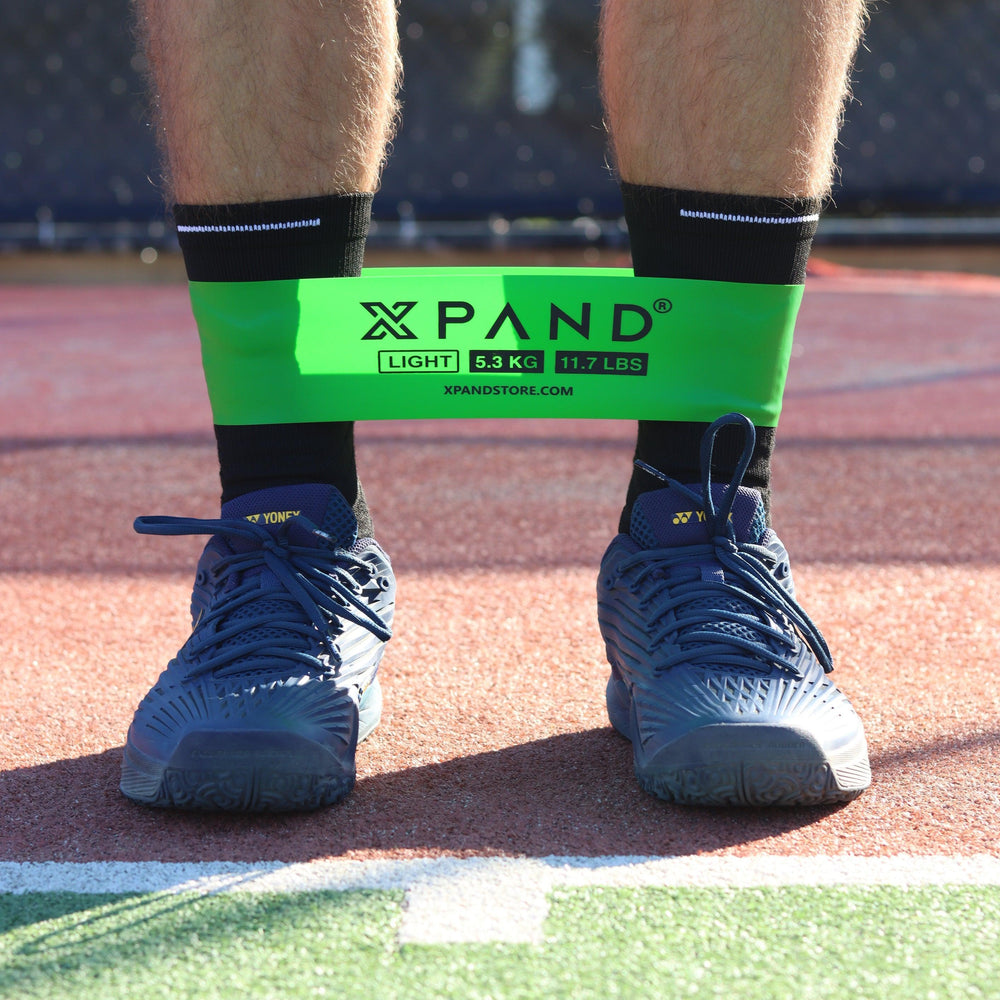
Training rotation at home is straightforward. Medicine ball work, resistance band rotations, and thoracic mobility drills all build the capacity to generate and transfer force. You don't need a gym for any of it.
Focus on hip mobility as a priority. Many club players have restricted hips from long hours sitting, and that restriction directly limits how much rotation they can generate into a groundstroke. Ten minutes of hip mobility work each morning will produce visible changes in your stroke within a few weeks.
Add core work that mimics rotation under load. Pallof presses, rotational planks, and anti-rotation holds. The goal is not aesthetic core strength. It's the ability to hold and transfer force through your centre without losing structure at the point of contact.
Build the Habit Before You Build the Session
The most common mistake with home training is going too big too fast. Players plan elaborate sessions, miss a few days, and stop entirely. Consistency beats intensity, especially for skill and movement development.
Start with twenty minutes, three or four times a week. Split it between movement work and skill work. Add strength and rotation on alternate days. Track it simply. The habit matters more than the programme in the early weeks.
The players who improve fastest are not always the ones with the best coaching or the most court time. They're the ones who use every available hour well. Home training, done with intention, is one of the highest-leverage habits a serious tennis player can build.
If you're ready to bring more structure to your off-court development, start with your movement foundation. Everything else builds from there.