


Tennis Proprioception Training: The Hidden Skill That Separates Good Players from Great Ones

Tennis Proprioception Training: The Hidden Skill That Separates Good Players from Great Ones
You watch the ball. You read the court. You know where you want to hit. But somewhere between the decision and the execution, something gets lost. The shot doesn't feel right. Your balance is slightly off. Your footwork arrives a fraction late. You chalk it up to a bad day.
Most players do. But the real issue is often deeper than technique or fitness. It lives in something you can't see on video and rarely practise deliberately. It's your proprioception, and it shapes almost everything that happens on a tennis court.
What Proprioception Actually Means for Tennis Players

Proprioception is your body's ability to sense its own position in space without looking at it. The sensors inside your muscles, joints and tendons are constantly sending signals to your brain, telling it where your limbs are, how much load is on each foot and whether your posture is stable or collapsing.
In tennis, this system is working every single rally. When you split-step and push off to a wide forehand, your proprioceptive system determines how low your base drops, how quickly your hips load and whether your upper body stays controlled through contact. A well-trained system does all of this automatically. A neglected one forces conscious correction at the worst possible moment.
The result of poor proprioception isn't always dramatic. It shows up as inconsistency. Shots that feel different each time. A slightly high base on quick exchanges. Balance that wobbles just enough to cost you clean contact under pressure. These are not technique problems at their root. They are body awareness problems.
Why Most Players Never Train It Directly
The challenge with proprioception is that it improves through sensation, not repetition alone. You can hit ten thousand forehands and still have a weak proprioceptive foundation if nothing in your training asks your body to feel what it's doing in real time.
Traditional drills don't create enough instability or feedback to genuinely stress the proprioceptive system. You need training environments that force your body to self-correct automatically. That's what reactive neuromuscular training does. It creates a small, consistent challenge that your nervous system has to respond to, reinforcing the correct posture and base position without conscious thought.
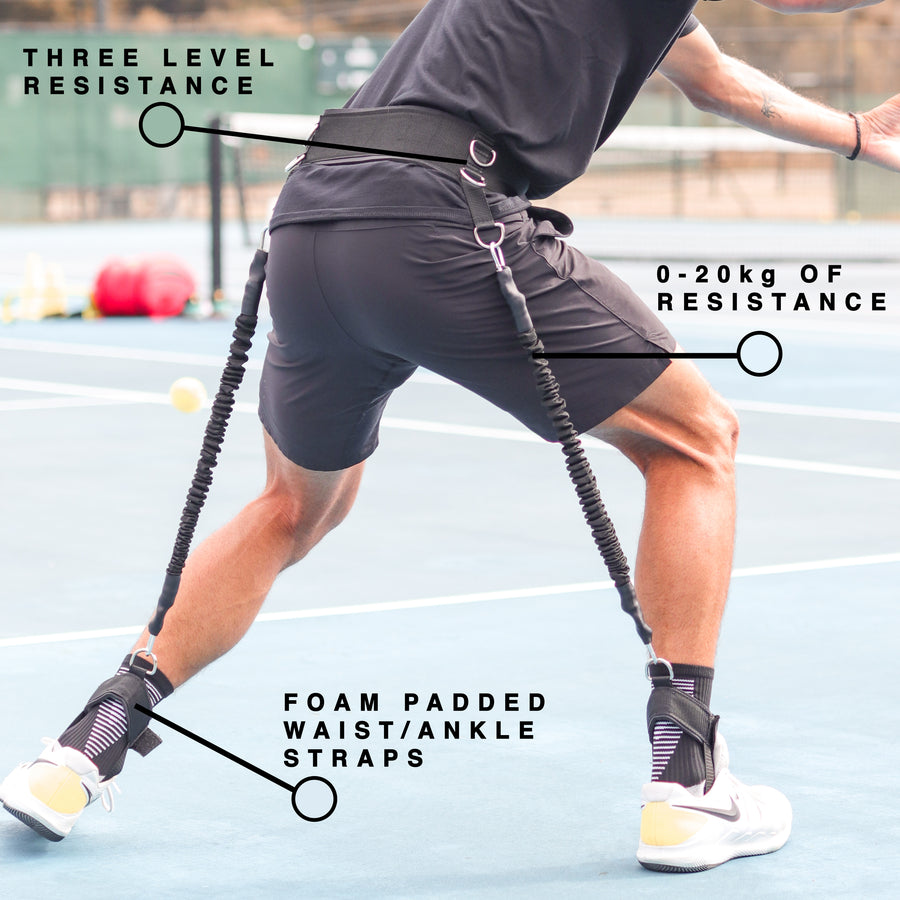
This is exactly the principle behind the Gravity Belt 2.0. The belt creates gentle downward resistance as you move, which signals your nervous system to drop your centre of gravity and maintain a stable, athletic base. Over time, your body stops needing the prompt. The low, balanced stance becomes the default, even in fast, pressured exchanges.
Practical Tennis Proprioception Training Methods

The good news is that proprioceptive training doesn't require a specialist facility or an extra hour in your week. Much of it can be layered into what you're already doing.
Single-leg balance work with eyes closed. Simple, but highly effective. Stand on one foot and hold for 20 to 30 seconds with your eyes shut. This removes visual feedback and forces your proprioceptive system to work harder. Progress by adding small arm movements or doing it on a slightly unstable surface.
Movement pattern training at reduced speed. Slow your footwork patterns right down. A slow-motion split-step or crossover forces conscious attention to where your weight is sitting and how your base is positioned. Your nervous system encodes sensation more deeply when you give it time to process.
Reactive drills with unpredictable stimuli. Any drill that requires you to respond to something you haven't anticipated, a feed from an unusual angle, a call from your coach, a reaction ball bounce, asks your body to self-organise without planning ahead. This is where proprioception lives and where it grows.
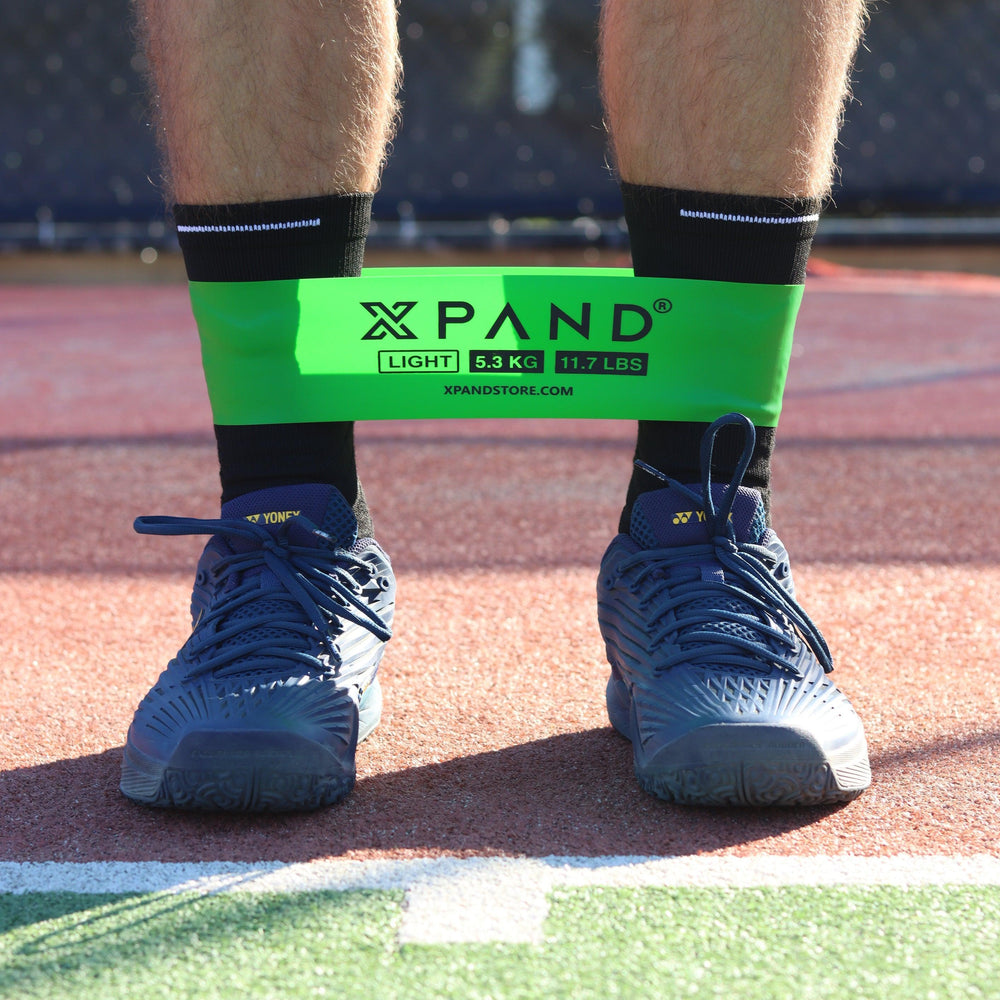
Wearable resistance during footwork sessions. Adding resistance to movement challenges your body's ability to maintain correct posture under load. The key is that the resistance must encourage the right position, not just make movement harder. That distinction matters. Resistance that rewards a low, stable base teaches your body where it should be. Done consistently across several weeks of training, the effect carries over into match play.
What Changes When Your Proprioception Improves
Players who do this work consistently describe a shift that's hard to quantify but immediately obvious in how they feel on court. Shots feel more repeatable. Movement feels less effortful. Recovery between rallies feels cleaner because the body isn't compensating or bracing unnecessarily.
Balance under pressure improves most noticeably. That wide forehand on a break point. The overhead after a short sprint. The low slice return on a fast serve. These are moments where proprioception is doing most of the work, and where a trained system earns its keep.
Technical improvements also become more durable. When your body has a reliable sense of its own position, new technique doesn't get lost under match pressure. It sticks, because the nervous system can find the right base even when conscious attention is focused on the ball and the tactics.
Build It Into Your Routine, Not Onto It
Proprioception training doesn't need to be a separate session. It needs to be a layer. Add single-leg holds to your warm-up. Use reactive footwork drills in your movement work. Introduce wearable resistance into training days where you're focused on court coverage and athletic positioning.
The players who improve most are the ones who treat body awareness as a trainable quality, not a fixed trait. It responds to the right stimulus. It builds over weeks and holds under pressure.
If you're ready to take that seriously, start with the training tools that make your nervous system work. Your game on court will tell you the difference.