


The Tennis Training Equipment Serious Players Actually Need on Court

The Tennis Training Equipment Serious Players Actually Need on Court
Most club players train hard. They book court time, they show up, they hit thousands of balls. But somewhere between effort and improvement, results stall. The problem is rarely commitment. It is usually the gap between what you practise and what your body actually knows how to do under pressure.
The right tennis training equipment does not just add variety to your sessions. It changes the quality of your movement, the reliability of your mechanics, and the way your nervous system responds when a match is on the line. That distinction matters more than most players realise.
Why Equipment Choice Shapes Your Ceiling as a Player

Coaches often talk about technical ceilings. A player hits a ceiling not because they lack talent, but because their training environment stops challenging the right things. Generic gym work builds general fitness. Feeding drills build ball striking. But neither one addresses the specific movement patterns, postural habits, and force production mechanics that tennis actually demands.
This is where purpose-built training tools change the equation. When equipment is designed around the specific demands of a sport, it accelerates the feedback loop between your body and your game. You stop practising effort and start practising quality.
The players who improve fastest are usually the ones whose off-court and on-court training speak the same language. Their tools reinforce the same positions, the same timing, the same athletic habits they need during live play.
The Foundation Most Players Neglect: Athletic Stance and Court Movement
Watch a club-level player who has plateaued and you will often see the same pattern. They move upright. They recover slowly. Their split-step is shallow or mistimed. These are not tactical errors. They are postural and movement defaults that no amount of ball hitting will fix on their own.
A low, stable athletic base is the foundation of everything in tennis. It powers your first step. It supports your groundstroke rotation. It keeps you balanced through contact and ready to recover. When that base is missing, you compensate elsewhere, and compensation always costs you something: power, consistency, or court time to injury.
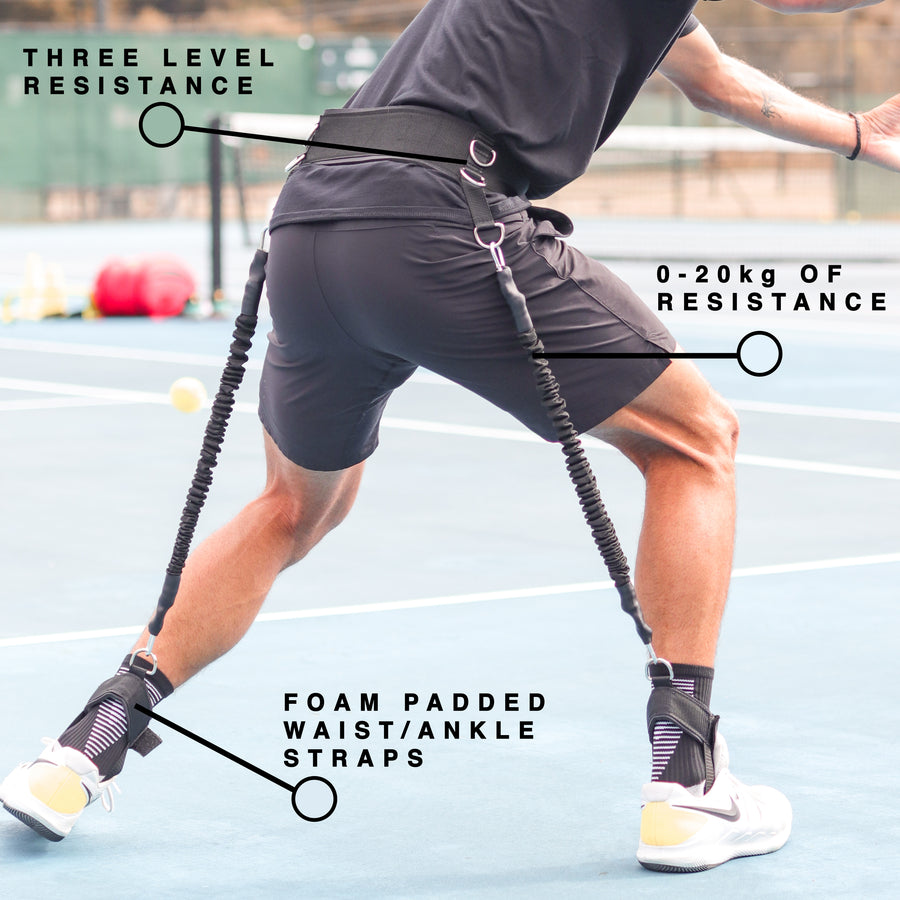
Training tools that use resistance to reinforce posture are particularly effective here. The Gravity Belt 2.0 works through Reactive Neuromuscular Training, applying downward resistance that pulls your body into a naturally lower, more stable position as you move. The result is that your nervous system starts to recognise that low, ready stance as its default. It is not about grinding through reps in a gym. It is about rewiring how you move every time you are on court.
Used consistently during footwork drills, shadow movement, or even warm-up routines, this kind of resistance training builds the athletic foundation that coaches spend years trying to teach verbally. The body learns it much faster when it feels it.
Building Power That Holds Up Under Match Pressure

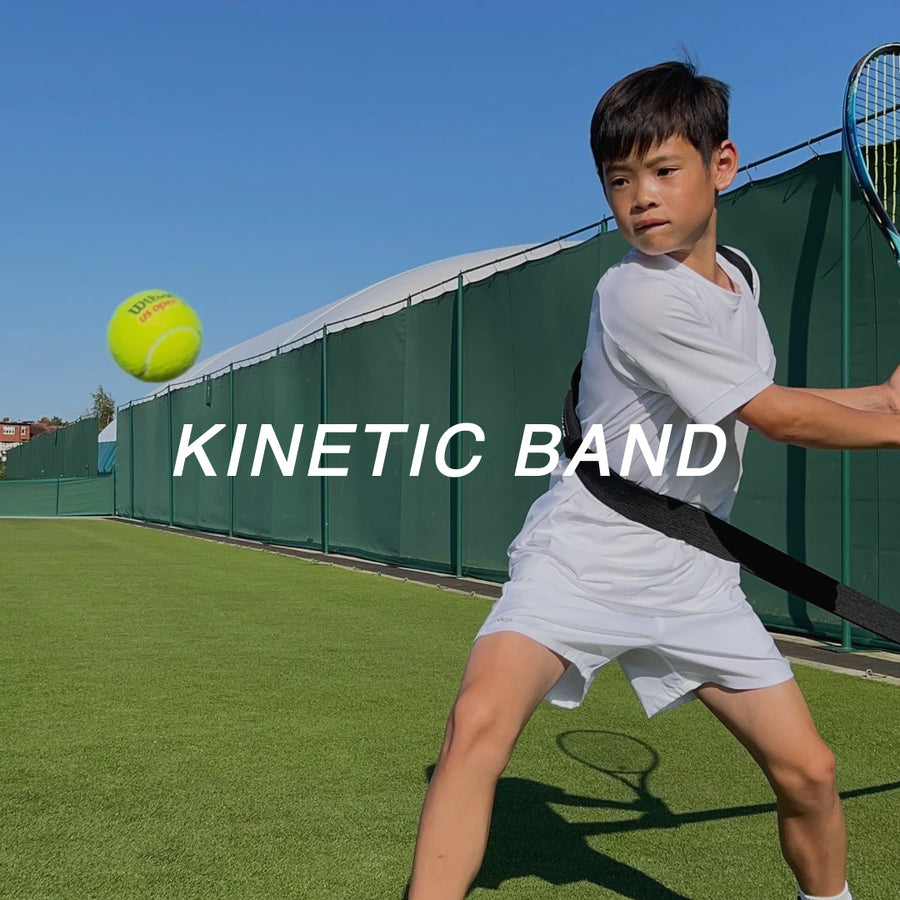
Power in tennis does not start with the arm. It starts with the hips. The kinetic chain runs from the ground up, through the legs, through hip rotation, through the trunk, and finally into the racket. When any link in that chain is weak or mistimed, your power leaks. You compensate with your arm, your shots become inconsistent, and your elbow or shoulder eventually pays for it.
Most players know this in theory. Far fewer train it in practice. Isolated gym exercises rarely translate directly to the rotational demands of a groundstroke or serve. The training needs to be specific to the movement pattern itself.
Tools designed to load the hips during rotational drills teach your body to generate and transfer force the way tennis actually requires. That kind of training builds the kind of power that holds up in the third set, not just in a ball machine session with unlimited recovery time.
How to Build a Smarter Training Session Around Your Equipment
The most effective tennis training sessions have a clear structure. They warm up the right systems, target a specific quality, and finish with competitive application. Equipment should serve each phase.
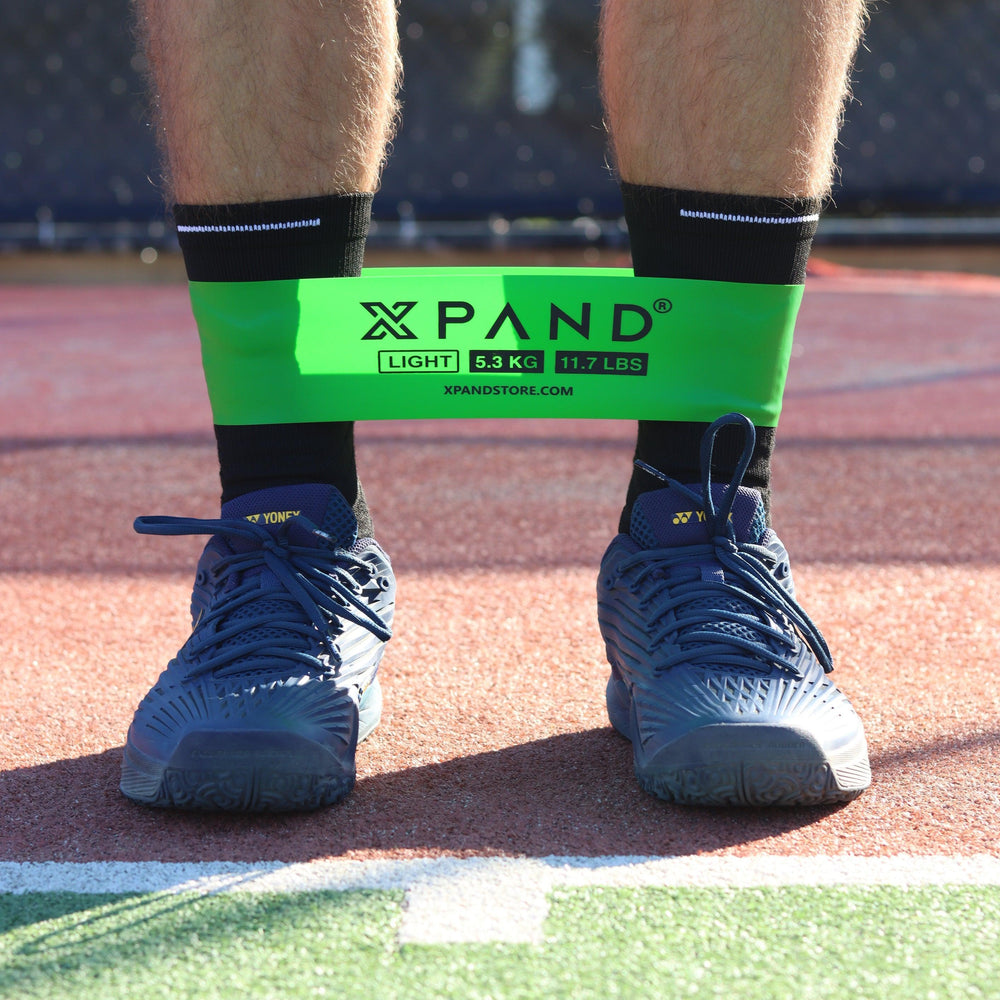
Start with activation. Resistance bands, dynamic movement patterns, and postural work prime your body before you ever pick up a racket. Then move into your primary training focus, whether that is footwork precision, groundstroke mechanics, or serve development. Use your tools here to add feedback and resistance that you cannot get from drilling alone. Close the session with match play or live ball scenarios where the qualities you have trained are tested under pressure.
The mistake most players make is treating training tools as occasional add-ons rather than core parts of their development system. When the right equipment is integrated into every session with purpose, it stops being an accessory and becomes a competitive advantage.
Train Smarter, Not Just Harder
Effort alone does not create improvement. Directed effort, supported by the right environment and the right tools, does. The players who make consistent progress are the ones who have stopped repeating the same sessions and started building training habits that actually target their weaknesses.
Your equipment choices are a direct reflection of what you believe training should do. Choose tools that reinforce real athletic qualities. Build sessions with intention. And give your body the feedback it needs to change, not just the repetition it already knows.
If you are ready to train with more purpose, explore the full range of tennis training equipment at XPAND and build a kit that works as hard as you do.