


How to Improve Pickleball Movement: The Foundation Most Players Overlook

How to Improve Pickleball Movement: The Foundation Most Players Overlook
You're losing points you shouldn't lose. Not because your dink is off or your serve needs work, but because you're arriving late. A half-step behind. Reaching when you should be set. It's a movement problem, and it's one of the most common limiters at the club-competitive level in pickleball.
The good news is that movement is trainable. The frustrating truth is that most players try to fix it by playing more, hoping repetition alone will sharpen their feet. It rarely does. Real improvement in pickleball movement comes from understanding what's actually happening between shots, and then training those specific patterns intentionally.
Why Pickleball Movement Is Different From Other Racket Sports

The pickleball court is small. That makes some players assume movement matters less here than in tennis. It's the opposite. Because the court is compact and points are fast, your margin for positional error is tiny. Being a foot out of position at the kitchen line is the difference between a comfortable reset and a body shot you can't handle.
Pickleball movement is also unique in how abrupt it is. You're not covering long distances. You're making short, rapid adjustments, often while already in a rally, often while managing your weight transfer and paddle position at the same time. The demand is less about raw speed and more about readiness. Can you move instantly from wherever you are? That requires a low, stable athletic base. Most recreational and club players simply stand too tall between shots.
The Athletic Stance: Where Everything Starts
Watch the best movers in pickleball. They look relaxed but coiled. Knees slightly bent, weight forward over the balls of the feet, hips low and ready. That position is not accidental. It's trained. And it's the prerequisite for everything else.
When your hips are high and your weight is back, your reaction time suffers. You have to first drop into a ready position before you can move. That takes time you don't have. The split-step helps, but it only works if your base is already low enough to absorb and redirect. Tall players lose that fraction of a second on every exchange.
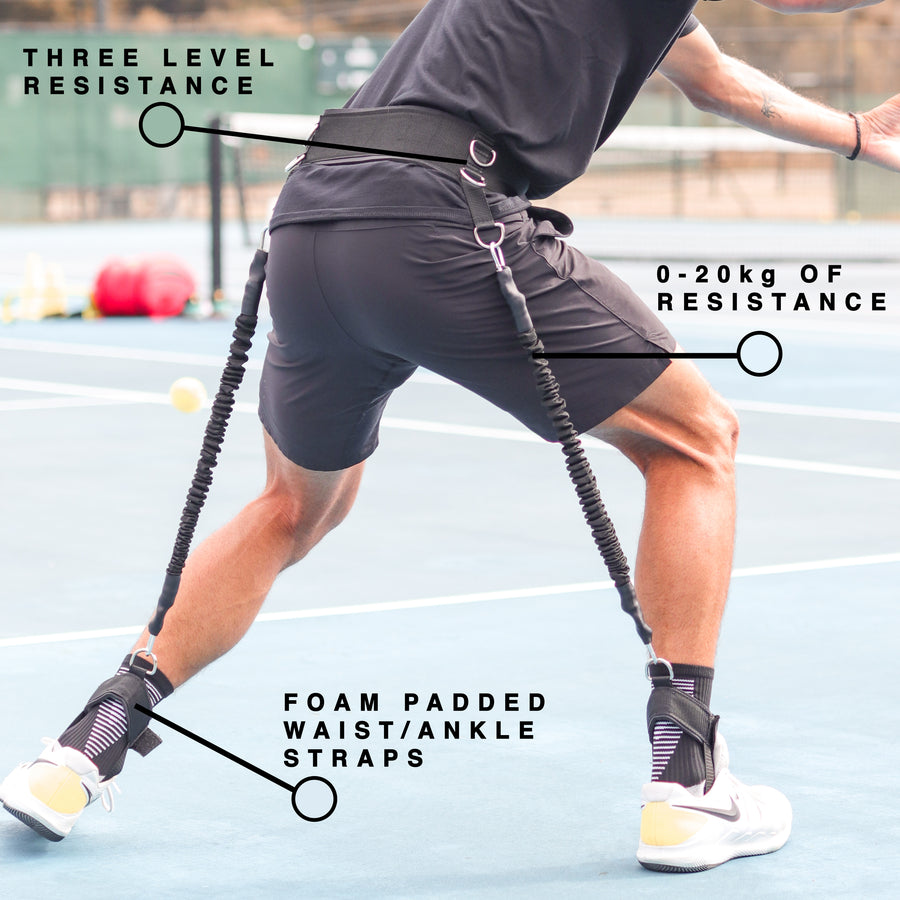
One of the most effective tools for ingraining a consistently low athletic base is the Gravity Belt 2.0. It uses Reactive Neuromuscular Training to give your body real-time feedback when your posture rises or your base becomes passive. Rather than thinking your way into a better stance, you feel when you're drifting out of it. Over time, the low, ready position becomes your default, not something you have to remind yourself to hold mid-rally.
Movement Patterns That Actually Win Points

There are a handful of movement patterns that come up constantly in pickleball. If you can sharpen these specifically, your court coverage improves fast.
The transition zone walk-in. Moving from the baseline to the kitchen after a third shot drop is where most club players either rush and arrive off-balance, or hesitate and stay stuck in no-man's land. The key is controlled, forward momentum with your paddle up and your base staying low throughout the approach. Don't stand tall as you walk in.
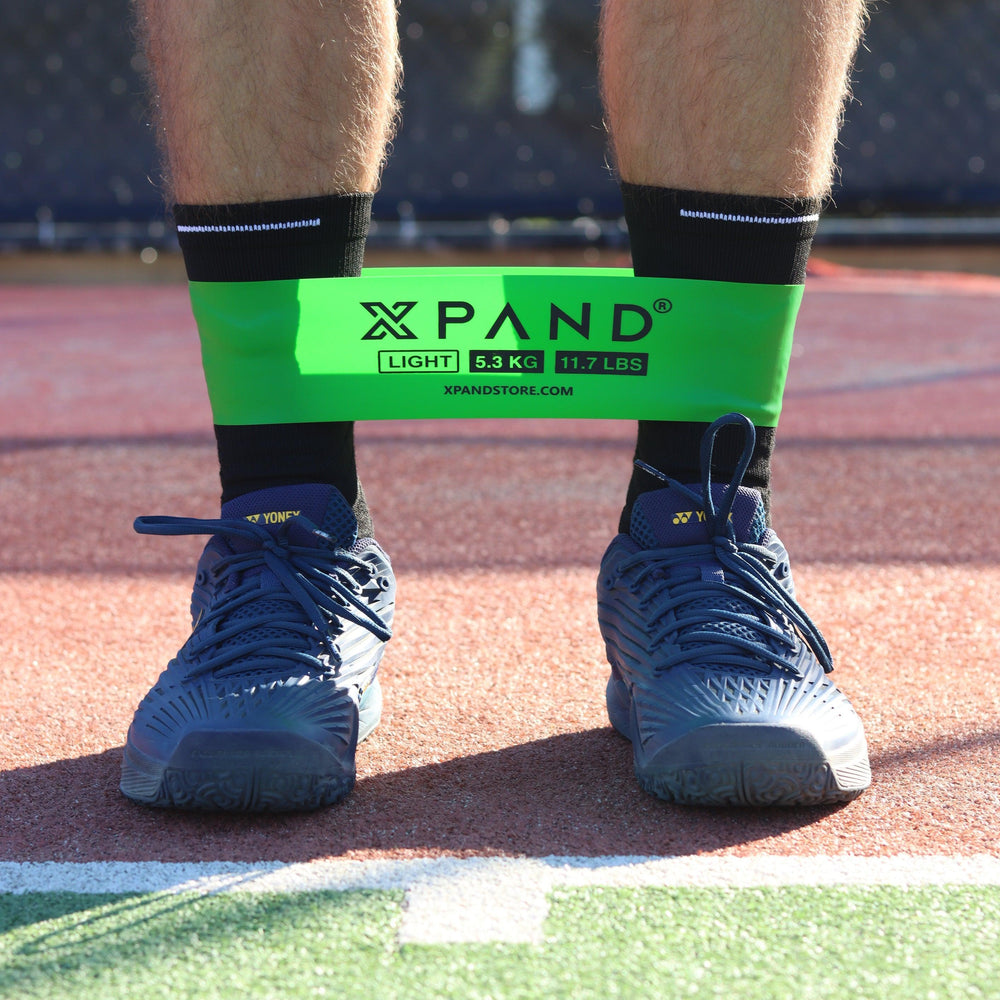
Lateral shuffle at the kitchen. Kitchen line exchanges require rapid side-to-side adjustment without crossing your feet or losing your ready position. This is almost entirely about hip stability and how quickly you can load and redirect. Drills that isolate lateral shuffle in short bursts, keeping the base consistently low, build this faster than match play alone.
The recovery step. After playing a wide ball, getting back to your position before the next shot arrives is critical. Players who recover slowly get exposed on the same side again. Work on the first two steps after contact. That's where the recovery is won or lost.
Training Movement Off the Court
On-court drilling is valuable. But movement patterns are also built off the court, through targeted footwork training that isolates the specific demands of pickleball without the cognitive load of tracking a ball and managing tactics simultaneously.
Short lateral shuffles, quick direction changes, split-step timing drills: these can all be practiced in a small space, without a court. The goal is to make your feet automatic, so that when you're in a rally your attention is on the ball and your opponent, not on where your feet are going.
Consistency matters more than intensity here. Ten focused minutes of footwork work several times a week will do more for your movement than one long session once a month. The nervous system adapts through repetition, not volume.
Small Changes, Compounding Results
Improving how you move in pickleball is not about getting fitter. It's about getting more precise. A lower stance, a sharper split-step, cleaner recovery patterns: these are skills that compound. Every point where you arrive in position, balanced and ready, is a point where you're playing the game on your terms.
Start with the foundation. Get your base lower. Train the patterns that come up most. And be deliberate about it, because the players who move best didn't get there by accident.
If you want to accelerate that process, explore how tools like the Gravity Belt 2.0 can make the feedback loop faster. Better movement starts with better awareness of where your body actually is between shots.