


How to Improve Padel Movement and Stop Losing Points Before You Even Swing

How to Improve Padel Movement and Stop Losing Points Before You Even Swing
You see the ball coming. You know exactly what shot to play. But by the time you get there, you're already late, off-balance, and scrambling just to keep the rally alive. The shot falls apart. Not because your technique is wrong. Because your movement let you down.
This is one of the most common frustrations in padel. Players spend hours working on volleys, bandeja technique, and wall reads, but very little time training the thing that determines whether any of that actually works: how they move around the court.
Padel movement is not just about being fast. It's about being early, efficient, and balanced. Here's how to build it properly.
Why Padel Movement Is Different From Tennis or Squash

The padel court is small. You'd think that makes movement easier. It doesn't. It makes timing and positioning far more demanding, because the margins for error are tighter and the ball can come off walls at unpredictable angles.
In tennis, you often have time to take three or four steps and load up. In padel, you might get one or two steps before you need to be set and ready. That means your starting position and your first movement decision matter enormously. A slow reaction or a lazy stance before the ball is struck can cost you the point before you've moved a single step.
There's also the vertical dimension. Playing high volleys, adjusting to balls that bounce off the back glass and kick up, dealing with lobs overhead: padel demands you move in multiple planes, not just side to side. Your body needs to be comfortable with short, sharp changes of direction in very little space.
The Foundation: Athletic Stance and Court Positioning
Almost every movement problem in padel traces back to one thing. Players stand too upright between shots. When you're tall and passive, your body has to drop into position before it can actually move. That costs you the fraction of a second that padel doesn't give you.
The fix starts with your default ready position. Knees slightly bent, weight on the balls of your feet, hips low. You want to feel like you're already beginning to react, not waiting to start. This low, stable base is not just about looking athletic. It directly changes how quickly you can push off and change direction.
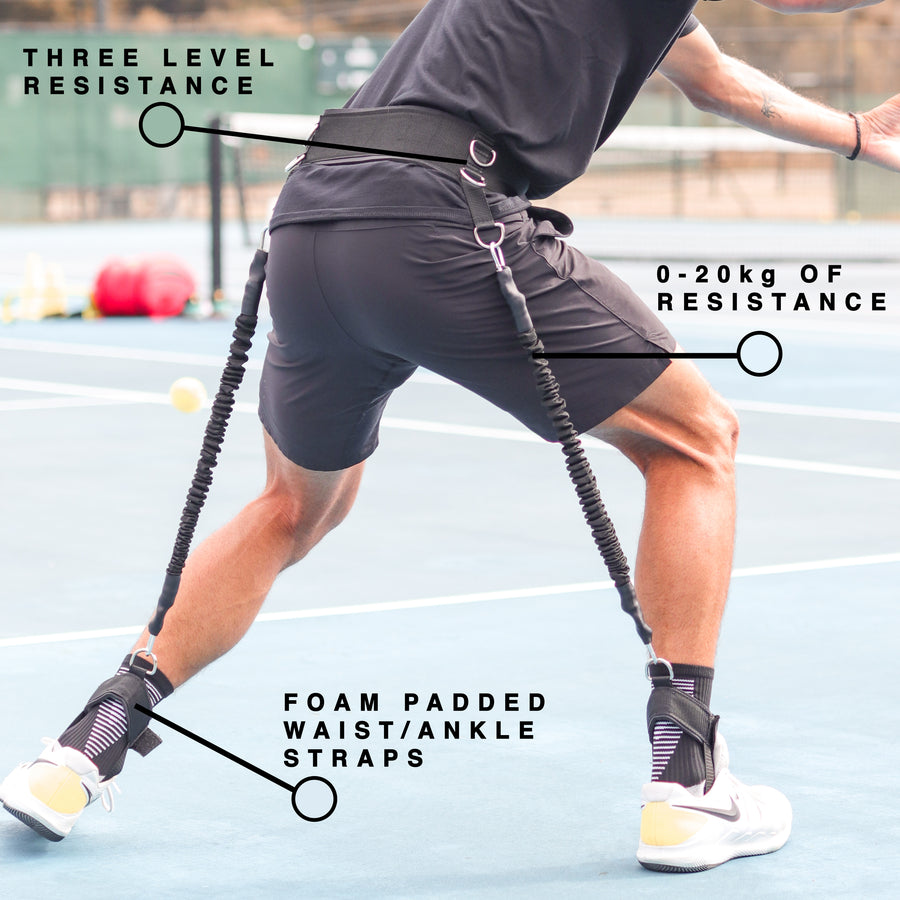
Training this position under fatigue is where most players fall short. It's easy to hold a good stance when you're fresh and thinking about it. It disappears when you're in a long rally and breathing hard. This is exactly why The Gravity Belt 2.0 is worth building into your training. It uses Reactive Neuromuscular Training to give your body continuous feedback, reinforcing that low athletic position throughout movement drills. Over time, the stance stops being something you think about and becomes something your body simply defaults to.
Movement Patterns That Actually Transfer to the Padel Court

Generic fitness work helps. But if you want movement that actually transfers to padel, the patterns you train need to match what the game demands.
The split-step. This is non-negotiable. Just as your opponent makes contact with the ball, you hop lightly onto both feet so your weight is balanced and loaded. From that position, you can push in any direction instantly. Players who skip the split-step are always chasing. Players who own it are always early.
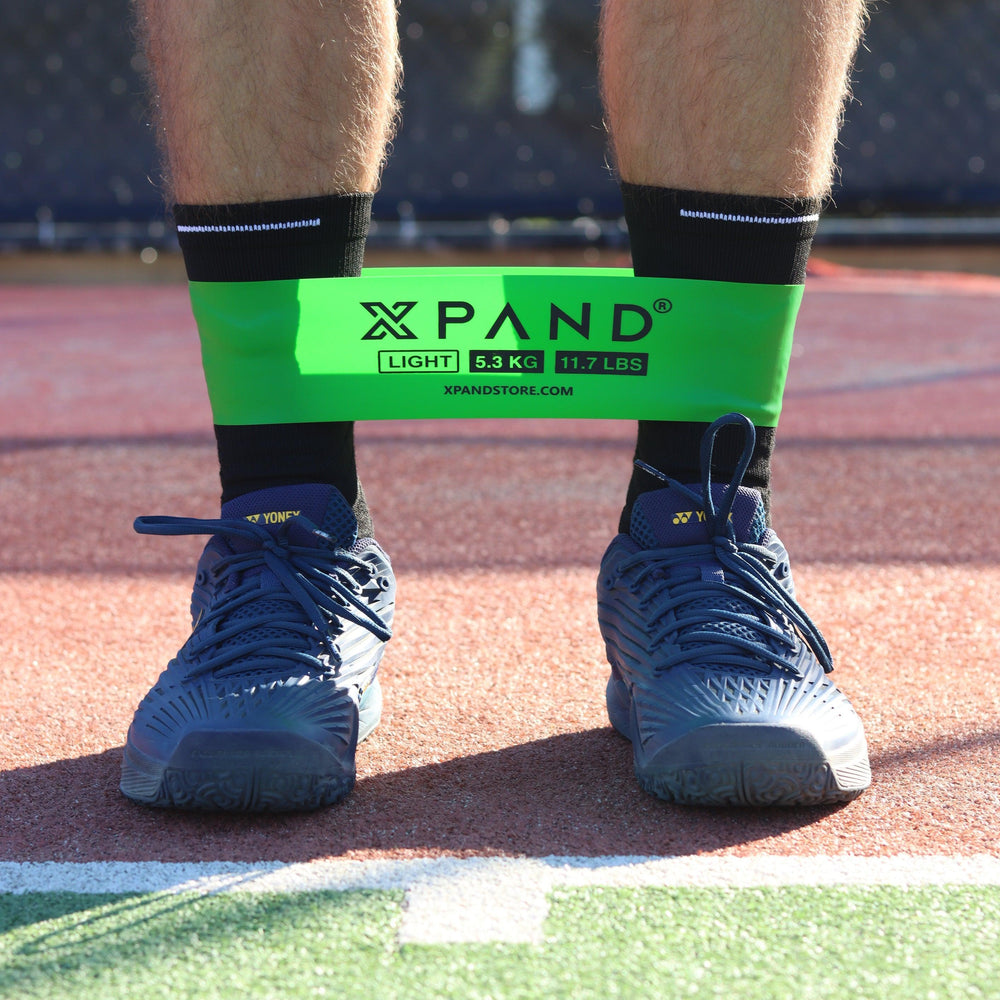
Short lateral shuffles. Most movement in padel is one to three steps sideways. Drill these at full intensity, not slow practice speed. Get comfortable covering small distances explosively without crossing your feet.
Recovery movement. Getting to the ball is only half the job. Getting back to your position after the shot is what keeps you in control of the rally. Drill the shot and the recovery together, not just the approach.
Backward movement toward the glass. This is unique to padel and catches many players off guard. Moving back to play off the back wall requires you to track the ball over your shoulder, judge the rebound, and set your feet in a confined space. Spend dedicated time on this. It won't feel natural at first. It will if you practise it enough.
The Mental Side of Better Movement
Good movement in padel is as much anticipation as it is athleticism. The best movers on court are not always the fittest. They're the ones reading the rally early and making decisions before the ball has even left the opponent's racket.
Watch your opponents' body shape as they prepare to strike. Their shoulder turn, their grip, their position relative to the ball: all of these give you information about where the ball is likely to go. The earlier you process that, the earlier you can begin moving. A player who reacts half a second earlier will always look faster than someone who waits to confirm where the ball is going.
Combine this with consistent split-step timing and a solid ready stance, and your movement will improve significantly even before you've done a single agility drill.
Build the Habit, Then Trust It Under Pressure
Movement is a skill. Like any skill, it degrades under pressure and in fatigue unless you've built it into your body through repetition. The players who move well in tight moments aren't naturally gifted. They've trained it until it became automatic.
Focus on your stance between every shot. Commit to your split-step before every rally. Practise your recovery movement as seriously as you practise your shots. These are not small details. They are the foundation that everything else is built on.
If you want a tool to accelerate that process, training with The Gravity Belt 2.0 during your movement drills creates the kind of neuromuscular reinforcement that sticks. Your body learns to stay low and balanced not because you're reminding it, but because the pattern has been trained in properly.
Fix your movement, and you'll find your whole game feels easier. The shots were always there. Now you'll actually be in position to play them.