


Why a Resistance Belt for Sports Training Might Be the Missing Piece in Your Athletic Development

Why a Resistance Belt for Sports Training Might Be the Missing Piece in Your Athletic Development
You train hard. You put in the court time, the gym sessions, the footwork drills. But something still feels off. Maybe your movement is reactive rather than athletic. Maybe you lose your base under pressure, or your recovery after wide balls is slower than it should be. The problem often isn't effort. It's that most training tools don't address the root of the issue: your athletic position.
A resistance belt for sports training targets exactly that. Not isolated muscles. Not raw strength. The actual movement patterns that determine how well you perform when it matters most.
What Makes Resistance Belt Training Different

Traditional resistance training builds strength in the gym. That strength matters. But transferring it to sport-specific movement is a different challenge entirely. The gym doesn't replicate the unpredictable, multi-directional demands of a tennis rally, a padel exchange, or a fast-paced pickleball point.
Resistance belts work within your actual sport environment. You wear them while moving, while drilling, while competing in practice scenarios. The resistance is applied in real time, which means your nervous system adapts to real movement patterns. That's the key distinction.
This principle sits at the core of Reactive Neuromuscular Training, or RNT. Rather than training your muscles in isolation, RNT uses resistance to create a stimulus that your nervous system has to respond to. Your body learns to correct itself, to stay low, to maintain balance, to move with greater efficiency. The improvements are neurological as much as physical. That's why they transfer so directly to on-court performance.
The Athletic Base Problem Most Players Ignore
Ask most club-level players to describe their technique issues and they'll talk about their backhand, their serve, their net game. Rarely do they point to their stance. But a weak athletic base undermines everything else. If your hips are too high, if your weight is back, if your base is narrow under pressure, every other technical element suffers.
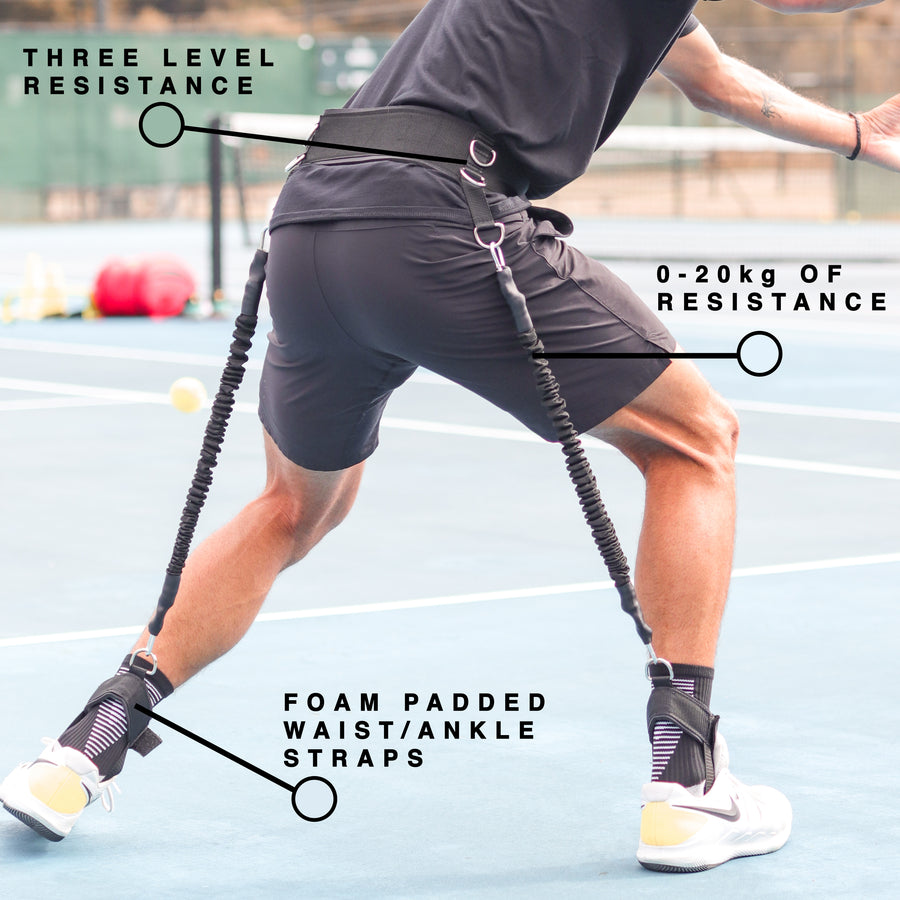
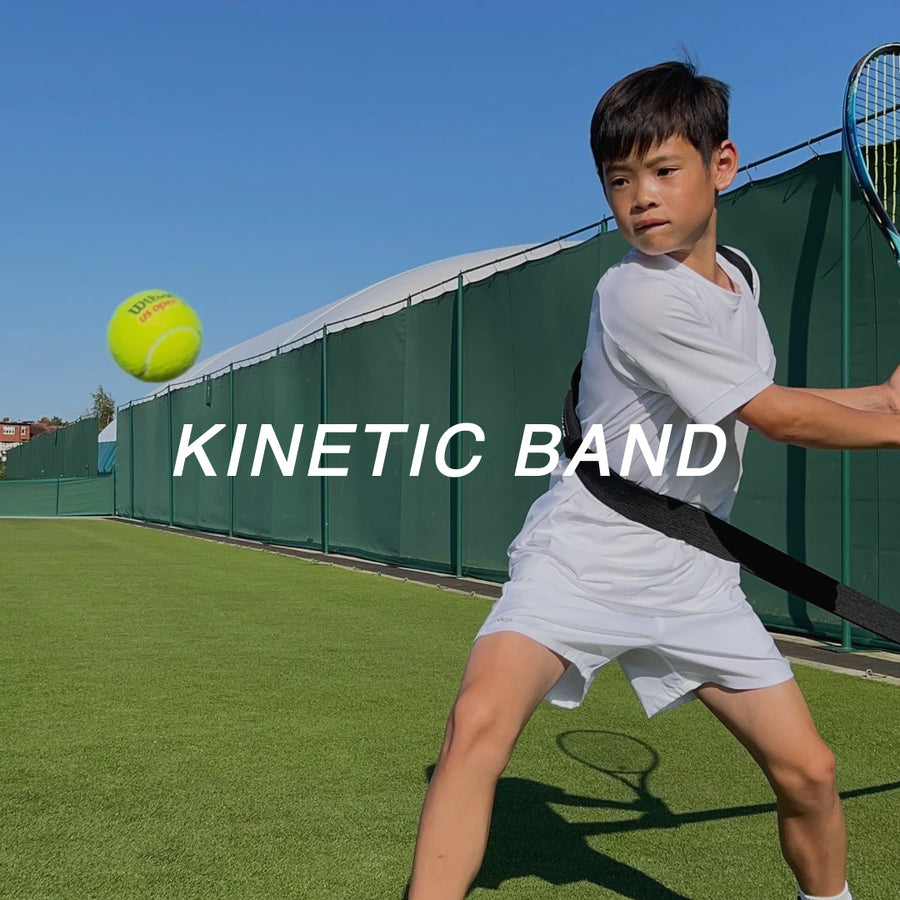
This is where the Gravity Belt 2.0 does something genuinely different. It uses weighted resistance around your waist to reinforce a lower, more stable athletic position during movement. When you wear it through footwork patterns, split-step drills, or live ball practice, your body is constantly being cued to drop lower and stabilise. Over time, that position becomes default. You stop thinking about it. It just happens.
The result isn't just better posture. It's better balance on wide balls, quicker direction changes, and a more grounded, confident presence at the baseline and the net.
How to Use a Resistance Belt Effectively in Training

The most common mistake with resistance training tools is overcomplicating the approach. More resistance does not always mean more benefit. The goal is to create the right stimulus, not to exhaust yourself before the real work begins.
Start by incorporating a resistance belt into your warm-up and movement work. Use it during shadow footwork, lateral shuffles, and split-step practice. The load encourages your body to find a stable base without you having to consciously think about it. That's the point. Conscious technique breaks down under match pressure. Automatic movement does not.
As you adapt, you can bring the belt into more complex scenarios: feeding drills, live rallies at reduced intensity, even match practice. The more your nervous system experiences the correct position under load, the more reliably it reproduces that position when the belt comes off.
Consistency matters more than duration. Twenty minutes of focused belt work three times per week will produce more meaningful change than occasional long sessions. The adaptation happens between sessions, not during them.
Who Benefits Most from This Kind of Training
The honest answer is: most players at most levels. But there are specific situations where resistance belt training tends to produce the most noticeable results.
Players who have been told to "stay lower" repeatedly without seeing lasting change. Players who feel their court coverage is limited by balance rather than speed. Players returning from lower body injuries who need to rebuild movement confidence. And serious juniors developing their athletic foundation before bad habits become ingrained.
Elite players use this type of training too. The principle scales. Whether you're playing at club level or competing nationally, a stable, low, reactive athletic base separates players who read the game well from those who can actually execute under that pressure.
Racket sports reward athleticism that is trained, not assumed. The players who move best aren't always the most naturally gifted. They're the ones who understood that movement is a skill, and trained it accordingly.
Build the Foundation Your Game Deserves
If your training has been focused on strokes, tactics, and fitness, but your on-court movement still lets you down in key moments, it's worth looking at the foundation. A resistance belt for sports training isn't a shortcut. It's a specific, evidence-based tool for reinforcing the athletic position that everything else is built on.
Train the base. The rest of the game follows.