


Padel Training for Beginners: How to Build Real Skills from Your Very First Session

Padel Training for Beginners: How to Build Real Skills from Your Very First Session
Most beginners step onto a padel court for the first time and feel completely lost. The glass walls are unfamiliar. The scoring is borrowed from tennis but the tactics are not. The rally pace feels forgiving until you realise you have no idea where to stand, how to move, or why your shots keep dying in the net. That confusion is normal. It is also fixable, but only if you train with intention from the start.
Padel rewards good habits early. The players who improve fastest are not the ones with the best natural hand-eye coordination. They are the ones who understand what to work on and why. This guide breaks that down simply, so your first weeks of padel training actually move you forward.
Start with Your Stance, Not Your Shots

New padel players obsess over technique before they have ever sorted out their base. It is the wrong order. In padel, you are constantly reacting to unpredictable angles off the glass. If your stance is high, narrow and passive, no amount of stroke technique will save you.
The athletic base in padel is low, wide and ready. Knees bent. Weight slightly forward on the balls of your feet. Racket up in front of you, not hanging at your side. From this position, you can move left, right, forward or backward in a split-step without hesitating. From a tall, passive stance, you will always be late.
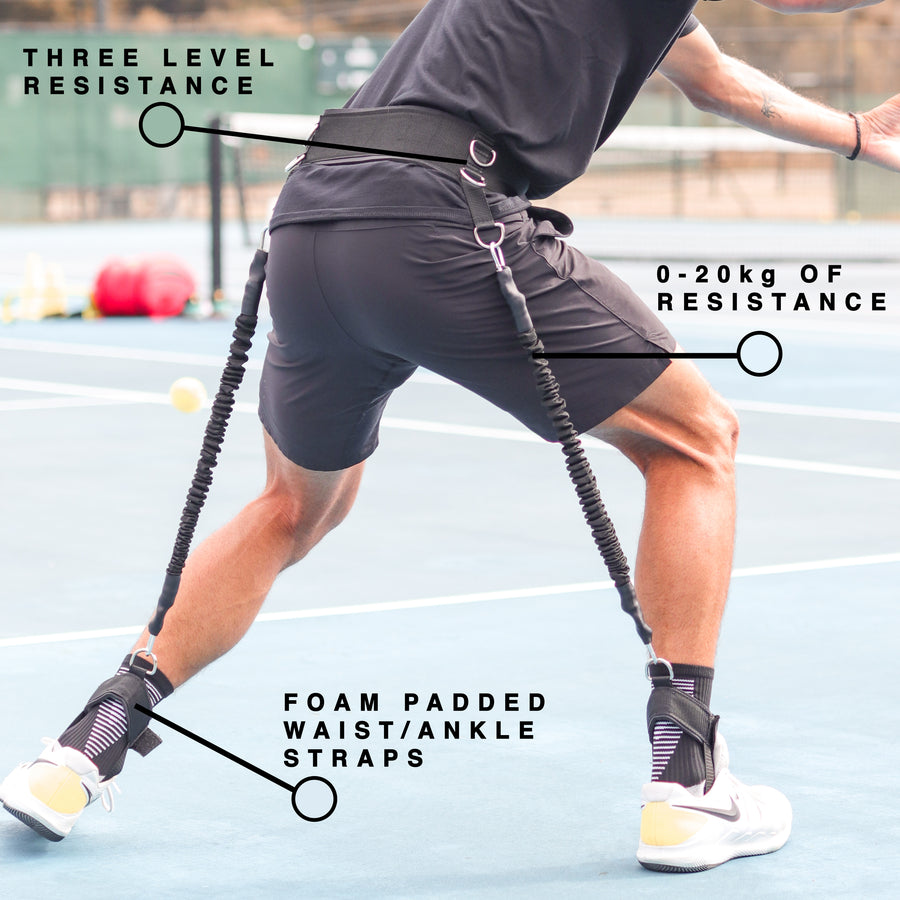
This is worth drilling deliberately, not just hoping it arrives naturally. One tool that helps here is the Gravity Belt 2.0. It uses Reactive Neuromuscular Training to pull your body toward its natural low athletic position during movement, reinforcing the habit without you having to consciously think about it on every point. For beginners, that kind of physical feedback accelerates what would otherwise take months of coached repetition.
Before you hit a single ball in training, spend five minutes just moving around the court in your ready position. Shadow footwork. Side steps, forward sprints, recovery steps back to the T. Get the movement pattern in your body first.
The Four Shots Every Beginner Must Prioritise
You do not need a full shot arsenal to start winning points. You need four shots, done consistently.
The bandeja. The signature padel overhead. Not a smash, more of a controlled slice that keeps the ball in play and puts your opponents under pressure. This is the shot you will play most from the net area. Learn it early.
The forehand drive. Compact, controlled and aimed cross-court. In padel, you are not trying to blast winners from the back. You are trying to keep the ball deep and wait for your opportunity. A consistent, flat forehand drive is your most reliable weapon from the baseline.
The lob. Underestimated by beginners, essential at every level. A well-placed lob forces your opponents off the net and resets the point. Work on depth and arc, not power.
The volley. Padel is won and lost at the net. The sooner you get comfortable with short, punchy volleys, the sooner you start controlling rallies rather than surviving them.
Drill these four shots deliberately. Feed balls to yourself off the back wall. Work with a partner from fixed positions. Do not just play points and hope the technique develops. It will not.
Use the Walls as a Training Partner

The glass walls are what make padel unique. They are also what most beginners fear. The ball comes off the back wall at angles that feel unpredictable until you have trained your eye to read them. Then they start to feel logical.
The best drill for this is simple. Stand near the back corner and have someone feed high balls into the glass. Your only job is to track the bounce, move into position and play the ball back. No pressure on the shot quality. Just learn to read the trajectory and get your feet set before the ball arrives.
As you get more comfortable, start working off the side glass too. The double glass corner, where the back wall and side wall meet, is the trickiest angle on the court. Spend time there early. It will feel awkward before it feels natural, but that is exactly where the game is won once you move past the beginner stage.
Structure Your Sessions Like a Serious Player
Random hitting is fun. It is not training. Even at beginner level, structuring your sessions makes a significant difference in how quickly you improve.
A simple session format that works: ten minutes of movement warm-up and footwork, fifteen minutes on one specific shot with repetitive drilling, fifteen minutes of cooperative rallying with a set tactical goal, then a short game situation with purpose. That might be serving and returning, or net play against a lobbing opponent. Something with context.
Write down what you worked on after each session. What improved. What still felt inconsistent. Beginners who track their training even informally develop faster than those who just show up and hit.
Building the Foundation That Carries You Forward
Padel training for beginners is not about collecting shots. It is about building a foundation: a low, mobile athletic base, consistent core technique on a handful of key shots, comfort with the walls, and a structured approach to practice.
The players who plateau early are almost always those who skipped the foundation and jumped straight into match play. The players who improve steadily are those who treat early training as an investment, not just an activity.
If you are serious about developing your padel game from the ground up, start with your movement and your stance. Everything else follows from there. Train with intention, and the results will come.