


How to Stay Low in Tennis and Why Most Players Get It Wrong

How to Stay Low in Tennis and Why Most Players Get It Wrong
You've heard it a hundred times. "Stay low." Your coach says it. You tell yourself between points. And yet, the moment the rally speeds up, you're back on your heels, upright, reaching for the ball instead of moving through it.
The problem isn't effort. It's that staying low in tennis isn't just a mindset cue. It's a physical skill. One that requires the right movement patterns, real body awareness, and consistent reinforcement before it becomes automatic under pressure.
If you're serious about improving your court coverage, your balance through contact, and your ability to handle pace, this is where it starts.
Why Staying Low Actually Matters

A low athletic base does several things at once. It shortens your center of gravity, which means you can change direction faster and with more control. It keeps your weight forward and balanced, so you're not getting caught flat-footed on wide balls. And it puts your body in a position to actually use your legs through the shot, rather than relying on your arm to generate everything.
Watch any elite player moving between shots. Their hips are rarely fully extended. There's a constant, quiet bend in the knees. That isn't an effort they're making consciously in the moment. It's a trained default. Their nervous system has been taught that this is the ready position, and it returns there automatically.
For club and competitive players, the body tends to default to standing tall. It's more comfortable. It's less tiring in the short term. But it costs you in every rally that matters.
The Real Reason You Stand Up Mid-Rally
Most players assume they rise up because they're tired or lazy. That's rarely the full story. The more common cause is that your body doesn't actually know what low feels like as a default. You can squat in a gym. But translating that into a dynamic, reactive athletic stance under match conditions is a different demand entirely.
When you're reading the ball, tracking spin, deciding shot selection, and preparing your swing, staying low drops down your priority list fast. Your brain is occupied. Your body reverts to its default. And if the default is upright, upright is what you get.
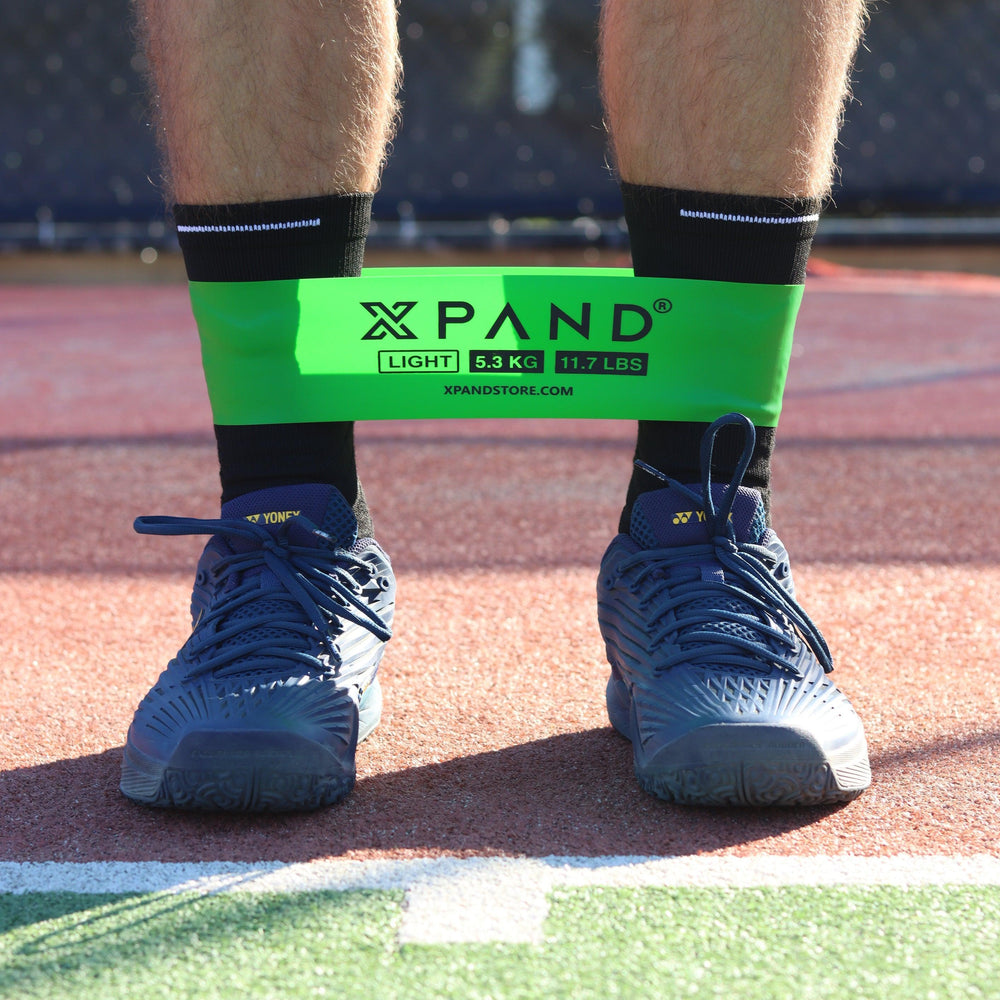
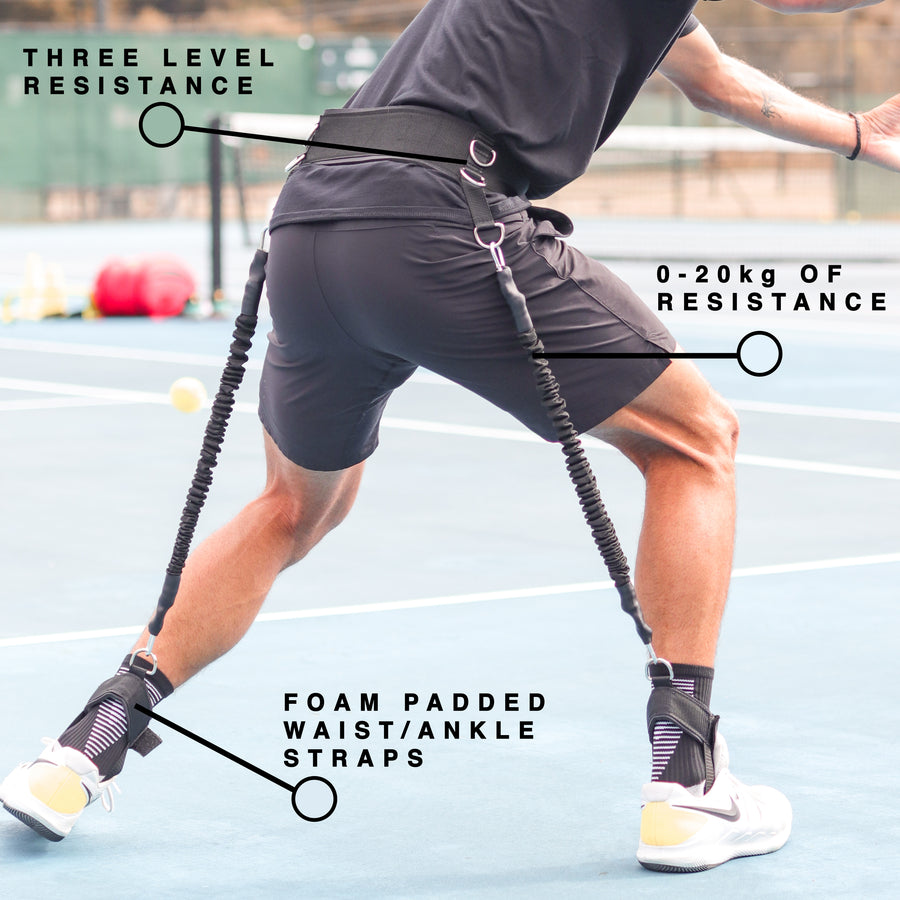
This is where training tools built around neuromuscular reinforcement become genuinely useful. The Gravity Belt 2.0 works on exactly this problem. It applies light resistance that activates your postural muscles and cues your body to maintain a lower, more stable base during movement drills. The feedback is constant and physical rather than verbal. Over time, your nervous system starts to treat the low position as the path of least resistance rather than something you have to consciously fight for.
That's the difference between a cue and a trained habit.
How to Train the Low Stance So It Sticks

Start with your ready position between points. This is where the habit lives. Before the serve, check yourself. Are your knees bent? Is your weight on the balls of your feet? Is there a slight forward lean in your torso? That shape should be your baseline, every single point.
From there, focus on your split-step. A good split-step is low and purposeful. If you're landing upright, you're losing the advantage immediately. Land with soft knees, weight centered, ready to push in any direction. Drill this deliberately during practice rallies. Not just when you think about it, but on every ball.
Shadow footwork is underused at club level. Moving through your patterns without a ball, focusing entirely on staying low through lateral shuffles, crossover steps and recovery movements, builds the motor pattern without the cognitive load of live play. Add it to your warm-up two or three times a week and you'll notice the transfer into match play within a few weeks.
The key is repetition with the right posture. Not just volume. If you're drilling footwork but still defaulting to a tall stance, you're reinforcing the wrong habit. Training tools that create physical feedback, rather than just verbal reminders, accelerate this process significantly.
What Changes When You Get It Right
Players who develop a genuinely low, stable athletic base notice several things almost immediately. Their balance through contact improves. They stop feeling rushed on wide balls. Their recovery back to the centre of the court becomes smoother and faster. And perhaps most noticeably, their groundstrokes start to feel more connected, because their legs are actually contributing to the shot.
Staying low isn't just a defensive quality. It's a power source. When your hips are loaded and your base is stable, your kinetic chain works the way it's supposed to. The energy moves from the ground up through your core and into the ball. That's how effortless power actually happens.
The players who look unhurried on court, who seem to have more time than everyone else, aren't moving faster. They're moving from a better position. That position starts low.
Start Building the Habit Today
There is no shortcut to making the low stance automatic. But there is a smarter path. Train it with intention, use tools that reinforce the right posture through physical feedback, and give yourself enough repetitions that the body stops arguing.
If your current training doesn't include any specific work on your athletic base and movement quality, that's the gap worth closing first. Every other technical improvement you're working on will be limited by it.
Start with your ready position. Start with your split-step. And build from the ground up.