


Tennis Training for Kids: How to Build Real Skills That Last

Tennis Training for Kids: How to Build Real Skills That Last
Most junior players spend years hitting balls without ever developing a reliable athletic foundation. They look busy on court. They're enthusiastic. But when match pressure arrives, the movement breaks down, the shots go loose, and the confidence follows. The problem usually isn't effort. It's that their training never addressed the physical patterns underneath the game.
Tennis training for kids works best when it builds from the ground up. Not just technique drills and feeding baskets, but genuine athletic development: balance, coordination, body awareness, and the ability to move with control under pressure. Get those foundations right and everything else, the groundstrokes, the serve, the court coverage, becomes easier to learn and easier to keep.
Why Athletic Foundation Comes Before Technique

Watch a young player who struggles with consistency. Nine times out of ten, the issue starts before they even swing. Their stance is too high. Their weight is back. Their base is narrow. By the time the ball arrives, they're already out of position and compensating through the arm.
Junior tennis development research consistently points to the same conclusion. Kids who develop strong movement patterns early, specifically a low, stable, ready position, progress faster through technique milestones than those who jump straight into stroke mechanics. The body has to be in the right place before the swing can be correct.
This is why top junior academies around the world spend significant training time on posture, stance and court movement before anything else. It isn't glamorous. But it pays off in every session that follows.
What Good Junior Tennis Training Actually Looks Like
Effective tennis training for kids combines three elements: physical development, skill repetition, and competitive play. Each one feeds the others. Physical work without skill repetition doesn't transfer to match play. Skill repetition without physical development creates fragile technique that breaks under pressure. And competitive play without either produces bad habits that harden over time.
The best junior programmes build sessions around short, focused blocks. Movement work first, technique drilling second, point play third. Kids stay engaged because the variety is high and the purpose of each block is clear. Every drill has a physical outcome attached to it, not just a score or a target.
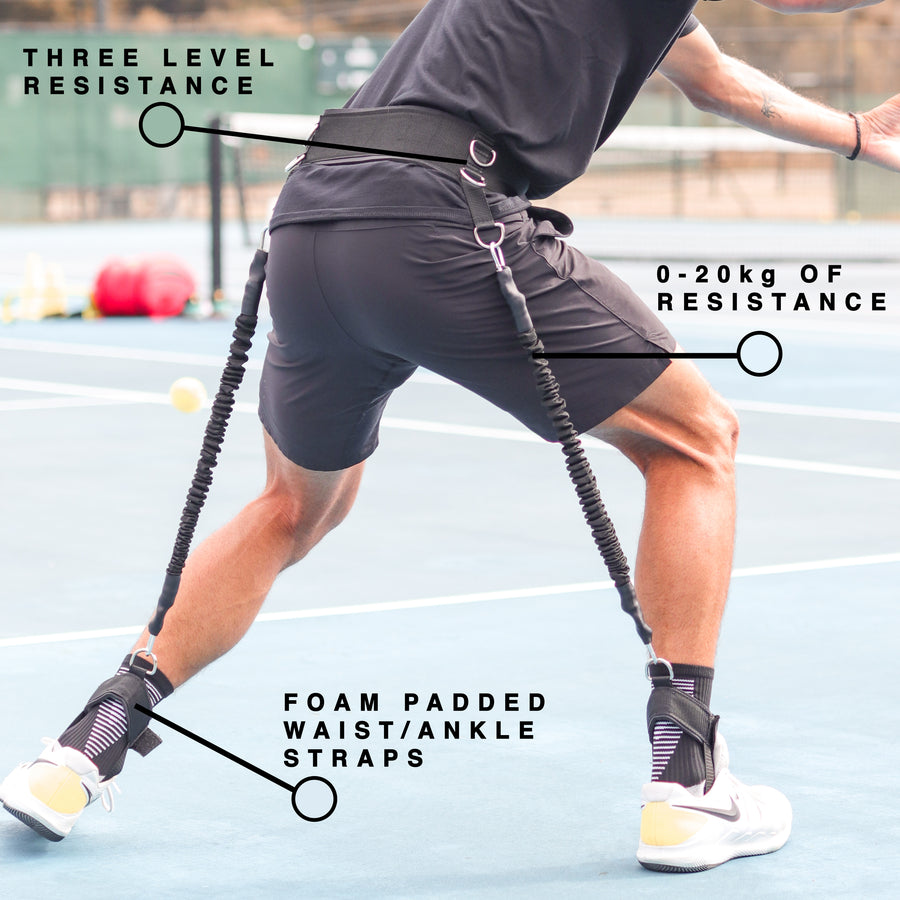
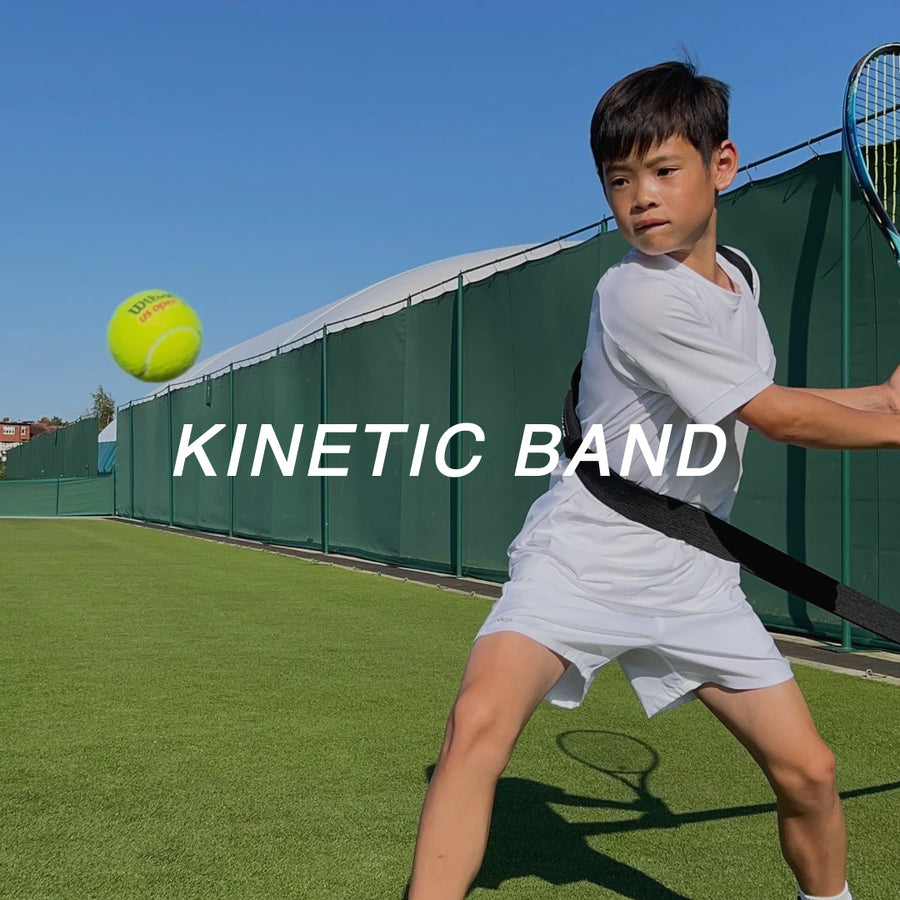
Tools that create physical feedback are particularly useful here. The Gravity Belt 2.0 uses Reactive Neuromuscular Training to pull young players into a lower, more stable athletic base during movement drills. Rather than telling a child to bend their knees again, the belt creates a natural downward resistance that the body learns to adapt to. The correction happens through sensation, not instruction, and that makes it stick far more reliably for younger players who respond better to feel than to verbal cues.
Building Movement Skills That Transfer to Match Play

There is a significant gap between looking good in a drill and performing under match pressure. Junior players often move well in isolated feeding drills and then completely lose structure once a point becomes competitive. This is normal. But it means training has to deliberately close that gap.
Movement drills that include decision-making are far more effective than purely mechanical repetition. Split-step timing, direction changes off a visual cue, recovery footwork after a wide ball, these patterns need to become automatic before they show up reliably in matches. The goal is not to think about movement during a point. The goal is to have moved correctly before the thought even forms.
Ladder drills, lateral shuffle patterns, and cone-based change-of-direction work all help when they are coached with purpose. Speed matters less than control at junior level. A player who moves to the ball under control, arrives balanced, and recovers efficiently will always outperform a faster player who arrives off-balance and has no return position.
The Long Game in Junior Development
Parents and coaches sometimes feel pressure to accelerate junior development because other kids seem to be progressing faster. It's a trap. Junior tennis has a long timeline. Players who peak at twelve often plateau by sixteen because their development was technique-first and physically shallow. Players who build slowly on strong physical and athletic foundations tend to keep improving well into their late teens and beyond.
The most important thing a junior programme can do is make training enjoyable and physically honest. Enjoyable so the player stays in the sport long enough to develop. Physically honest so the habits they build are the right ones. Those two things together create the conditions for real long-term improvement.
Consistency over time is what separates players who reach their potential from those who don't. Not the number of hours, but the quality of those hours and the physical patterns being reinforced in each one.
Start With the Right Foundations
If you're coaching juniors or supporting a young player's development, focus first on what the body is doing before the racket ever moves. A low, stable, balanced base is the single most transferable skill in the game. Train it deliberately. Train it often. The technique work will find a home far more easily once the athletic foundation is in place.
Every serious junior player deserves training that treats their development as a long-term project, not a short-term performance sprint. Build it right from the start and the results will follow at exactly the right time.