


The Tennis Training Aids That Actually Change How You Play

The Tennis Training Aids That Actually Change How You Play
Most players who plateau are not lacking talent. They are lacking the right feedback. They hit thousands of balls, they show up to practice, they watch their technique on video. But something is still missing. The improvements feel slow. The habits that creep in during matches are the same ones they have been trying to fix for years.
The problem is not effort. It is the absence of resistance, sensation, and physical cues that force the body to move differently. That is exactly what the right tennis training aids are designed to solve.

Why Most Solo Practice Does Not Transfer to Matches
There is a well-known gap between how a player moves in a relaxed drill and how they move under match pressure. In a drill, you have time. You get set. You prepare early. In a match, everything comes faster, your body reverts to what feels natural, and what feels natural is often a pattern you have reinforced thousands of times without realising it.
The issue is that repetition alone builds habit. It does not guarantee the habit is correct. Without some form of external resistance or physical feedback, the nervous system has no reason to change what it is already doing. This is why players can spend months working on their stance and still stand straight up when a deep ball pushes them back.
Effective tennis training aids close this gap. They create a physical environment that makes the correct movement the path of least resistance, not just the intellectually understood goal.
The Role of Resistance and Neuromuscular Feedback
Strength work in the gym builds general capacity. What it rarely builds is sport-specific movement patterning under realistic conditions. That requires tools that interact with the body during the actual movement patterns of tennis.
Reactive Neuromuscular Training works on this principle. Rather than correcting posture or footwork through instruction, it uses resistance to trigger an automatic postural response. The body adjusts in real time, without the player having to consciously think about it. Over time, that adjusted pattern becomes the default.
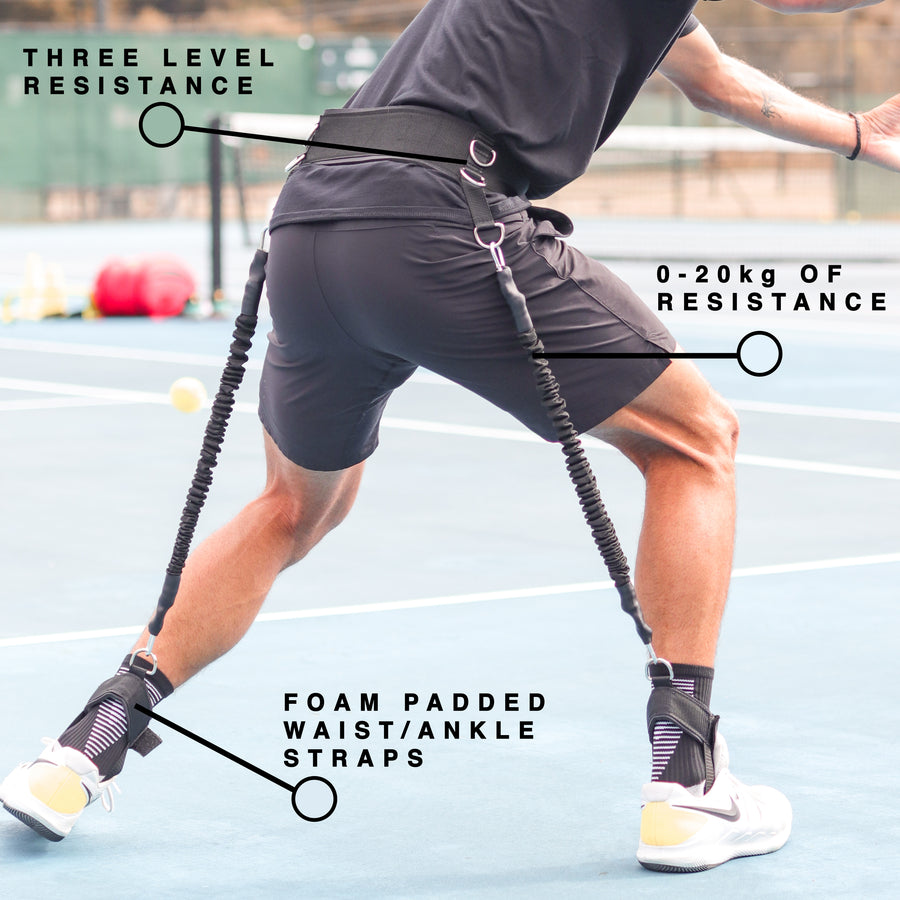
The Gravity Belt 2.0 applies this principle directly to on-court movement. It is a wearable resistance belt that uses RNT to reinforce a low, stable athletic base as you move. When your hips rise or your stance collapses, the belt creates the feedback that pulls your body back into position. You are not being told to stay low. You are feeling what it costs you not to.
For players who struggle with court coverage, recovery between shots, or holding a strong base through contact, this kind of physical cue accelerates adaptation in a way that verbal coaching alone cannot match.

Choosing Training Aids With a Clear Purpose
The market is full of products that promise transformation but lack a coherent training philosophy. The question to ask before introducing any training aid is simple: what specific movement problem does this solve, and how does it create feedback the body can act on?
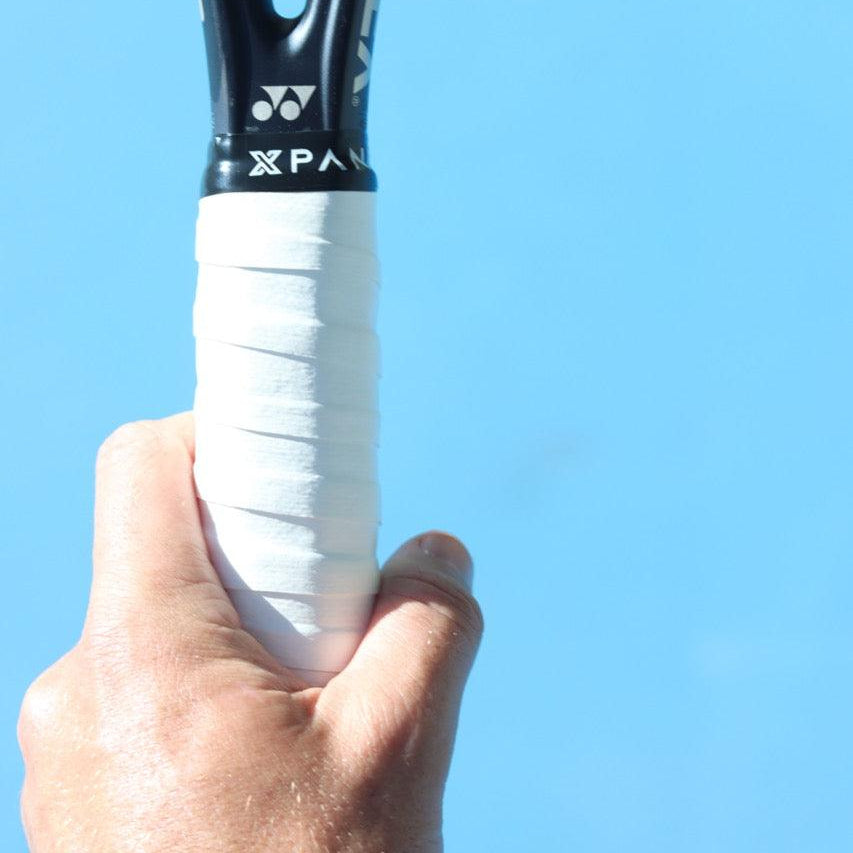
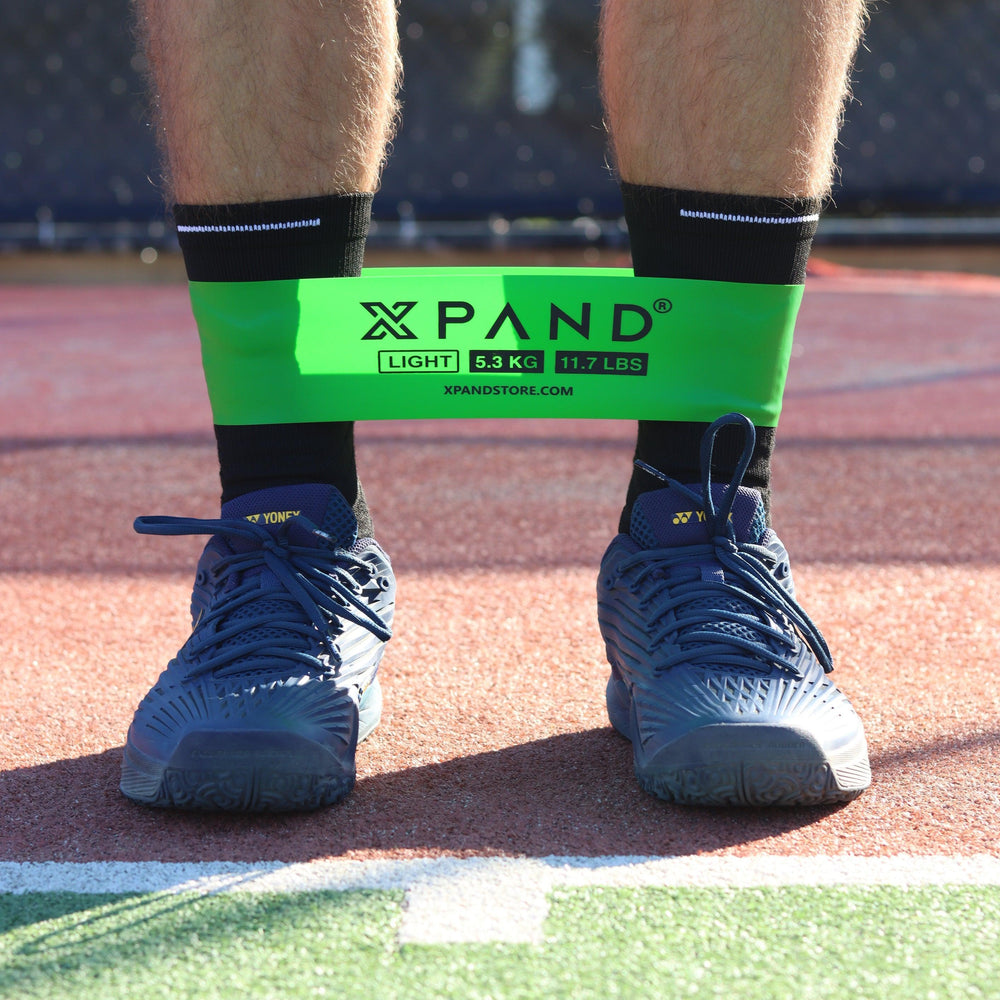
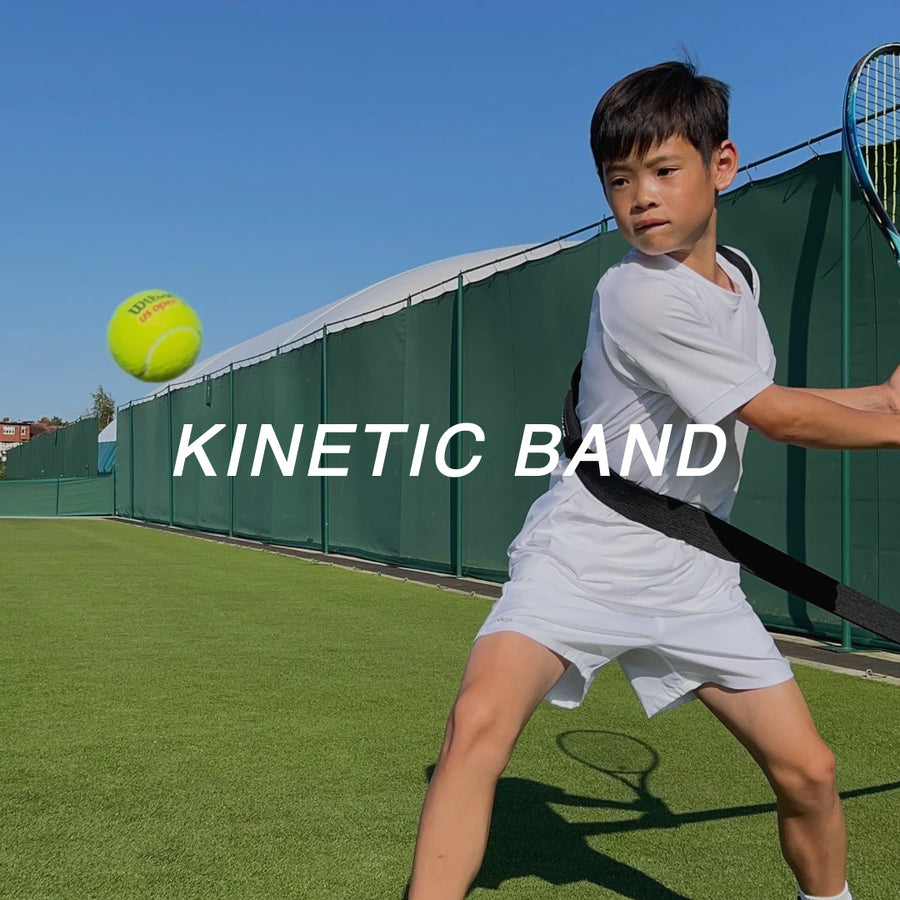
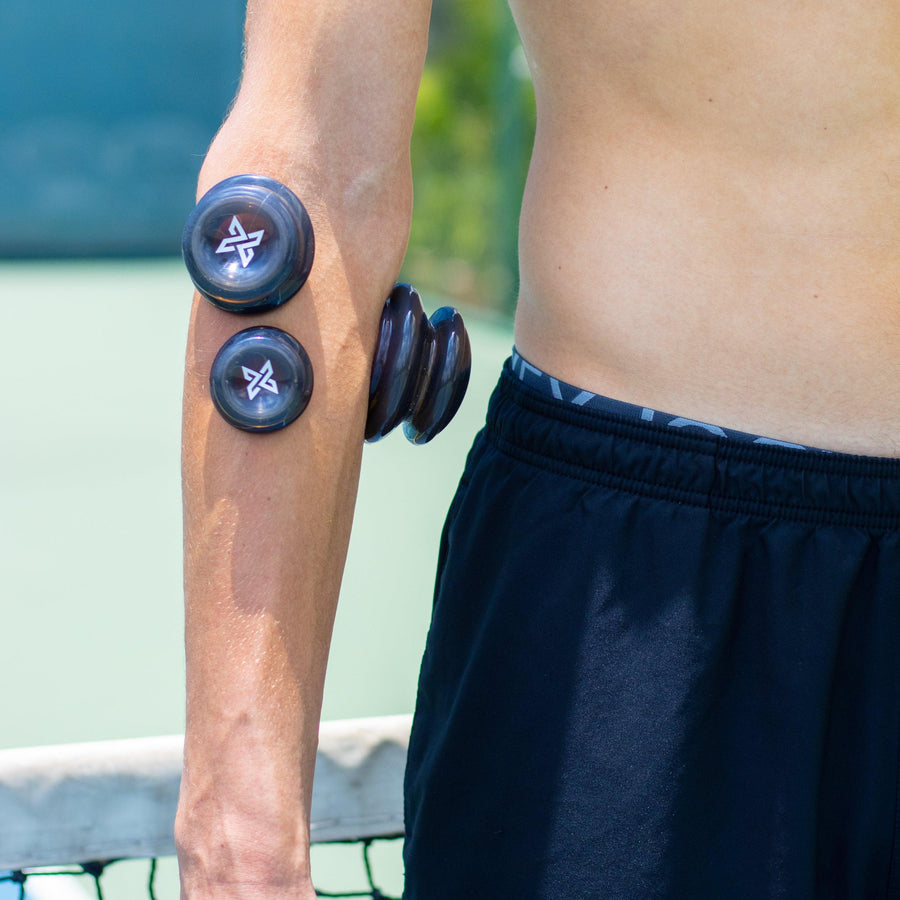
Footwork and stance problems respond well to resistance-based tools that interact with the lower body during movement. Rotation and power issues are often better addressed through torsional training that targets the hips and kinetic chain. Grip and racket control require tactile feedback at the point of contact.
Piling too many aids into a single session dilutes the stimulus. One focused tool used consistently over several weeks will change your game more reliably than three tools used occasionally. Serious players treat training aids the way they treat their racket setup, with intention and specificity.
How to Build Training Aids Into Your Weekly Routine
The most effective approach is to align your training aid work with your on-court sessions, not replace them. Use them as a bridge between your physical preparation and your hitting practice.
If footwork is the priority, introduce the Gravity Belt 2.0 during movement drills at the start of your session. Let the resistance recalibrate your base posture before you start hitting. Then remove it and hit. The body retains the pattern for longer than you might expect.
Track the specific movement cue you are targeting. Are you staying lower through your split-step? Are you recovering to a wider base after wide balls? Give yourself two to three weeks before evaluating. Neuromuscular adaptation takes time. Progress is often invisible before it becomes obvious.
The players who get the most from training aids are not the ones who use them most often. They are the ones who use them with clarity about what they are trying to change and why.
Conclusion
The right tennis training aids do not replace hard work. They make hard work more precise. When your body receives the correct feedback during movement, it adapts faster, retains changes longer, and brings those changes into match conditions more reliably.
If your footwork, stance, or court coverage is holding your game back, start there. Identify the specific problem, choose a tool built to address it, and give the process the time it deserves. The results show up on the scoreboard, not just in drills.
Explore the full range of XPAND training tools at xpandstore.com and find what your game is missing.