


Junior Tennis Training Drills That Actually Build Better Players

Junior Tennis Training Drills That Actually Build Better Players
Most young players hit a wall. They train consistently, show up every week, work hard in lessons. But their game stops progressing. The problem is rarely effort. It is usually the drills themselves. Too many junior programmes rely on repetitive feeding drills that build muscle memory without building athleticism. The result is a player who looks solid in practice and falls apart in a match.
The best junior tennis training drills do two things at once. They develop technique, and they develop the physical and neurological foundations that technique depends on. When you separate the two, you get players who can hit beautifully from a stationary position and struggle the moment the ball moves them.
Why Most Junior Drills Miss the Point

Walk onto any junior court and you will likely see the same session. Coach feeds, player hits, player walks back to the baseline. Repeat. There is nothing wrong with feeding drills in isolation. The issue is when they become the whole programme.
Match tennis is chaotic. It demands quick direction changes, a stable base under pressure, and the ability to produce power from compromised positions. Feeding drills train none of that. They train a player to hit well when conditions are ideal. That is a useful starting point, not a finishing point.
The drills that accelerate junior development are the ones that force the body to adapt. Movement-based drills. Constraint drills that exaggerate a specific problem. Drills that build awareness of posture and balance in real time, not after the fact.
Four Drills Worth Building a Session Around
1. The Recovery Cone Drill. Set three cones along the baseline, one at each corner and one at the centre. After every fed ball, the player must touch the centre cone before the next ball is delivered. This trains recovery movement, split-step timing and mental presence. Players who skip recovery steps in practice will skip them in matches. This drill removes that option.
2. The Short Ball Attack Drill. Coach feeds alternating deep and short balls with no warning. The player must read depth early, close the court aggressively and produce a controlled approach shot under forward momentum. This builds decision-making speed alongside shot execution. It also exposes players who use too upright a stance when moving forward, which is one of the most common technical faults in juniors.
3. The Crosscourt Consistency Rally. Two players rally crosscourt only, keeping score from fifteen. Any ball that lands down the middle or goes down the line ends the point. This creates immediate accountability. Players learn to aim with purpose under light pressure. It also reveals who is hitting shapes versus who is swinging and hoping.
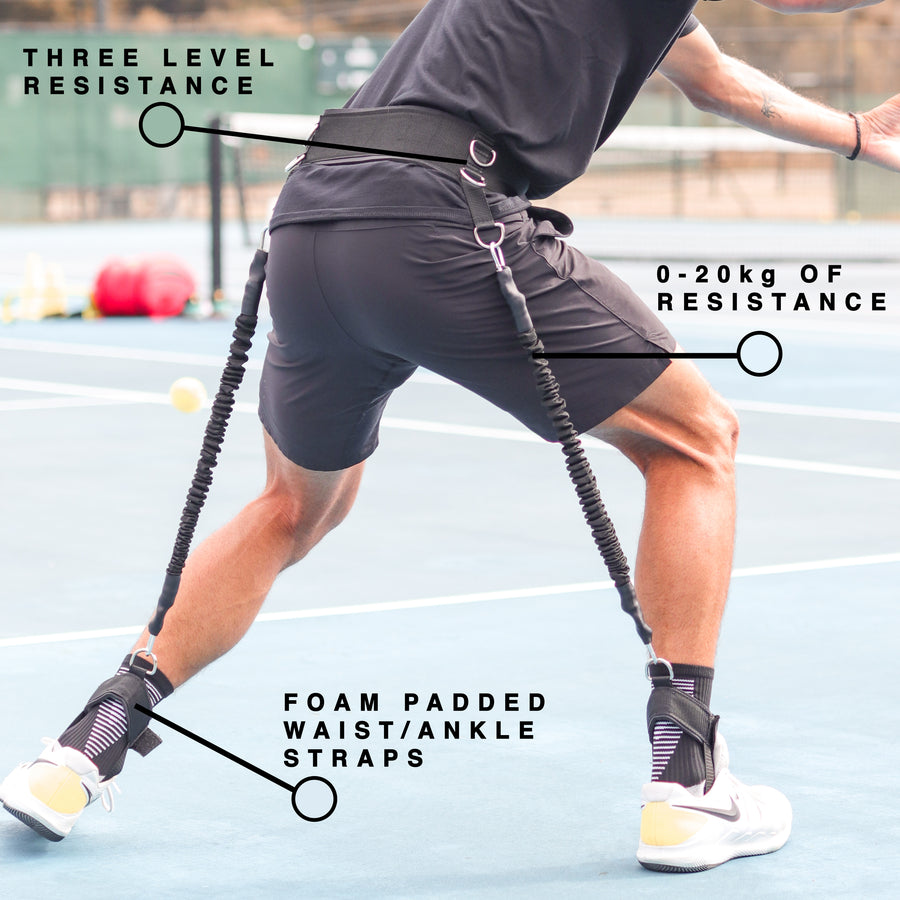
4. The Stance Check Drill. This one is simple and often overlooked. Before a feeding drill begins, a coach or training partner calls out the player's stance. If the base is too narrow, too upright, or the weight is on the heels, the ball is not fed. The player resets. This trains physical awareness in real time. Tools like the Gravity Belt 2.0 support this kind of training well, using Reactive Neuromuscular Training to prompt the body to find and hold a lower, more stable athletic position. For juniors who are still developing proprioception, that kind of immediate physical feedback accelerates the learning curve significantly.
Building Athletic Foundations Alongside Shot Skills

Technique and athleticism are not separate conversations. A junior who lacks core stability will compensate with arm swing. A junior who cannot load the legs properly will hit from the elbow. These are not technique problems in the traditional sense. They are physical development problems showing up as technique problems.
The best junior programmes integrate movement and physical awareness into every drill rather than saving it for a separate fitness block. When posture, balance and footwork are embedded into the hitting practice itself, players develop faster and retain what they learn under match pressure.
Coaches working with juniors between ten and sixteen will notice that the players who progress quickest are rarely the ones with the cleanest swings early on. They are the ones who move efficiently, recover quickly and stay composed when the ball gets them out of position. Drill design should reflect that priority.
Consistency Over Complexity
There is a temptation in junior development to rotate through a large library of drills to keep sessions fresh. Variety has value. But mastery requires repetition. A player needs hundreds of quality reps inside a pattern before that pattern becomes automatic under pressure.
Pick four or five drills that address the real gaps in your players' games. Run them consistently over a block of weeks. Track what changes. Real development is measured in matches, not in how entertaining the practice session looked.
Junior tennis training drills are only as good as the intentions behind them. Start with the problem each player actually has. Build the drill around solving that problem. And build the physical tools alongside the technical ones, because in match play, you cannot separate the two.
If you are serious about giving junior players an edge in training, explore the tools XPAND has developed to support exactly that kind of purposeful, performance-driven practice.