


The Pickleball Split Step: Why Most Players Skip It and Pay the Price

The Pickleball Split Step: Why Most Players Skip It and Pay the Price
You watch the ball sail past you. Your feet were planted. You were ready, or so you thought. The truth is, being stationary and being ready are two very different things in pickleball. The split step is the difference between those two states, and most club-level players either never learned it properly or stopped practising it once they got comfortable on court.
That comfort is costing them points.
What the Split Step Actually Does

The split step is a small, timed hop that lands you in a wide, balanced stance just as your opponent strikes the ball. It is not decorative. It is not something elite players do because they have extra time. It is how elite players create extra time.
When you land from a split step, your muscles are loaded. Your hips are low, your weight is distributed evenly across both feet, and your body is primed to push off in any direction within a fraction of a second. Without it, you are flat-footed. Flat-footed means slow. Slow means you are always chasing instead of reading.
In pickleball specifically, the pace can change in an instant. A drive from the baseline, a reset dink, a sudden ATP attempt. The court is small but the angles are sharp. Your reaction window is tighter than you think. The split step gives you that window back.
The Timing Problem Most Players Get Wrong
The most common mistake is timing the split step too early or too late. Players either hop as they approach a position and land before their opponent hits, which means their loaded stance dissipates, or they hop after the ball is struck, which defeats the purpose entirely.
The split step should land at the exact moment your opponent makes contact. Not before. Not after. That synchronisation is what activates the reactive chain through your legs and into your first explosive step toward the ball.
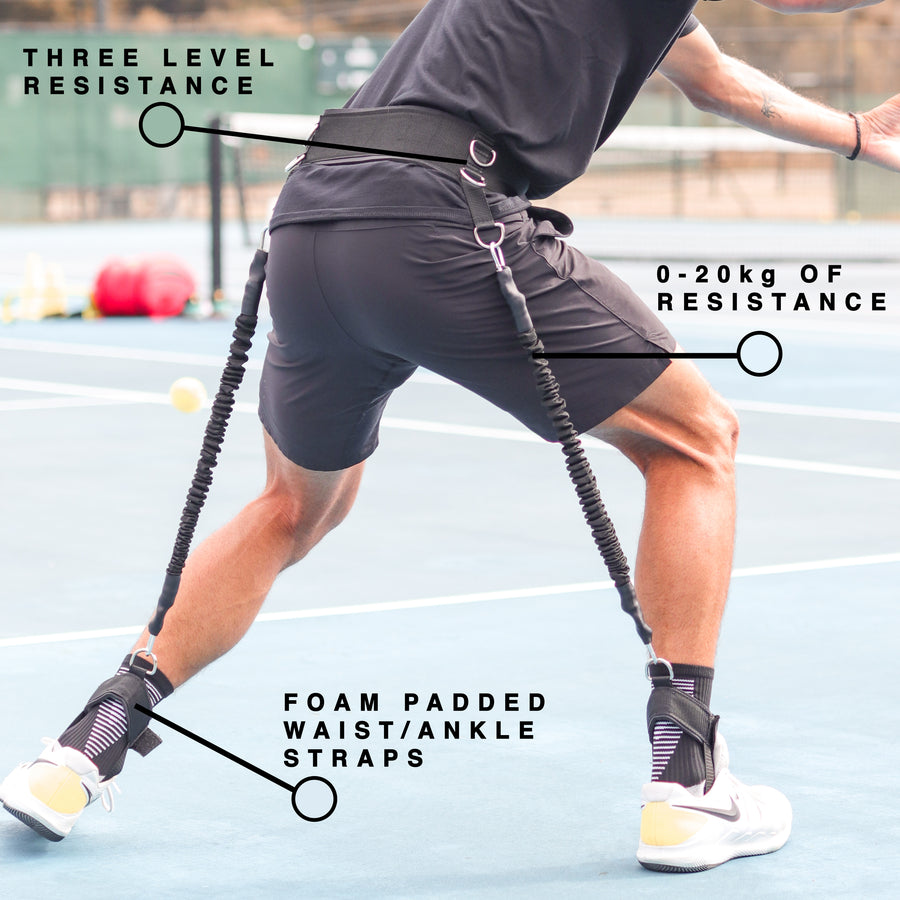
Practising this timing in isolation is useful. But training it under actual movement conditions is where real improvement happens. One tool that accelerates this process is the Gravity Belt 2.0. It uses Reactive Neuromuscular Training principles to reinforce a low, stable athletic base during movement drills. When you practise your split step timing while wearing it, your body builds the habit of landing with proper posture and weight distribution rather than drifting upright and losing that loaded position. The feedback is immediate and it sticks.
How to Build the Habit Into Your Game

Most players understand the split step conceptually after five minutes of explanation. The challenge is making it automatic under match conditions. Here is how to build that automaticity properly.
Start with shadow movement. No ball, no partner. Stand at the kitchen line and practise the timing against a visual cue. A partner raises a paddle, you hop. Land low, stay quiet, push off laterally. Repeat until the sequence feels natural rather than forced.
Move to controlled rally drills. Ask a drilling partner to feed balls at a consistent tempo. Your only job is to split step on every single feed before you move to the ball. Do not worry about shot quality at first. Quality of movement comes first. Shot quality follows.
Add direction unpredictability. Once your timing is clean, ask your partner to alternate randomly between your forehand and backhand side. Now the split step has to do its real job. You land, you read, you react. That sequence, done correctly, is what separates players who look athletic from players who actually are.
Film yourself. Most players are shocked when they see how often they skip the split step in match play after thinking they had it dialled in during drills. Recording a practice session or casual match from the sideline is one of the most honest forms of feedback available.
Why This One Habit Changes Everything Else
Footwork in pickleball is not just about getting to the ball. It is about arriving in a position where you can actually do something useful with it. When your split step is consistent, your court coverage improves. Your dink consistency improves because you are arriving balanced rather than lunging. Your drive defence improves because you are already loaded when the ball is struck. Even your mental composure improves because you stop feeling like you are always one step behind.
The split step is also self-reinforcing. Once players feel what a properly timed hop does to their first-step speed, they rarely go back. It clicks, and it stays clicked.
Good footwork does not require a bigger court or a more talented opponent to develop. It requires deliberate repetition with the right focus and, where possible, the right training tools.
Start with the Step, Build from There
If your movement has felt reactive rather than proactive, the split step is the first thing to address. Not your grip, not your dink technique, not your serve placement. The step comes first because everything else builds on top of it.
Work it into every drill session. Make it non-negotiable. Give it the same attention you give your shots and it will return the investment every time you step on court.