


Tennis Body Awareness Training: The Hidden Edge Most Club Players Never Develop

Tennis Body Awareness Training: The Hidden Edge Most Club Players Never Develop
You watch the ball. You swing. Something feels off, but you cannot quite name it. The shot lands short, or you catch the frame, or your feet are just slightly wrong and the whole point unravels. Most players blame their technique at this point. The real problem is usually something deeper: you do not know where your body is.
Body awareness, the technical term is proprioception, is your nervous system's ability to sense position, balance and movement in real time. In tennis, it is the difference between a player who can feel when their stance is off and correct it mid-rally, and one who keeps repeating the same errors without understanding why. It is trainable. Most players simply never train it deliberately.
Why Body Awareness Matters More Than You Think

Tennis is a sport of split-second adjustments. Every point asks you to read an incoming ball, position your body, generate force and transfer it through the racket, all in under a second. That process only works smoothly when your body is giving your brain accurate feedback in real time.
Poor body awareness shows up in specific ways. You stand too tall through contact, losing power and stability. Your weight drifts back when you need to be loading forward. Your hips stay quiet when they should be driving the shot. None of these feel dramatic in the moment. They just quietly cost you, every single point.
The frustrating part is that hitting more balls does not automatically fix this. Repetition reinforces patterns, good or bad. Without training your proprioceptive system directly, you can groove the wrong positions for years and wonder why your game plateaus.
The Foundation: Training a Low, Stable Athletic Base
Most body awareness problems in tennis originate at the base. Specifically, players do not stay low enough, consistently enough, under real match pressure. The moment a point gets fast or physical, posture rises, the athletic base collapses and errors follow.
The most effective way to address this is through resistance-based proprioceptive training. When your body has to work against a consistent external force to maintain position, the nervous system learns what correct posture actually feels like. It stops being a conscious thought and becomes a felt sense.
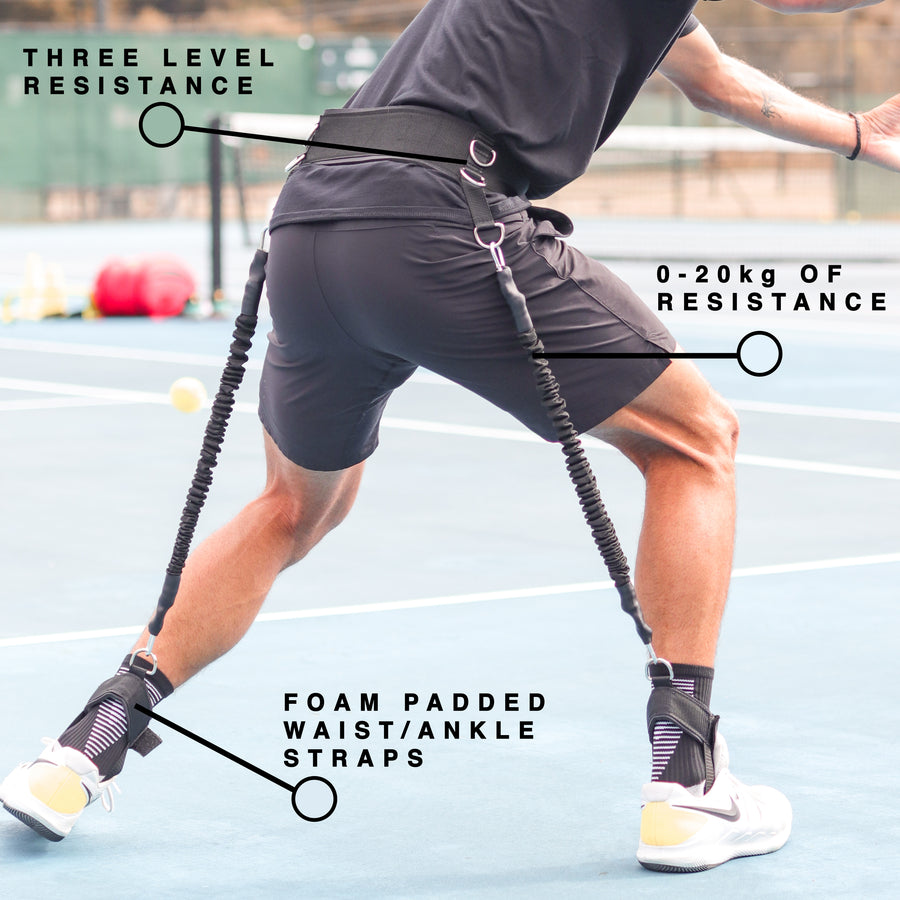
The Gravity Belt 2.0 uses Reactive Neuromuscular Training to do exactly this. Worn during on-court practice or movement drills, the belt creates gentle downward resistance that pulls your centre of gravity toward the ground. Your body has to actively maintain a low, stable base to move well against it. Over time, that position becomes your default. Players who train with it consistently report that staying low stops feeling effortful and starts feeling natural.
This is what serious tennis body awareness training looks like. Not just drilling footwork patterns, but teaching the nervous system to recognise and hold the right positions automatically.
Practical Drills to Build Proprioceptive Awareness

Body awareness is built through training that demands your attention be on how your body feels, not just where the ball is going. These drills are simple and highly effective when done consistently.
Eyes-closed stance holds. Set up in your ready position and close your eyes. Hold for ten seconds. Open your eyes and check your feet, knees and posture. Most players are surprised by how much they drift without visual feedback. This simple check builds internal awareness quickly.
Shadow footwork with pauses. Move through your standard court patterns, split-step, side shuffle, recovery, but add deliberate pauses at the moment of contact. Freeze. Feel exactly where your weight is, where your hips are, whether your knees are loaded. This pause trains your brain to read your own position more accurately under movement.
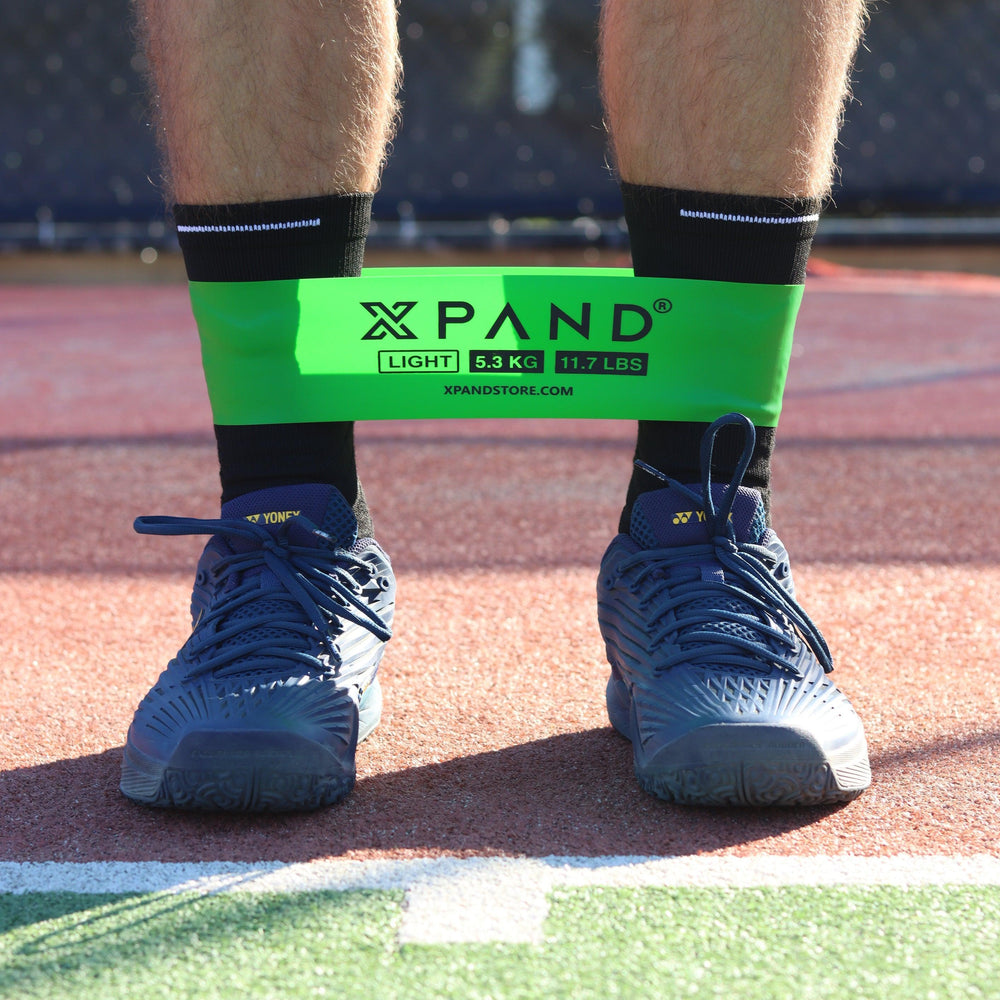
Resistance-based movement drills. Wearing a resistance tool like the Gravity Belt 2.0 during shadow movement or slow rallying forces your body to feel its own base. The resistance gives your nervous system something to push against, which sharpens positional feedback dramatically compared to unresisted practice.
Single-leg balance during groundstroke simulation. Stand on one leg and shadow a forehand or backhand. The instability immediately exposes any imbalance in your swing mechanics and forces your body to develop stronger positional control.
Connecting Training to Match Performance
The goal of all of this is not to think about your body more during matches. It is the opposite. You want body awareness to become so automatic that your conscious mind stays on the ball, the pattern and the opponent.
Players who invest in proprioceptive training report a specific change over time. They start catching errors earlier, sometimes before the shot even happens. They feel when their stance is wrong and adjust without thinking. Their recovery after wide balls becomes more efficient because their body already knows how to find balance quickly.
That responsiveness is earned through deliberate training. It does not come from hitting harder or grinding more baseline rallies. It comes from training your nervous system to know where you are at all times.
Start With Awareness, Build From There
If you are serious about improving on court, body awareness is not optional. It is the substrate everything else is built on. Your footwork, your shot mechanics, your court coverage, all of it depends on your proprioceptive system working accurately and efficiently.
Start with the drills above. Add resistance-based work to your practice sessions. Be patient with the process. The improvements are not always visible in the first week, but they compound. One day a ball comes fast to your backhand corner and your body is already there, already loaded, already ready. That is what consistent tennis body awareness training builds.
If you want a structured starting point, explore how the Gravity Belt 2.0 fits into your current practice. Used consistently, it accelerates exactly the kind of proprioceptive development that separates players who plateau from those who keep improving.