


Pickleball Agility Training: Why Most Players Are Training the Wrong Thing

Pickleball Agility Training: Why Most Players Are Training the Wrong Thing
You're not losing points because you're slow. You're losing them because you're late. There's a difference, and it matters. Most recreational and club-level pickleball players put time into rallying, drilling groundstrokes, and working on their dink game. Very few put serious attention into how quickly they get into position before any of that happens. That gap is where points are actually won and lost.
Pickleball agility training isn't about sprinting faster across the court. The court is too small for that. It's about reading the play faster, reacting with your whole body, and moving with a low, controlled base that puts you in the right place at the right time. That's a trainable skill. And for most players, it's almost completely untrained.
The Real Reason Your Feet Are Letting You Down

Watch players at club level and you'll notice the same pattern. They stand too upright between shots. Their weight is back on their heels. When the ball comes, they react from a tall, neutral position and have to fight gravity to get moving. By the time they arrive at the ball, they're off-balance and cramped for time. The shot suffers as a result.
This isn't a fitness problem. It's a posture and awareness problem. The athletic base in pickleball, that low, bent-knee, forward-weighted stance, needs to be your default state during a rally. Not something you drop into when you sense danger. Most players only find it when it's too late.
Agility training for pickleball has to address this at its root. You can run ladder drills all day, but if you don't train your body to stay low and ready as its natural resting state on court, you'll still be a half-step behind when it counts.
What Effective Agility Training Actually Looks Like
Good pickleball agility training combines three things: reactive footwork, positional awareness, and body control under fatigue. All three need to show up in your training sessions.
Reactive footwork means training your split-step and first-step response. The split-step is the foundation of every good movement sequence in pickleball. You land light, you read the ball, you push. If you're not drilling this regularly, your movement will always feel reactive rather than proactive.
Positional awareness means training yourself to know where you are on the court without thinking about it. Shadow footwork drills, where you move through patterns without a ball, build this. They let you focus entirely on your base, your balance, and your recovery step after each movement.
Body control under fatigue is where most training programs fall short. It's easy to move well when you're fresh. The question is whether you can hold your athletic base and react cleanly at 70 percent energy in the third game of a competitive match. That requires training at that intensity, not just going through the motions at comfortable pace.
How to Build a Low, Stable Base That Holds Up Under Pressure

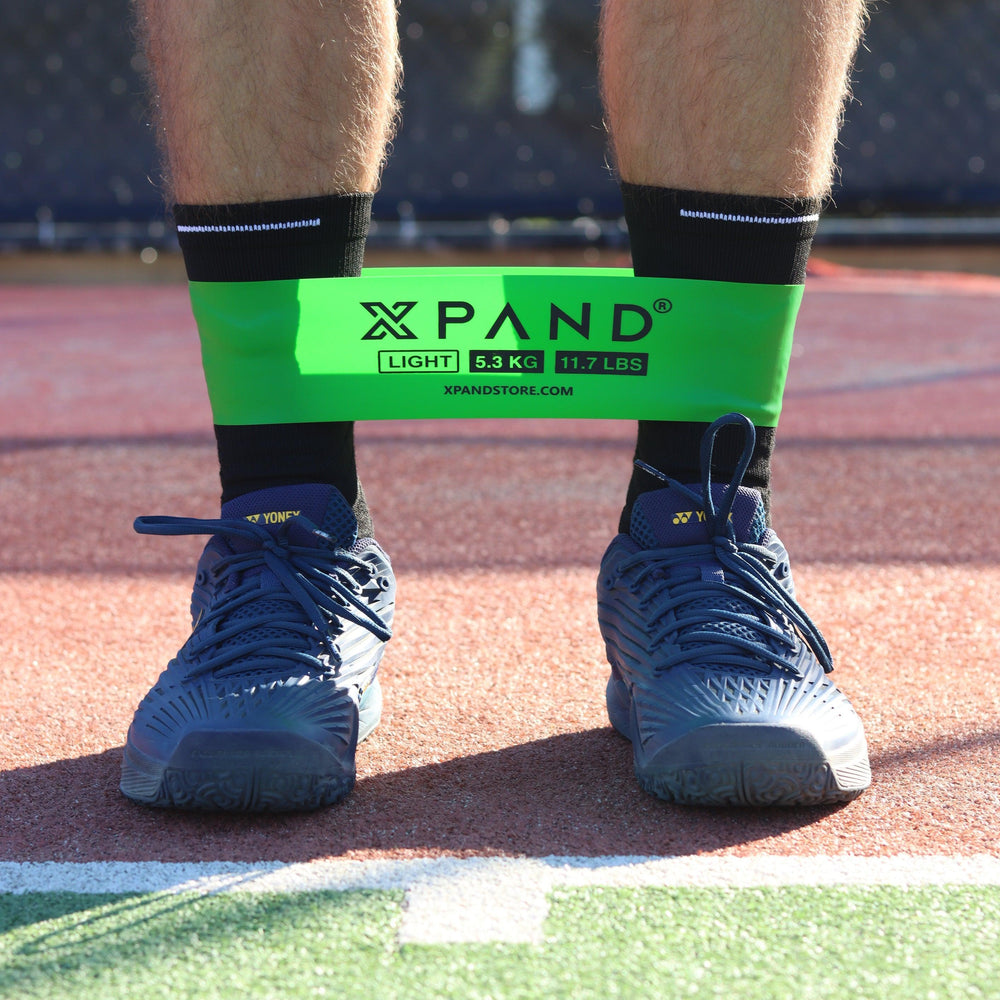
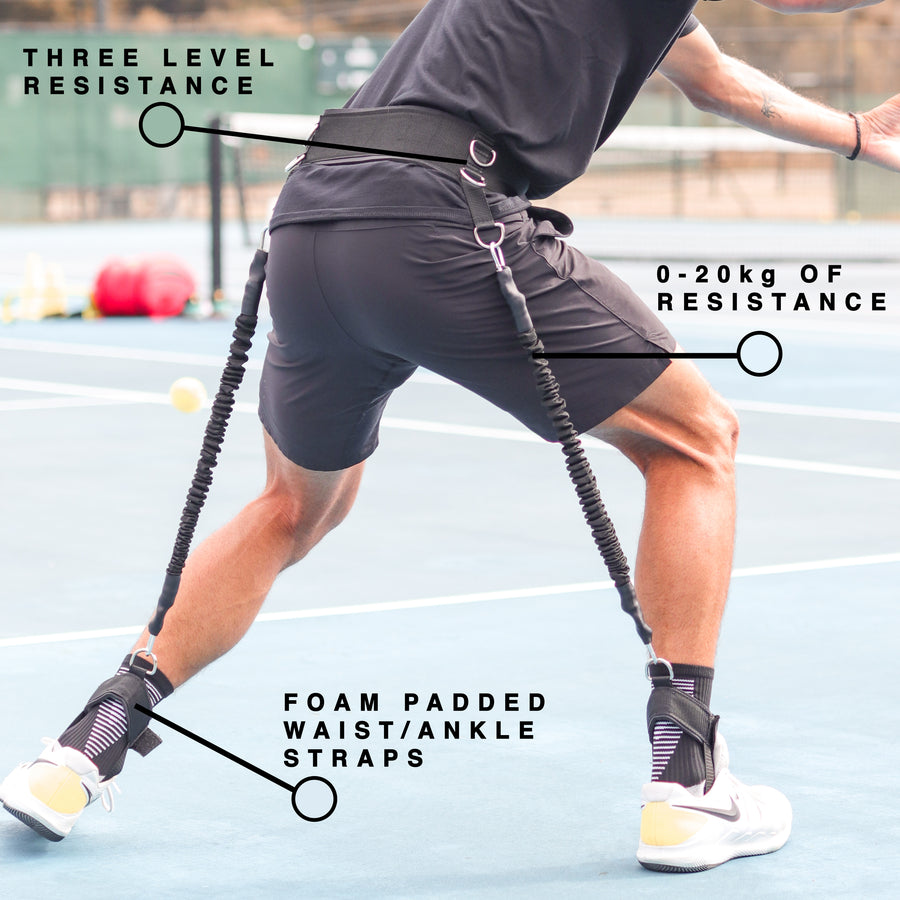
One of the more effective tools for this kind of training is the Gravity Belt 2.0. It uses Reactive Neuromuscular Training principles to physically cue your body into a lower, more grounded position as you move. When you train footwork patterns wearing it, your nervous system starts to associate movement with a lower centre of gravity. Over time, that carries over to match play without the belt on.
This matters for pickleball specifically because the court demands so many short, sharp directional changes. Every time you push off to cover the sideline or step forward to take a ball at the kitchen, your body needs to stay compact and balanced. Players who lose their base mid-movement are the ones who flick at the ball from an awkward position and either pop it up or miss the line entirely.
Pairing belt-based footwork work with unassisted shadow drilling gives you both the neuromuscular imprinting and the pure repetition your body needs to make low, controlled movement automatic.
The Habits That Separate Quick Players From Just Fit Ones
Agility isn't a single quality. It's a cluster of habits that show up consistently. The players who look quick on court share a few things in common. They never straighten up fully between points. They always split-step as their partner or opponent strikes the ball. They recover to a central, ready position after every shot rather than watching where their shot went.
These aren't natural gifts. They're trained behaviours. And they're available to any player willing to be deliberate about them in practice. The problem is that most players only practice their shots. They warm up, they rally, they work on technique. The movement that frames every shot goes largely unaddressed.
Start treating your footwork patterns as a discipline of their own. Spend fifteen minutes per session on pure movement work, no ball, just your feet, your base, and your reaction habits. Add structured agility drills two to three times per week off-court. Track your court coverage in match play and notice where you're consistently late.
Improvement here compounds quickly. A sharper split-step and a lower ready position might be worth more to your game right now than another hour of rallying from the baseline.
Build the Foundation Before You Chase the Results
Pickleball rewards players who are in the right place. Technique matters, power matters, touch matters. But none of it works if your feet aren't getting you there in time. The court is small, the game is fast, and the margins are tight.
Invest in your agility training the same way you'd invest in your serve or your dink. Be consistent, be deliberate, and use tools that give your nervous system clear feedback. The players who move well don't just feel more athletic. They feel more in control. That confidence alone changes how you play under pressure.
Start with your base. Build from there.