


Tennis Injury Prevention: What Serious Players Need to Do Differently

Tennis Injury Prevention: What Serious Players Need to Do Differently
You are not playing your best tennis right now. Not because of your technique or your tactics. Because something hurts, or something is starting to. A tight shoulder after serves. A knee that aches on long points. An elbow that has been sending quiet warnings for weeks. This is where most club-level players lose months of progress, not to a single dramatic injury, but to the slow accumulation of strain that was entirely preventable.
Tennis injury prevention is not about doing less. It is about training smarter, moving better, and building a body that can absorb the demands the sport actually places on it.
Why Tennis Players Get Injured More Than They Should

The honest answer is posture and position. Tennis is a sport built on explosive, asymmetrical movement. You are sprinting, stopping, rotating and striking, often hundreds of times in a single session. When your base is compromised, every one of those movements distributes load incorrectly through your joints, tendons and muscles.
Most recreational and club-level players stand too high. They react late, lunge instead of split-step, and absorb contact through stiff, upright positions. Over time, the lower back, knees and hips pay the price. This is not a fitness issue. It is a movement pattern issue. And movement patterns can be trained.
The most common tennis injuries share a single root cause: the body was not in the right position to handle the force being applied to it. Lateral ankle sprains happen when footwork is reactive and rushed. Knee injuries compound when the hips are not engaged. Shoulder problems often trace back to a core and trunk that is not generating rotation efficiently, leaving the arm to overcompensate.
Building a Low, Stable Athletic Base
The single most valuable thing you can do for tennis injury prevention is develop and maintain a genuinely low, stable athletic base. Not just in drills. In every point, under pressure, when fatigue sets in.
This is harder than it sounds because the body naturally wants to stand upright. It is more comfortable, less metabolically demanding, and completely wrong for court sports. Training your nervous system to default to a lower, more stable position requires deliberate, consistent stimulus.
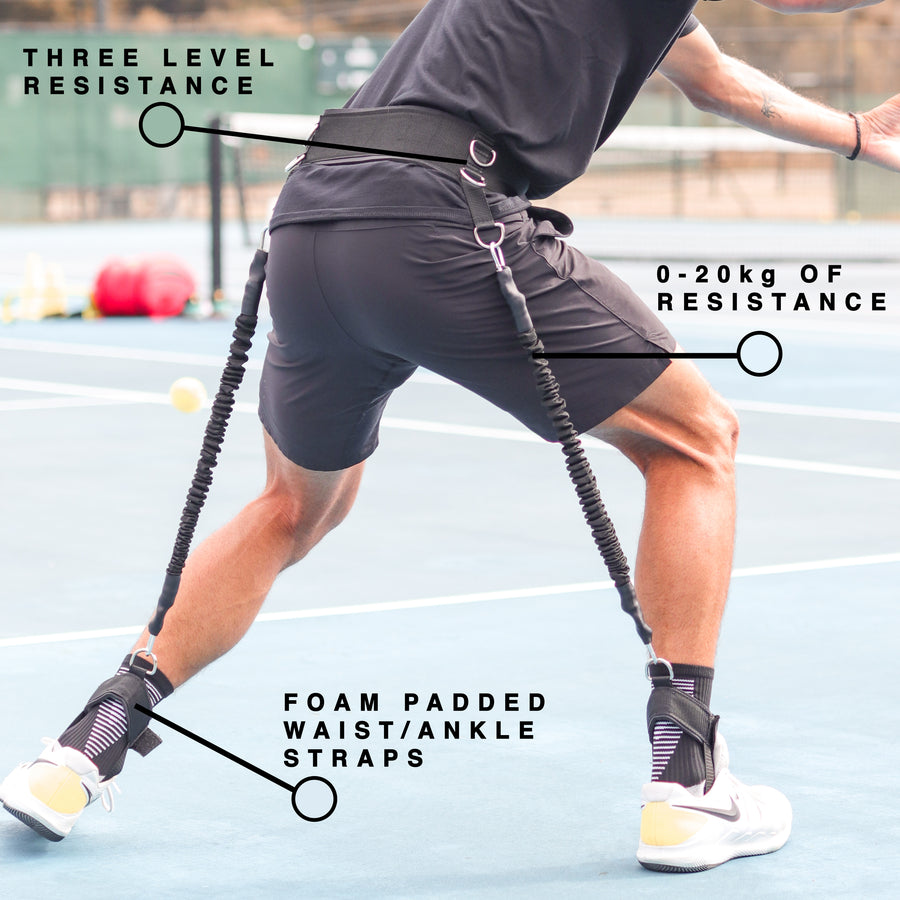
This is exactly the problem the Gravity Belt 2.0 is designed to solve. It uses Reactive Neuromuscular Training principles to create resistance that pulls you out of your athletic base whenever you drift too high or lose postural control. Your body learns, through repetition and real feedback, to hold the position that protects your joints and keeps you ready to move in any direction. Use it during footwork sessions or shadow drills and you will notice the difference in your natural court position within a few weeks.
A stable base does not just protect you. It improves everything. Your split-step lands with more control. Your first step is quicker. Your groundstrokes generate more consistent power because the platform underneath the stroke is solid.
The Role of Warm-Up and Recovery in Staying on Court

Serious players understand that injury prevention does not begin when something hurts. It begins before the first ball is struck. A proper dynamic warm-up activates the muscles that stabilise your ankles, knees and hips. It primes the rotator cuff before you load the serve. It raises tissue temperature so your tendons and fascia are ready for explosive movement.
Most players skip this or treat it as a formality. A gentle jog and a few arm circles is not a warm-up. It is a habit that eventually leads to a setback.
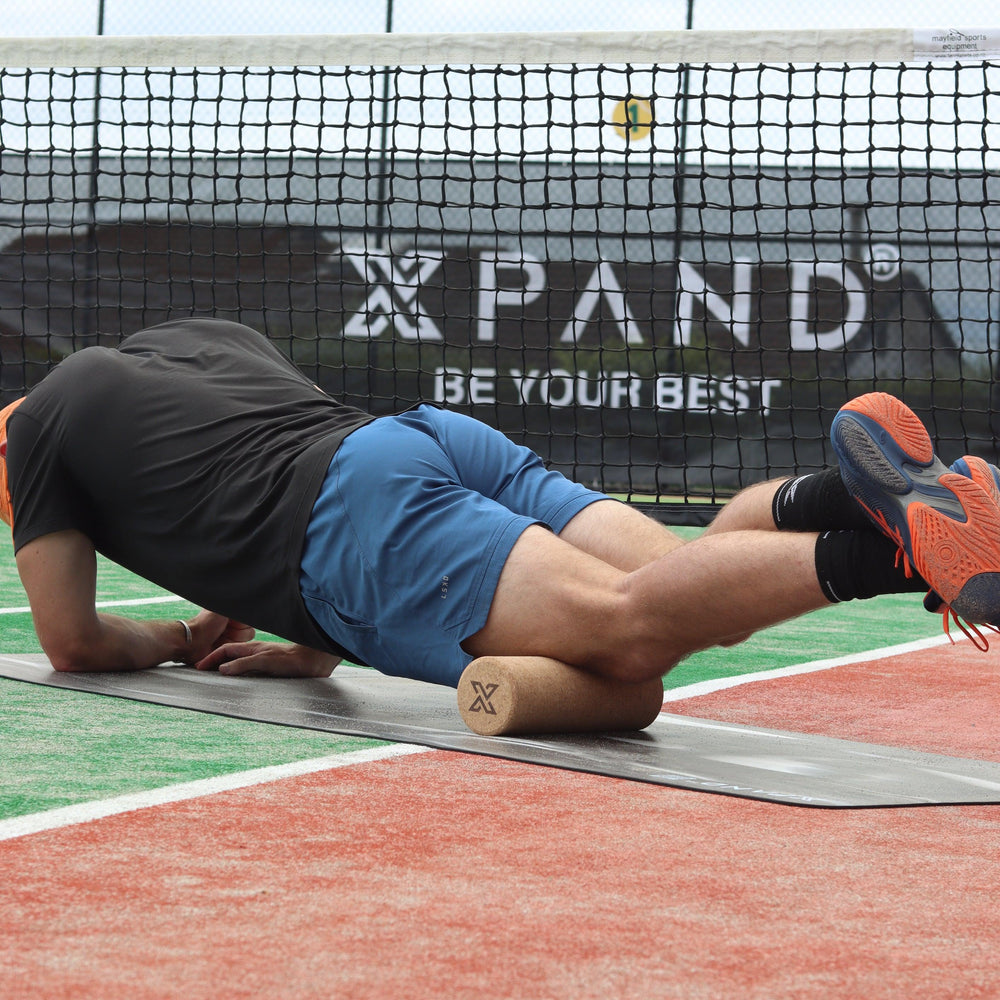
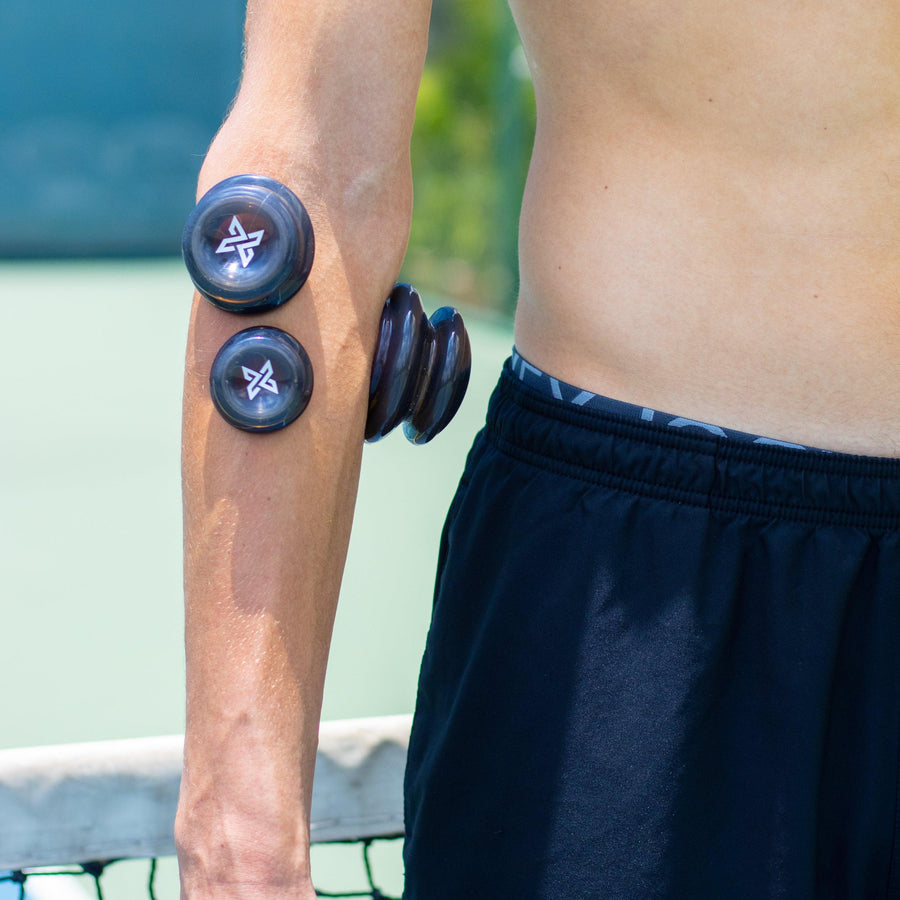
On the recovery side, the conversation needs to be equally honest. Training stress accumulates across weeks and months. If you are playing four times a week and doing nothing deliberate to manage soft tissue quality, soreness and stiffness will quietly reduce your range of motion, alter your mechanics, and create the conditions for injury. Targeted soft tissue work, proper sleep, and active recovery sessions are not optional extras for serious players. They are part of the programme.
The Small Habits That Compound Over a Season
Tennis injury prevention is not one big intervention. It is a collection of consistent, unglamorous habits that compound across a full season. Here is what that looks like in practice.
You split-step on every single point, not just when you remember. You arrive ten minutes before your hitting session to complete a proper dynamic warm-up. You train your movement and your base with the same seriousness you bring to your strokes. You manage your soft tissue between sessions. You listen to the quiet signals your body gives you before they become loud problems.
Players who do these things play more tennis. They progress faster. They are available to compete when it matters. The players who skip them spend weeks at a time on the sideline, frustrated and starting from scratch.
The difference between those two groups is not talent. It is process.
Start With the Foundation
If you are serious about staying healthy and improving your game this season, start with your movement foundation. Everything in tennis, power, speed, consistency and resilience, is built on top of it.
Work on your athletic base deliberately. Train your warm-up like it matters. Build recovery into your week. These are not complicated changes. They are just the ones most players delay until the injury forces the conversation.
Do not wait for that conversation. The court time you protect now is the progress you will see six months from now.