


Padel Strength Training: Why Most Players Are Building the Wrong Kind of Power

Padel Strength Training: Why Most Players Are Building the Wrong Kind of Power
You have been putting in the gym work. Squats, lunges, maybe some shoulder press. You feel stronger. But on the padel court, nothing has really changed. Your bandeja still floats. Your volleys still lack punch. You still feel late when the ball comes back faster than expected.
This is one of the most common frustrations in padel. Players train hard but train in the wrong direction. Padel strength training is not about raw muscle. It is about building the kind of force production that your body can actually express during a rally, under pressure, in a split second.
Here is what that actually looks like.
Padel Demands a Different Kind of Strength

Think about what padel actually asks of your body. You are changing direction every two or three seconds. You are absorbing force against the glass, then redirecting it. You are hitting with compact swings from tight angles, often off balance, with almost no time to set up. The strength that wins points in padel is reactive, rotational and positional.
Reactive means your muscles fire fast enough to meet the ball. Rotational means your power comes from the kinetic chain, not just your arm. Positional means you are stable and low enough to execute clean technique even when the situation is chaotic.
Most gym programmes address none of these three things directly. That is the gap.
Why Your Athletic Base Matters More Than You Think
Before you can express power, you need a base to express it from. In padel, that base is your stance. Players who are upright, passive or slow into position are always playing catch-up. They hit the ball late, their shots lack depth, and they tire faster because every movement is inefficient.
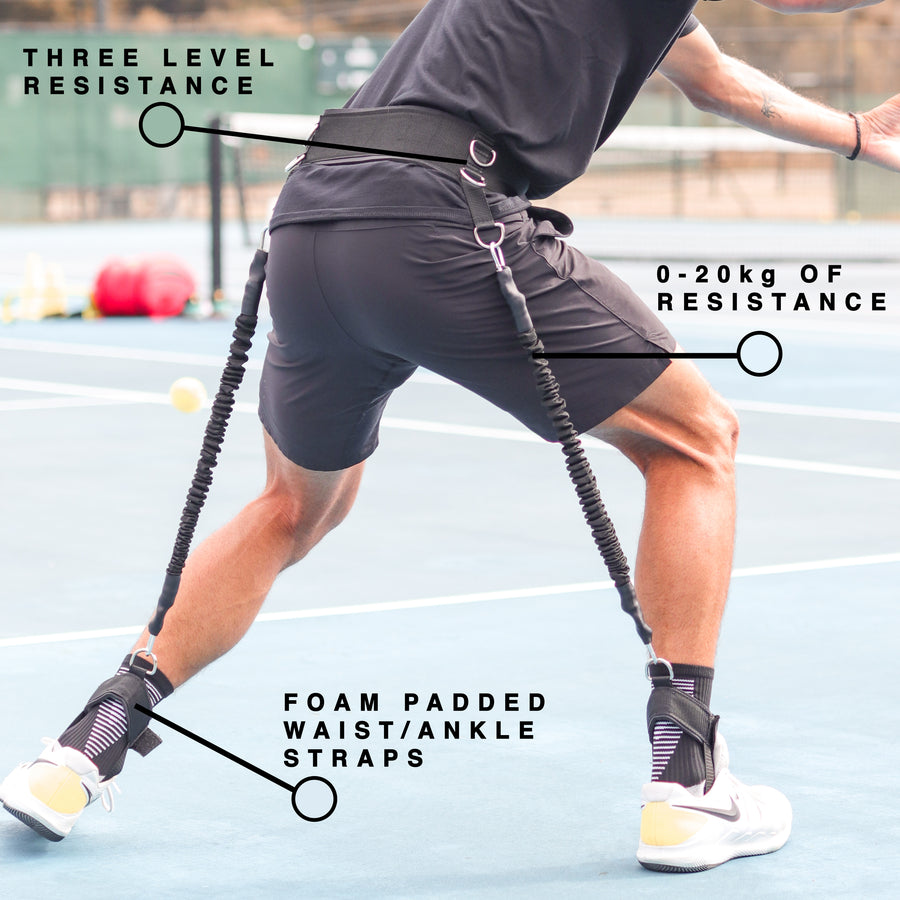
The solution is not just telling yourself to stay low. Your body needs to learn what low and stable actually feels like under load. This is where Reactive Neuromuscular Training becomes genuinely useful. The Gravity Belt 2.0 applies resistance around your centre of mass as you move, forcing your body to recruit the correct stabilising muscles and maintain a proper athletic base without conscious thought. Over time, that posture becomes automatic, even during fast exchanges at the net.
Better posture in movement means better contact. Better contact means more consistent power. It is a simple chain, but most players never address the first link.
Building Rotational Power for Padel Groundstrokes and Smashes

The most powerful padel players generate force from the ground up. Their legs load, their hips rotate, and the energy transfers through the torso into the racket. The arm is almost just a delivery mechanism. If your hips are not contributing, you are leaving a significant amount of power on the table and placing unnecessary stress on your shoulder and elbow.
Training rotational strength specifically is what changes this. Exercises like cable rotations, landmine presses, and rotational med ball throws teach the body to link lower body force to upper body output. Progress here is not about lifting heavier. It is about producing force faster and transferring it more cleanly through the chain.
You will feel the difference first on your vibora and smash, where hip drive is most obvious. Then it starts showing up on your drive volleys and lobs off the back glass too.
A Practical Padel Strength Training Structure
You do not need five gym sessions a week. Two or three focused sessions, built around padel-specific patterns, will move the needle more than a general fitness programme ever will. Here is a structure that works.
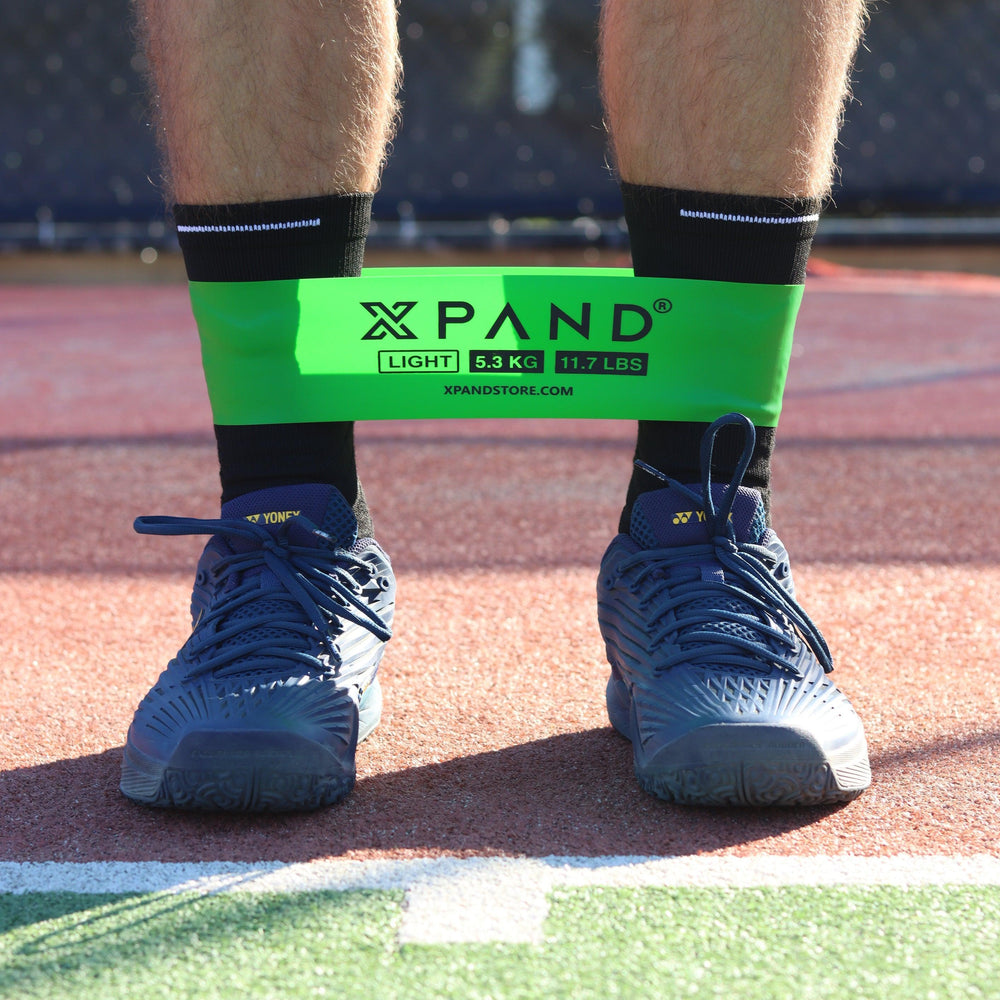
Session one: lower body and athletic base. Single-leg squats, lateral band walks, and hip hinge variations. Focus on control and range. This builds the positional strength that keeps you stable during long rallies and tight court exchanges.
Session two: rotational power. Cable or band rotations, landmine work, and explosive med ball throws against a wall. Drive everything from the hips first. Keep the reps low and the intent high. Power training only works when you are actually trying to move fast.
Session three: upper body and shoulder resilience. Face pulls, external rotation work, push variations and overhead stability exercises. Padel puts repetitive stress through the shoulder, especially on the smash. Prehab work here protects your longevity and keeps your technique consistent when fatigue sets in.
Between sessions, keep court work technical. Use your gym sessions to build the physical qualities. Let your on-court practice sharpen how you apply them.
Turning Gym Strength Into Court Performance
The final piece is the transfer. Strength built in isolation does not automatically show up during a match. You need training tools that blur the line between gym and court, that teach your body to use what it has built while it is actually moving like a padel player.
This is exactly where tools like the Gravity Belt 2.0 earn their place. Wearing it during footwork drills and movement patterns keeps your neuromuscular system engaged in a way that pure gym work cannot replicate. Your body learns to maintain its athletic base under resistance, and when you remove it, that stability feels natural rather than forced.
Padel strength training works when it is specific, when it targets the qualities the game actually demands and when it connects to how you move on court. Build the base. Train the rotation. Protect the shoulder. Then get back on court and play.
The strength you build in the next eight weeks will still be there in the final set. That is what makes it worth doing properly.