


Explosive Power for Tennis: Why Most Players Are Training It Wrong

Explosive Power for Tennis: Why Most Players Are Training It Wrong
You hit the gym. You work hard. You feel stronger. But somehow, that strength never quite shows up on court. Your serve still lacks pace. Your groundstrokes feel like they're missing something. You watch players who don't look particularly muscular but move and strike with a force you can't quite explain. This is one of the most common frustrations in competitive tennis, and the problem is almost never effort. It's the type of training.
Explosive power for tennis is not the same as general strength. Building it requires understanding how your body actually generates force during a match, and then training that specific system. Most players skip this step entirely.
The Difference Between Strength and Explosive Power

Strength is your capacity to produce force. Explosive power is your ability to produce that force fast. In tennis, almost every action requires the second quality. A split-step, a first-step acceleration, a serve, a forehand loaded with topspin. These all demand rapid force production, not slow, controlled effort.
The problem with traditional gym training is that it develops the slow end of the force spectrum. Heavy squats, machine-based leg press, standard resistance work. These build a base, and that base matters. But if you stop there, you've trained a quality that barely maps onto what tennis actually asks of your body.
The rate of force development is what separates a powerful tennis player from a merely strong one. Training this quality means introducing speed, rotation and reactive elements into your work. It means training the nervous system, not just the muscle.
Why Rotation Is the Engine of Tennis Power
Most recreational and club-level players generate power primarily from their arm. This is understandable. The arm is where the racket is. But it is also the weakest link in the chain. The real source of pace and spin in tennis is rotational force produced from the ground up, through the legs, through the hips, and into the core before the arm ever gets involved.
This kinetic chain is what allows professional players to generate racket head speed that defies their physical size. When the chain works, the arm is simply the final messenger, not the engine. When it breaks down, everything becomes effortful, inconsistent, and limited.
Training torsional force production specifically means working on hip mobility, hip drive, and the ability to uncoil from a loaded position with speed. This is where many players have a genuine gap, and it's also where the biggest gains tend to live.
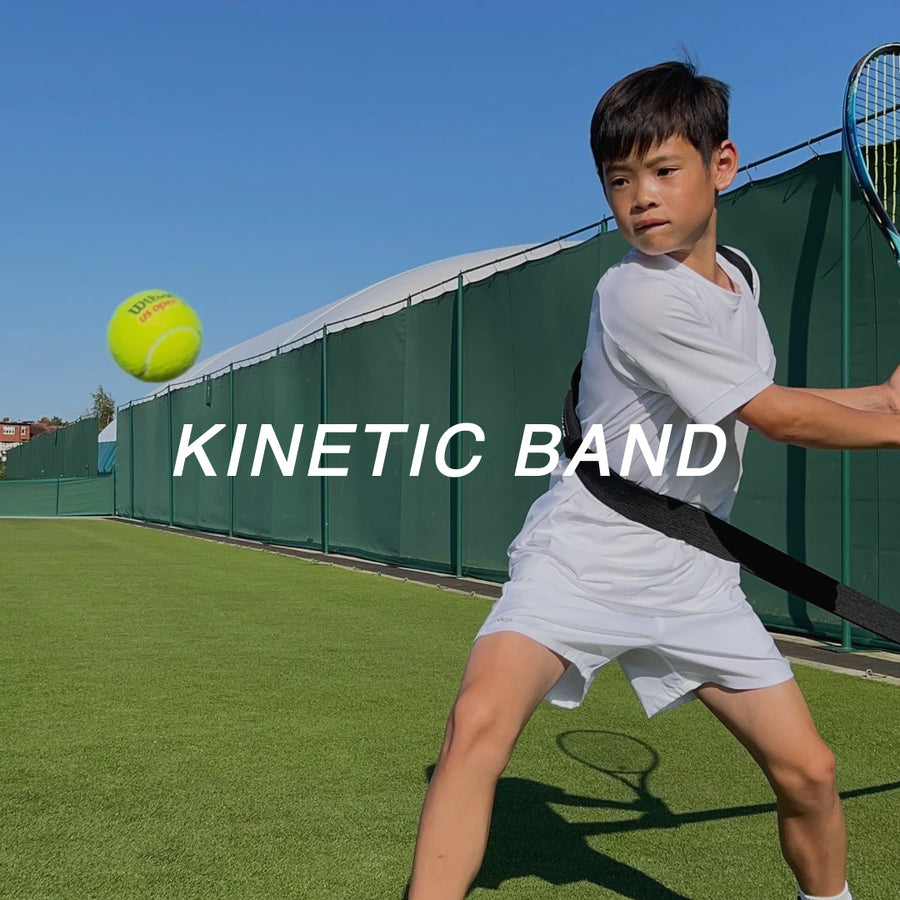
The Kinetic Band was built exactly for this. It creates resistance through the rotational plane, forcing your hips to generate torsional force on every rep. Over time, this teaches your body to recruit the right muscles in the right sequence, which is the foundation of consistent, effortless-looking power on court. Use it during groundstroke shadow swings or serve rehearsal and you'll feel immediately where your hip drive is limited.
The Role of the Lower Body in Explosive Court Movement

Explosive power is not only about hitting. It also determines how quickly you reach the ball, how well you set up for shots under pressure, and how efficiently you recover after each point. All of this begins with your stance and your ability to load and explode from a low, stable base.
Many players stand too tall between shots. When the ball comes, they have to drop their centre of gravity before they can move, which costs critical milliseconds. The players who look effortlessly quick are usually those who maintain a lower, loaded ready position throughout the rally. This is not just habit. It is a trainable physical quality.
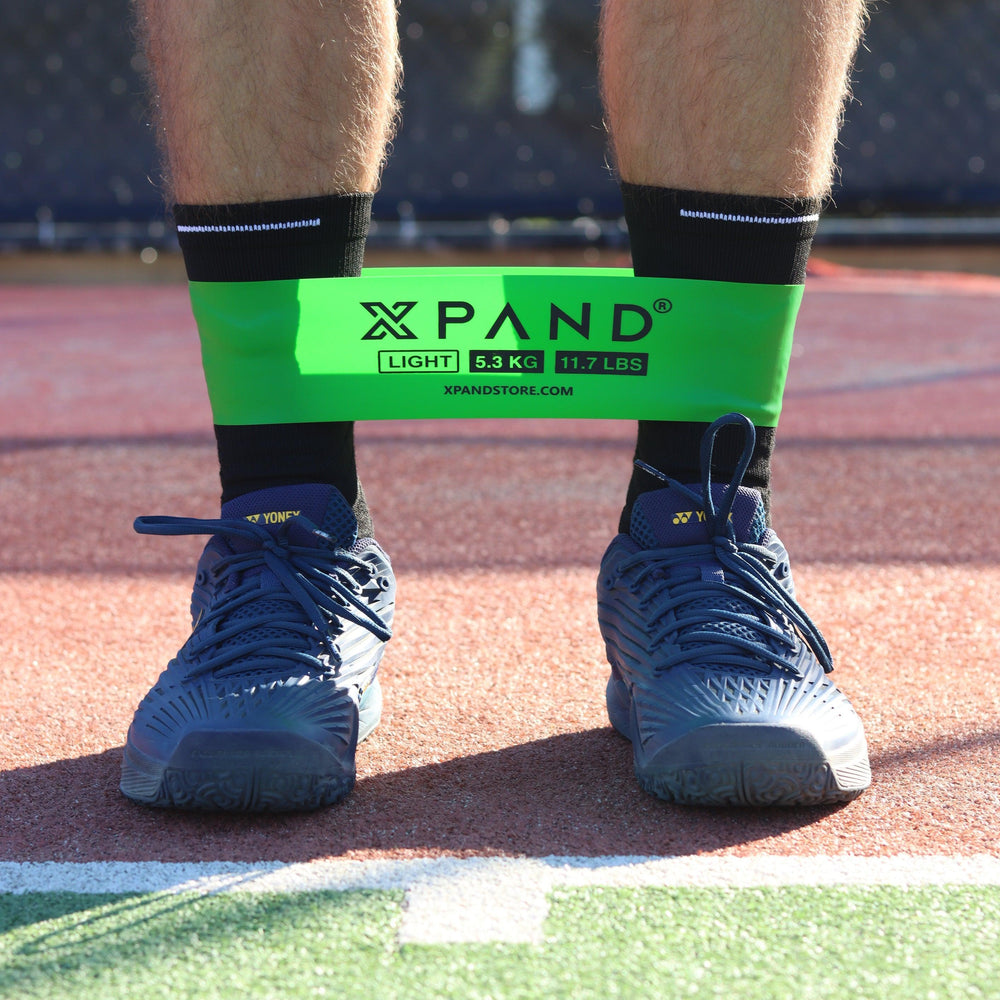
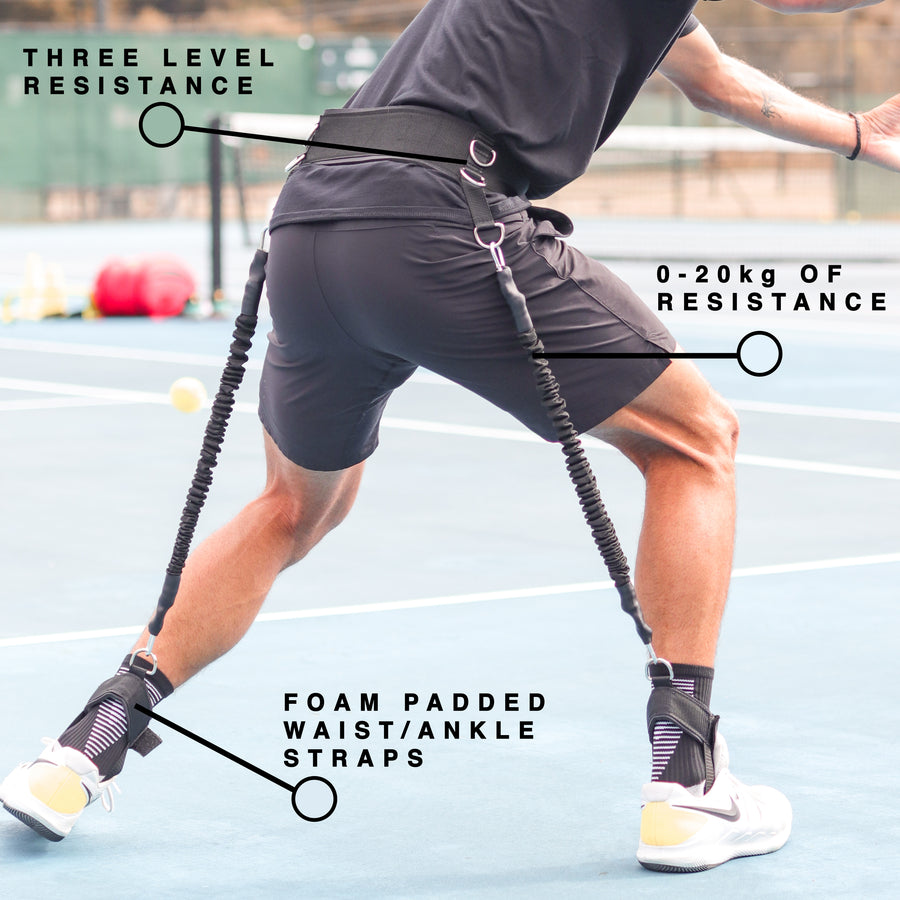
Building it requires time under tension in low positions and proprioceptive feedback that teaches your body what stable looks like at speed. This is exactly the training stimulus that reactive neuromuscular work provides. When your body learns to hold a proper base under resistance, it starts doing it automatically on court.
How to Structure Explosive Power Training for Tennis
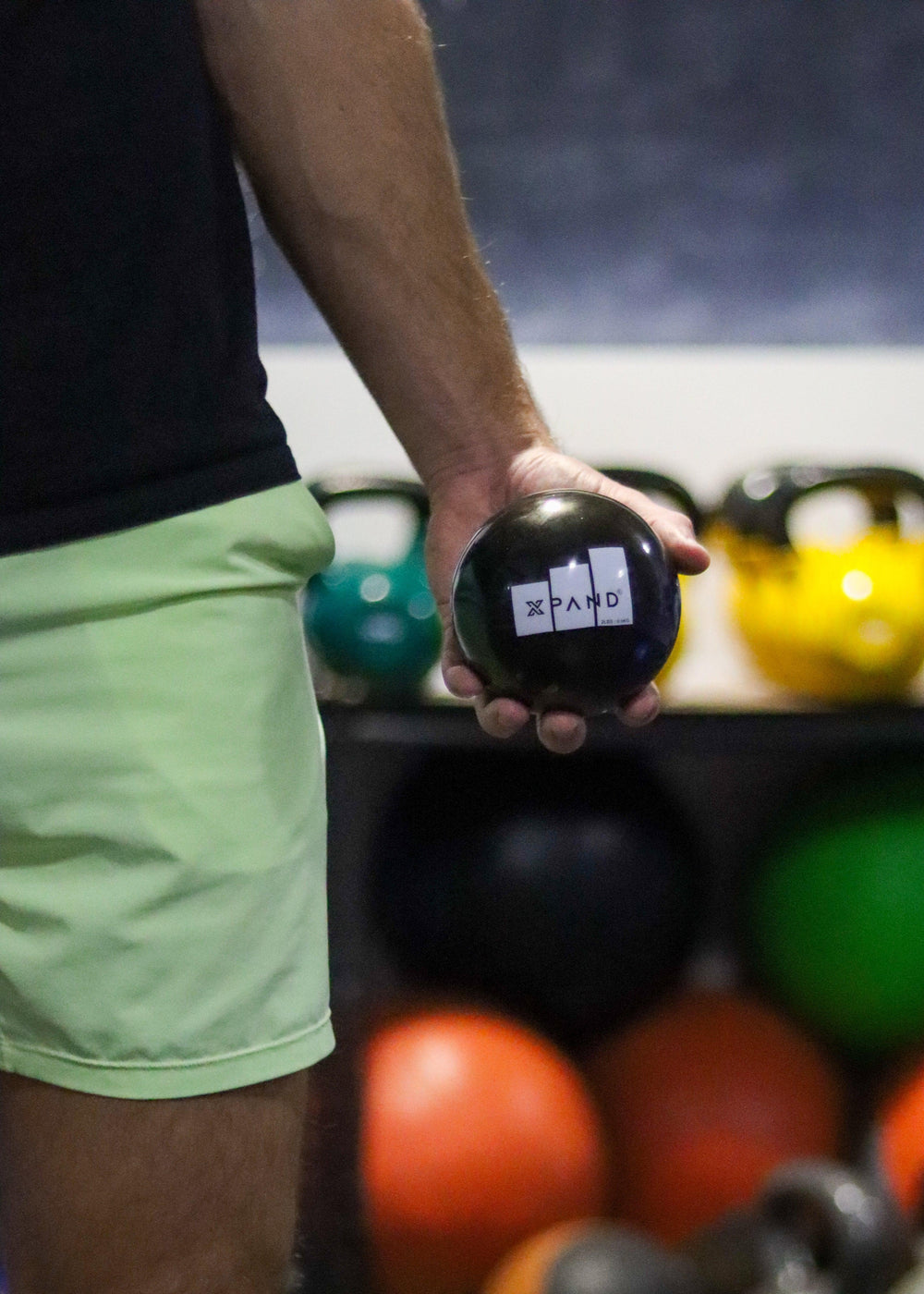
Effective power training for tennis has three layers. The first is building a strength foundation through compound movements like squats, Romanian deadlifts and hip hinges. The second is converting that strength to speed through plyometrics, med ball throws and reactive drills. The third is integrating that power into tennis-specific movement patterns on court.
Most players only do the first layer, occasionally dipping into the second. Very few train the third layer with any structure. This is why gym strength rarely transfers cleanly to match performance.
When you train with tools that bridge the gym and the court, the transfer happens faster. Resistance-based rotational work during your swing rehearsal, reactive footwork training with real sport-specific patterns, and low-position stability work that mirrors your ready stance. These close the gap between what you can do in the weights room and what you actually do when the ball is in play.
Two or three sessions per week dedicated to this work is enough to see meaningful change within six to eight weeks. The key is consistency and specificity, not volume.
The Player Who Trains Smart Hits Harder
Explosive power for tennis is accessible to any serious player willing to train the right qualities in the right order. It is not reserved for professionals or athletes with elite physical genetics. It is a trainable system, and the players who understand that consistently outperform those who simply work harder without direction.
If your power feels like it has a ceiling, the answer is rarely more repetition of the same work. It is usually a missing layer in how you're training rotation, rate of force development, or your athletic base on court.
Identify the gap. Train it deliberately. The results will follow.