


Padel Off Court Training: The Habits Separating Club Players From Competitive Ones

Padel Off Court Training: The Habits Separating Club Players From Competitive Ones
Most padel players plateau not because they stop practising, but because they only ever practise on court. They drill the same shots, run the same patterns, and then wonder why their movement feels heavy in the third set or why their smashes lack real venom. The truth is uncomfortable: what you do away from the court determines your ceiling on it.
Padel off court training is where the physical qualities that actually win points get built. Rotational power. Lateral speed. Postural stability under pressure. None of these develop reliably from match play alone. They require deliberate, targeted work. And the good news is that you do not need a full gym setup or hours of free time to do it properly.
Why Most Padel Players Train the Wrong Things

When club players do train off court, they tend to gravitate toward generic fitness. Long runs. Basic gym circuits. Isolated exercises that have little transfer to a padel court. These sessions build a base level of fitness, but they do not address the specific physical demands of the sport.
Padel is built around explosive short bursts, rapid direction changes, and shot-making under postural stress. You are constantly being pushed off balance by the pace of incoming balls. You are generating power from compromised positions. You are absorbing impact through the walls and immediately transitioning back into an attacking stance.
Training that does not replicate these demands produces players who are fit in a general sense but fragile in the specific sense. They fatigue faster under competitive pressure. Their technique breaks down late in matches. Their court coverage looks effortful rather than automatic.
The Physical Qualities That Actually Matter in Padel
Effective padel off court training targets three things above everything else: rotational power, lateral movement quality, and postural stability.
Rotational power is the engine behind almost every shot you hit. The bandeja, the vibora, the smash, the cross-court drive. All of them draw force from the hips and transfer it through the torso into the racket. Players who generate this force efficiently hit heavier shots with less physical effort. Players who generate it poorly rely on their arm, which creates inconsistency and, eventually, injury.
Lateral movement quality separates players who arrive to the ball comfortably from those who always feel rushed. The padel court is compact, but the transitions are sharp and the split-step timing is unforgiving. Developing hip mobility and fast-twitch responsiveness off court directly reduces the number of balls you get caught flat-footed on.
Postural stability is the quiet one. Nobody talks about it at the club. But it underpins everything. A low, stable athletic base lets you absorb pace, hold your position at the net, and recover quickly after each exchange. Without it, your positioning becomes reactive rather than proactive.
Building a Smarter Off Court Routine
The most effective approach to padel off court training is brief, frequent, and highly specific. Three to four sessions per week of thirty to forty-five minutes each will produce more transfer than one long gym session that covers everything loosely.
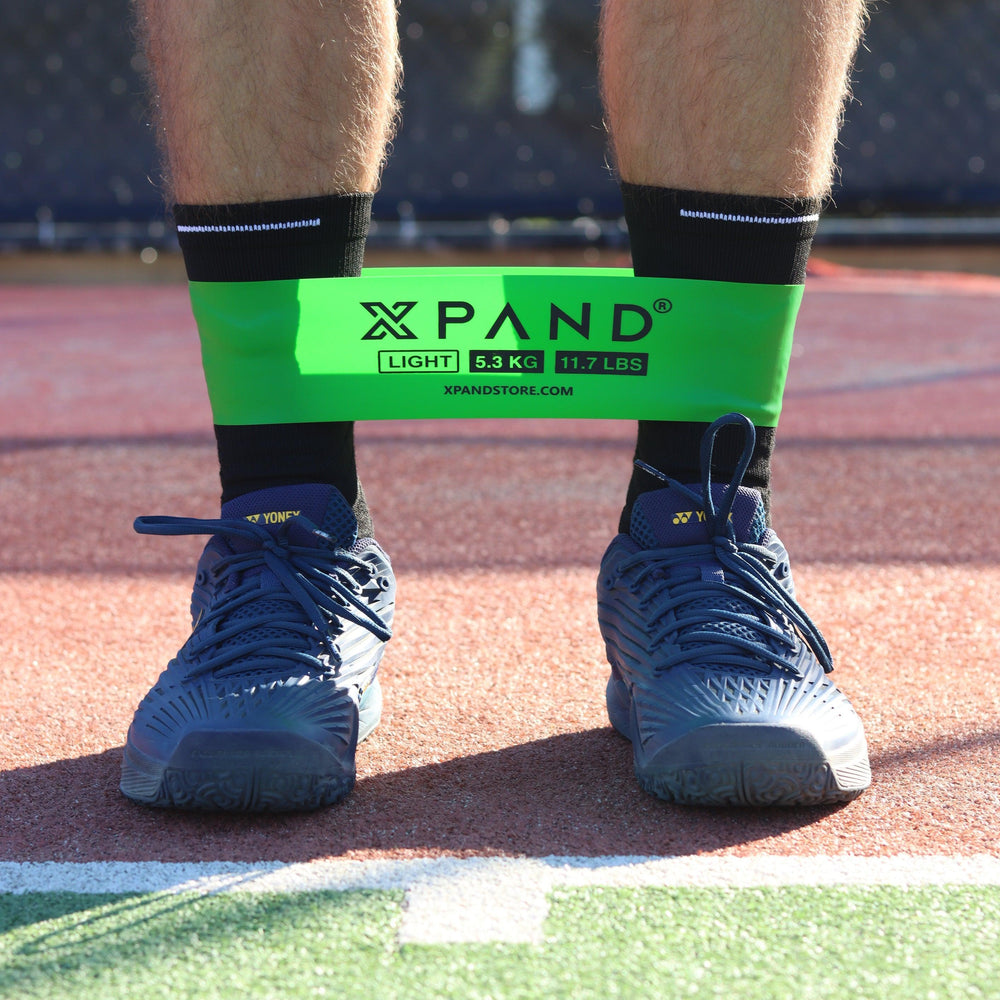
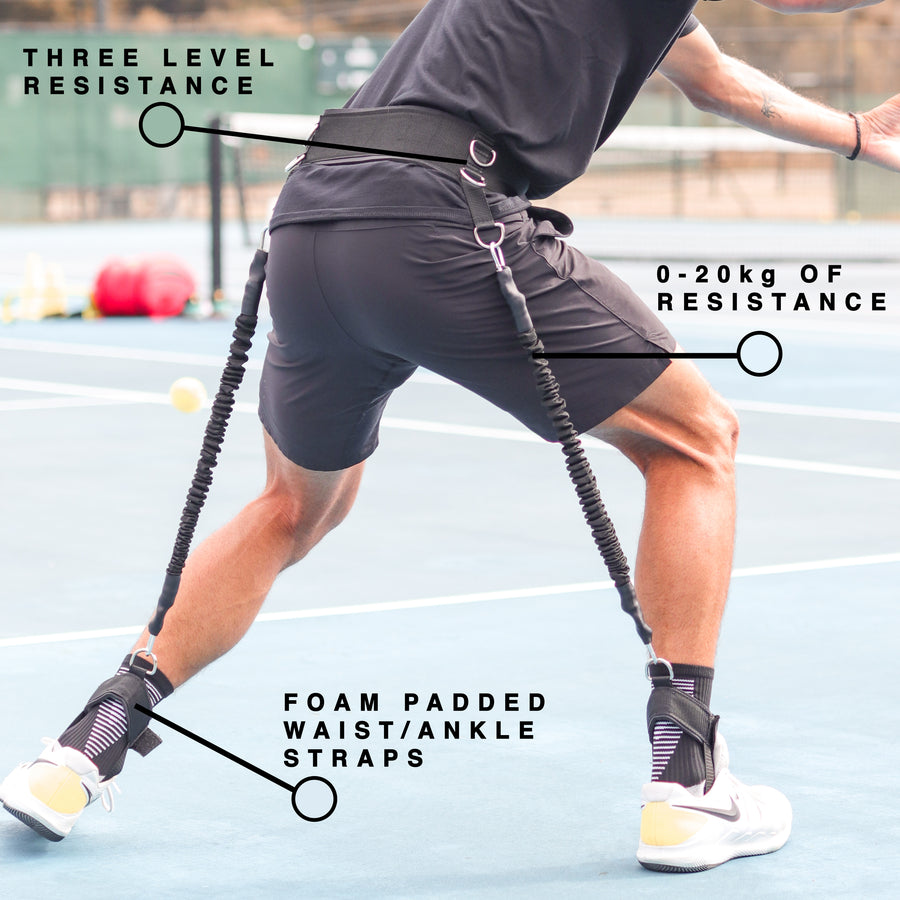
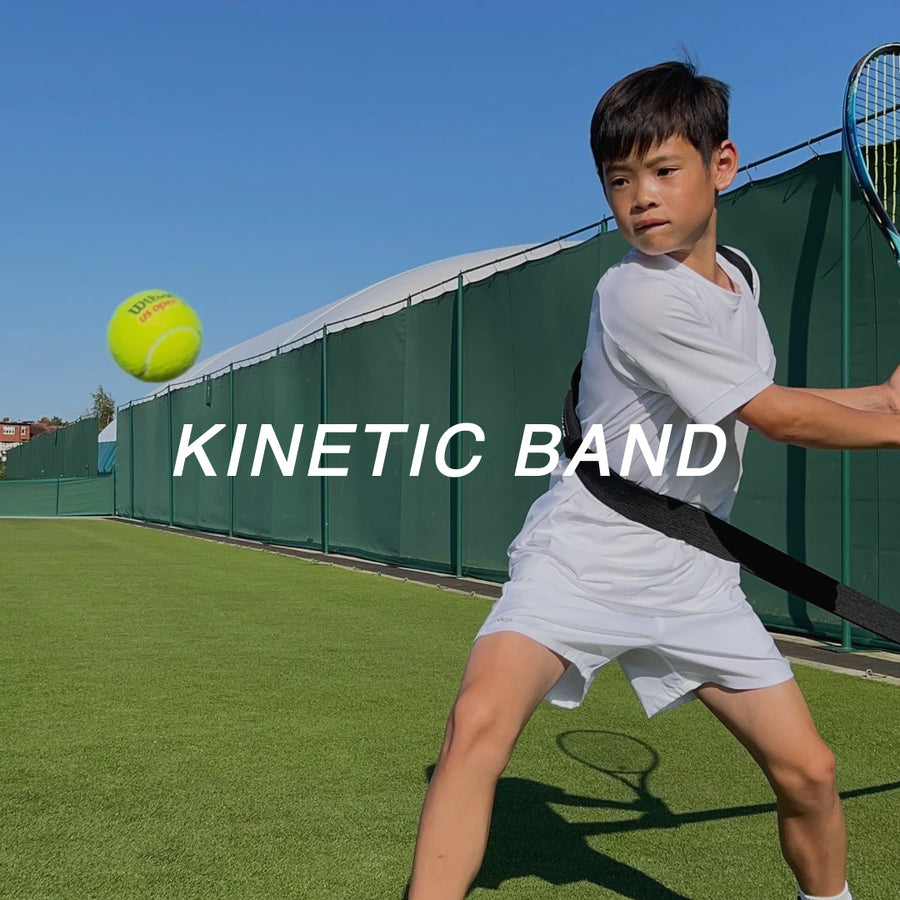
For rotational power, resistance-based hip loading drills are your best investment. Training the hips to drive force into rotation, rather than letting the upper body compensate, is what creates effortless-looking power. The Kinetic Band is built specifically for this. It loads torsional force production through the hips during movement, teaching your body to unlock rotation naturally rather than muscle through shots. Use it during shadow swings, lateral shuffles, and low groundstroke patterns to start feeling the difference quickly.
For movement quality, agility ladder work, lateral bounds, and reactive footwork drills are far more useful than treadmill running. Focus on the quality of each movement rather than the volume. Sharp, clean mechanics at lower speed transfer to the court. Sloppy reps at high speed do not.
For postural stability, single-leg balance work, low stance holds, and anti-rotation core exercises build the foundation that keeps your technique intact when the match gets tight. These are unsexy sessions. They are also the ones that pay dividends longest.
Connecting Off Court Work to On Court Results
The measure of any off court training programme is what happens when you step back onto the court. Not how tired you felt in the gym. Not how many exercises you completed. What actually changes in your game.
Players who commit to proper rotational training start noticing their smashes travel faster with less effort. Their cross-court drives feel more natural. Their opponents start commenting on the weight of the ball. These are not random improvements. They are direct outcomes of the physical qualities being trained.
Players who invest in movement quality start arriving to balls earlier. They have time to set up properly instead of scrambling. Their footwork becomes a quiet advantage rather than a constant liability.
The players who progress fastest in padel are not always the most naturally gifted. They are the ones who take their off court habits seriously and connect every training decision to a real performance outcome.
If you are ready to build that kind of foundation, start with what will move the needle most: your rotational power and hip drive. Everything else builds from there.