


Tennis Elbow Prevention Exercises Every Club Player Should Know
Tennis Elbow Prevention Exercises Every Club Player Should Know
You feel it first as a dull ache on the outside of your elbow. Then it sharpens on backhand contact. Then it starts showing up when you open a door. Tennis elbow does not arrive all at once. It builds slowly, quietly, and by the time most players take it seriously, they are already weeks behind.
The frustrating part is that tennis elbow is rarely about the elbow itself. It is a load management problem. The forearm extensors, which run from your fingers up to the lateral epicondyle, are being asked to absorb more stress than they can handle. That happens when technique is off, grip tension is too high, or the supporting muscles simply have not been trained to share the load.
Prevention is not complicated. But it does require consistency. These are the exercises that actually matter.
Why Most Players Ignore the Warning Signs
Club-level players tend to push through early discomfort because the pain is manageable. You tape it, you warm up longer, and you keep playing. That approach works right up until it does not.
The tissue around the lateral epicondyle has a limited blood supply, which means it heals slowly and degrades quietly. Ignoring mild symptoms for a few weeks can turn a minor overuse issue into a partial tendon tear that sidelines you for months.
The smarter move is to treat prevention like training. Build resilient forearms and shoulders before pain shows up, not after.
The Core Tennis Elbow Prevention Exercises
These four movements address the root causes directly. They are not complicated. They require no gym and take less than fifteen minutes. What they require is regularity.
Eccentric Wrist Extension. Hold a light dumbbell or a full water bottle with your palm facing down, forearm resting on your thigh. Use your other hand to lift the weight up, then slowly lower it back down using only the working hand. The lowering phase, which should take three to four seconds, is where the adaptation happens. Three sets of fifteen repetitions, three times per week. This single exercise has more research behind it than almost anything else in tennis elbow rehabilitation and prevention.
Wrist Flexion and Extension Curls. Using the same light load, perform slow, controlled curls in both directions. Palm up for flexion, palm down for extension. This builds balanced strength through the full range of the forearm, which reduces the muscle imbalances that contribute to overload at the elbow.
Forearm Pronation and Supination. Hold a hammer or a similarly weighted object at the handle end. With your elbow bent at ninety degrees, rotate your forearm from palm-up to palm-down in a slow, controlled arc. This trains the rotational capacity of the forearm, which matters enormously on topspin groundstrokes and serves where the racket face turns through contact.
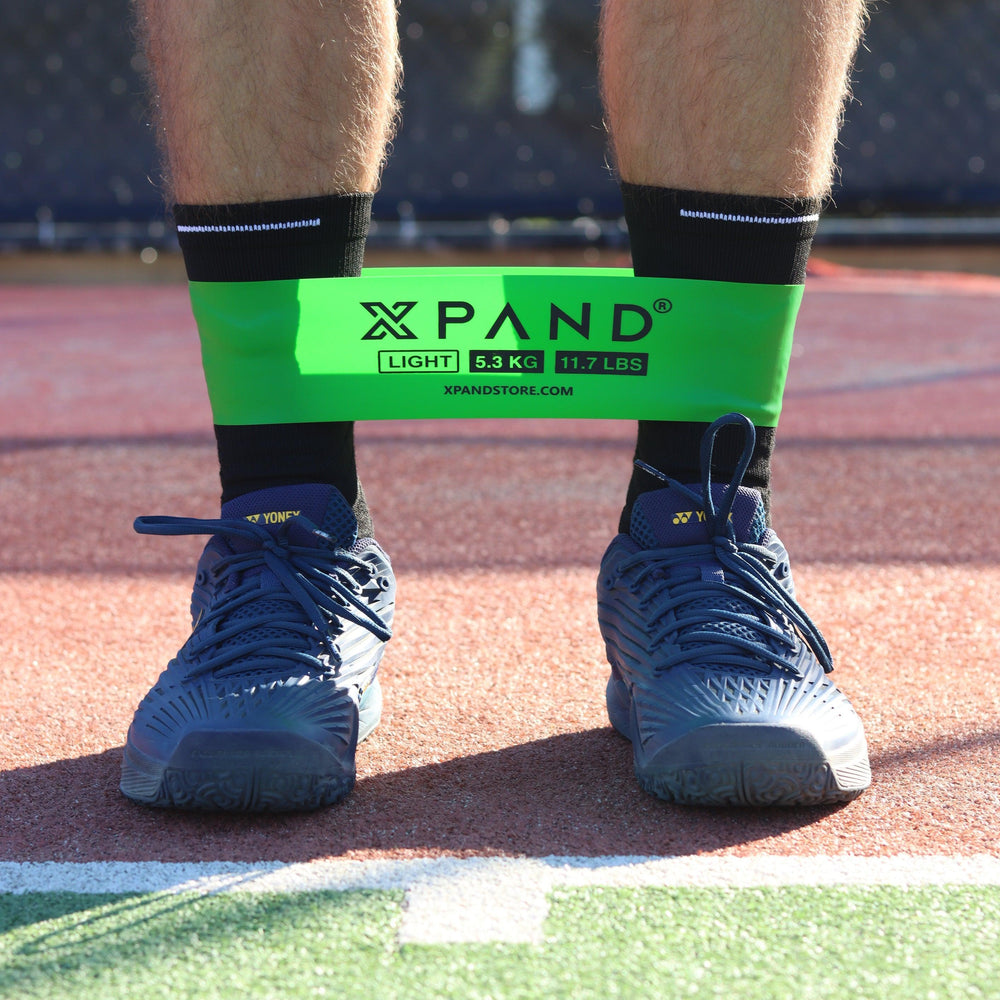
Shoulder External Rotation. Using a light resistance band, keep your elbow tucked at your side and rotate your forearm outward against resistance. This one surprises players who have never connected shoulder stability to elbow pain. When the rotator cuff is weak, the arm cannot decelerate properly after contact, and the stress travels down the kinetic chain to the elbow. Strengthening the shoulder changes that equation.
Grip Tension Is Quietly Making Things Worse
Many players grip their racket far too tightly, especially under pressure. A white-knuckle grip creates constant tension in the forearm extensors from the first point to the last. Over time that accumulated tension is exactly the kind of chronic load that damages the lateral epicondyle.
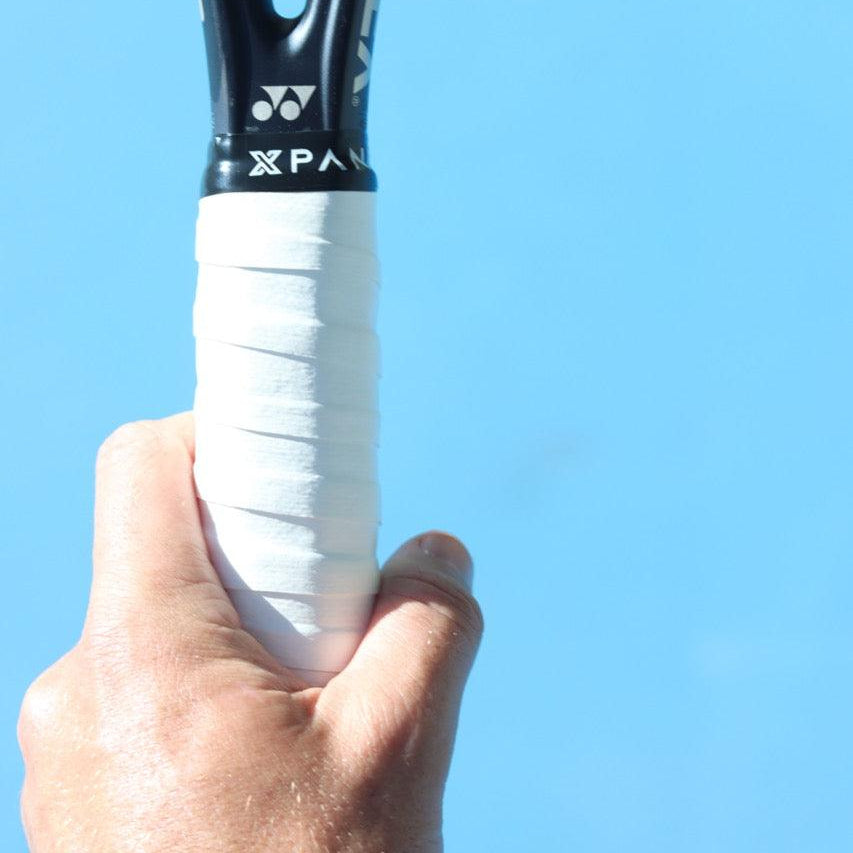
Part of the solution is technique. A relaxed grip that firms up only at the moment of contact reduces the total stress on the forearm significantly. But grip feel plays a role too. When your racket handle is slippery or uncomfortable, your hand compensates by gripping harder than it needs to.
Players dealing with sweaty hands or worn-down grips often find that switching to Finger Tape gives them the feel and control they need without having to squeeze. When you trust the connection between your hand and the racket, you stop fighting it. That small change in grip tension, maintained across hundreds of strokes per session, adds up to a meaningful reduction in forearm fatigue and elbow stress.
Consistency Beats Intensity Every Time
The mistake most players make with injury prevention is treating it like a course of treatment. They do the exercises for two weeks, feel fine, and stop. Then six months later they are back to square one with a flare-up.
Tennis elbow prevention is ongoing maintenance, not a fix. The forearm extensors need regular loading to stay resilient. The shoulder needs to stay strong enough to protect what is downstream. The grip needs to stay controlled enough to avoid accumulating unnecessary tension through the kinetic chain.
None of this is dramatic. It just needs to be done.
Build the exercises into your warm-up or cooldown two to three times a week. Pay attention to how your elbow feels during and after sessions. If discomfort returns, reduce load and add volume. If it persists, see a physiotherapist before continuing to play through it.
Your elbow is not the enemy. It is a signal. The players who last longest on court are the ones who learn to listen to it early, train around their weak points proactively, and treat recovery as seriously as they treat practice. Start there, and the rest follows.