


Tennis Agility Training: Why Most Players Are Building Speed on a Broken Foundation

Tennis Agility Training: Why Most Players Are Building Speed on a Broken Foundation
You've done the ladder drills. You've put in the split-step reps. You've watched the footwork videos and tried to apply them on court. Yet when a heavy ball lands deep to your backhand corner, your body still doesn't respond the way it should. You feel a half-second behind. You reach instead of drive. You recover late.
This isn't a fitness problem. For most club-level and competitive players, it's a movement quality problem. And no amount of conditioning work will fix it until the root cause is addressed.
The Difference Between Looking Agile and Being Agile
Tennis agility training is one of the most misunderstood areas of player development. Most players associate agility with speed, which leads them to train speed. They run faster. They drill harder. They add resistance bands and cone patterns to their warm-up routine.
But agility in tennis isn't just about how fast your feet move. It's about how quickly and accurately your body can change direction under pressure, from a position of genuine athletic readiness. That requires a stable base. It requires your hips, knees and ankles to be loaded correctly before you push off. Without that, speed actually works against you.
When your body isn't in a proper athletic stance, moving faster only amplifies the problem. You overshoot. You lose balance mid-rally. You can't transfer energy cleanly through your shots because your base was compromised before you even started moving.
What Reactive Agility Actually Demands From Your Body
A professional player makes between 300 and 500 direction changes in a single match. Each one begins with a split-step, a small explosive movement timed to the opponent's contact. The split-step only works if the landing position is correct. Hips back, weight forward, knees aligned, centre of gravity low and ready to redirect.
Most players know what this position should look like. Far fewer can consistently reproduce it at match speed, under fatigue, on the third set of a tough match. The body defaults to habit. And if the habit is a high, passive stance with weight on the heels, that's exactly what happens when it matters most.
This is where training intent becomes critical. Drilling footwork patterns without addressing your default body position is like painting over a crack in the wall. It looks fine until the pressure builds.
Effective tennis agility training must train the position, not just the pattern.
How RNT Changes the Way Your Body Learns to Move
Reactive Neuromuscular Training, known as RNT, is a methodology built around using external force to trigger your body's automatic correction response. Rather than consciously thinking about your position, RNT creates a stimulus that forces your neuromuscular system to self-correct in real time.
This is significant for tennis players because the sport gives you almost no time to think. Decisions happen in fractions of a second. That means your movement mechanics need to be ingrained at a subconscious level, not recalled from a coaching cue you heard six months ago.
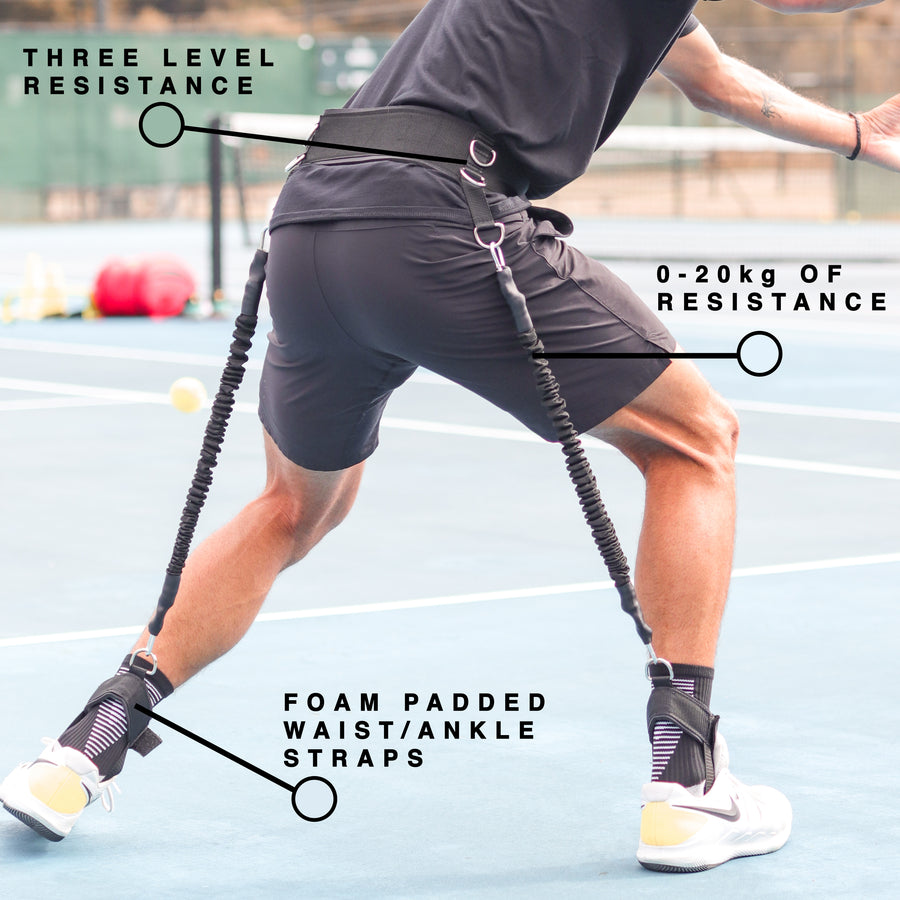
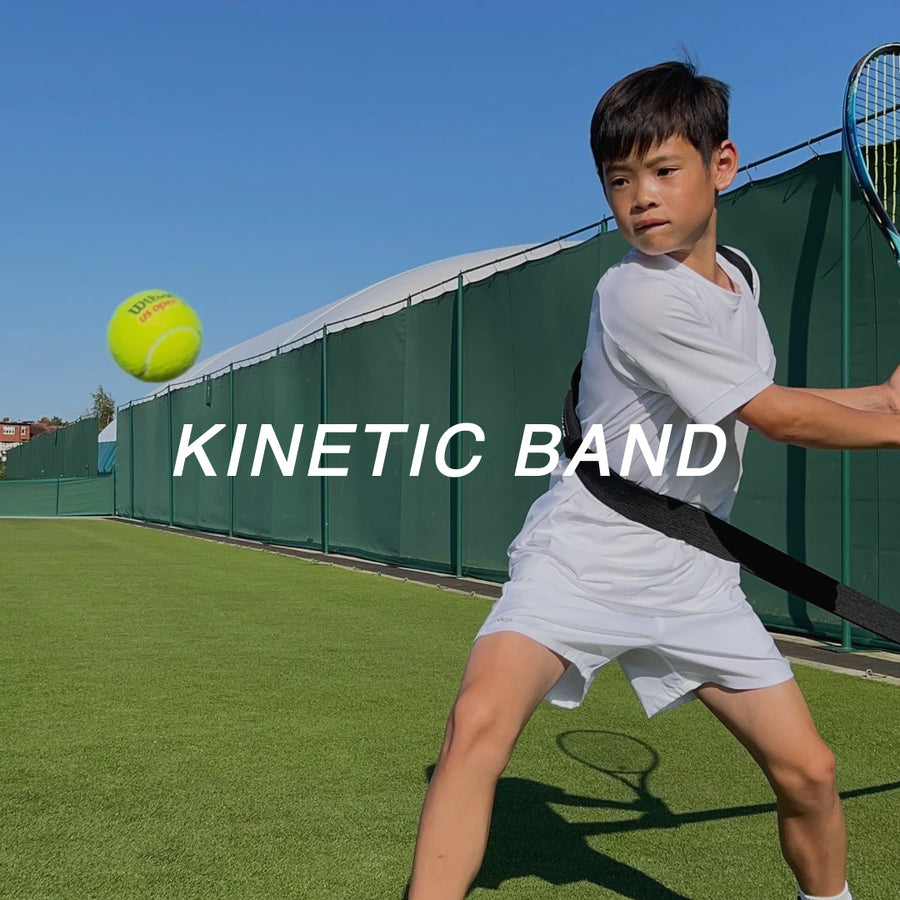
The Gravity Belt 2.0 is built on this principle. By applying a calibrated horizontal load through your centre of mass during movement drills and on-court practice, it constantly challenges your body to maintain the correct athletic position. When you shift into a passive or compromised stance, the belt makes that immediately apparent. Your body learns to correct, and over time that correction becomes automatic.
Players who train with the Gravity Belt 2.0 aren't just improving their footwork patterns. They're reprogramming their default movement mechanics so that match conditions, where there's no time to think about posture or position, no longer expose the same weaknesses.
Building a Tennis Agility Training Routine That Transfers to Match Play
The goal of any serious agility programme is transfer. Every drill you do in training needs to show up under pressure on court. Here's how to approach that with more intention.
Start with position, not speed. Before any agility drill, establish what the correct athletic ready position feels like for your body. Low hips, weight through the balls of your feet, knees soft and tracking over your toes. Spend time here. Then add movement.
Train direction changes, not just straight-line speed. Tennis agility is multidirectional. Include lateral shuffles, diagonal drives, drop steps and recovery patterns in every session. The split-step to first-step sequence deserves specific attention because it appears in almost every point you play.
Introduce load progressively. Tools like the Gravity Belt 2.0 allow you to add challenge to your movement drills without compromising technique. The resistance keeps your body honest, which is exactly what you need to build the kind of automatic positioning that holds up in a third-set tiebreak.
Connect footwork to stroke production. Agility doesn't end when you reach the ball. Your court position on arrival directly affects your ability to execute the shot and recover. Practise arriving in balance, not just arriving quickly.
Movement Quality Is the Competitive Edge Most Players Ignore
Serious tennis players invest heavily in their technique, their tactics and their physical conditioning. Very few invest with the same intention in how their body actually moves between shots. That gap is where matches are won and lost.
Tennis agility training done properly isn't about adding more to your schedule. It's about making every movement rep count. It's about building a foundation that holds under pressure, because the players across the net are applying exactly that kind of pressure.
If your movement feels inconsistent or your first step is slower than it should be, the answer likely isn't more fitness work. It's better movement mechanics, trained in a way that your nervous system actually retains.
Explore how the Gravity Belt 2.0 supports this kind of training at xpand.com and take a more structured approach to the part of your game that underpins everything else.