


Tennis Posture Tips That Actually Translate to Better Performance on Court

Tennis Posture Tips That Actually Translate to Better Performance on Court
You've hit thousands of balls. Your technique feels solid in practice. But under pressure, something breaks down. Your shots lose depth. Your movement feels a step slow. Your coach keeps telling you to stay low, stay ready, stay balanced. And yet the moment a fast ball comes at you, the body does what it wants.
This is not a technique problem. For most club-level and competitive players, it is a posture problem.
Poor athletic positioning in tennis is one of the most common and most overlooked performance limiters at every level. It doesn't show up on a scoreboard directly. But it shows up in every late contact point, every shanked return, every time you feel rushed by a ball you should have handled.
The good news: posture is trainable. These tennis posture tips are built around how your body actually learns and holds position under pressure.
Why Tennis Posture Is Different From Everyday Posture

When people think about posture, they picture standing up straight. Tennis posture is something else entirely. It is a dynamic, loaded, athletic position that has to be maintained while you're moving, reading the ball, and preparing to strike.
The foundation of good tennis posture is what coaches call the athletic ready position: slight hip hinge, soft knees, weight distributed through the balls of your feet, spine neutral and tall. From this position, you can move in any direction efficiently. You can rotate into groundstrokes with power. You can absorb pace and redirect it.
When this position collapses, everything downstream suffers. A rounded upper back limits shoulder rotation. A locked hip limits your ability to load into shots. Standing too tall slows your first step and raises your centre of gravity at exactly the wrong moment.
The challenge is that your body reverts to its default under stress. If your default is poor positioning, pressure will expose it every time.
The Most Common Posture Faults and What They Cost You
There are three posture faults that appear repeatedly in club-level and competitive tennis players. Each one has a direct performance cost.
Anterior pelvic tilt. This is when the hips tip forward and the lower back arches excessively. It compresses the lumbar spine and disengages the glutes, which are the primary power source in almost every tennis movement. Players with this fault often feel like their shots lack pace even when their swing looks correct.
Rounded upper back. Thoracic kyphosis, the technical term, limits shoulder external rotation. For a player trying to generate topspin or serve with proper shoulder turn, this is a serious ceiling on power and consistency.
Upright stance during rallies. Many players unconsciously stand too tall between shots. It feels comfortable. But it means every ball requires you to drop your level reactively rather than being already loaded. You end up playing from behind the ball rather than through it.
Identifying your fault is the first step. But awareness alone rarely fixes the problem during live play.
How to Train Correct Positioning So It Sticks Under Pressure

This is where most posture advice falls short. Telling a player to stay low or keep their spine neutral is useful information, but it doesn't change a motor pattern. You need the body to feel the correct position and learn to self-correct automatically.
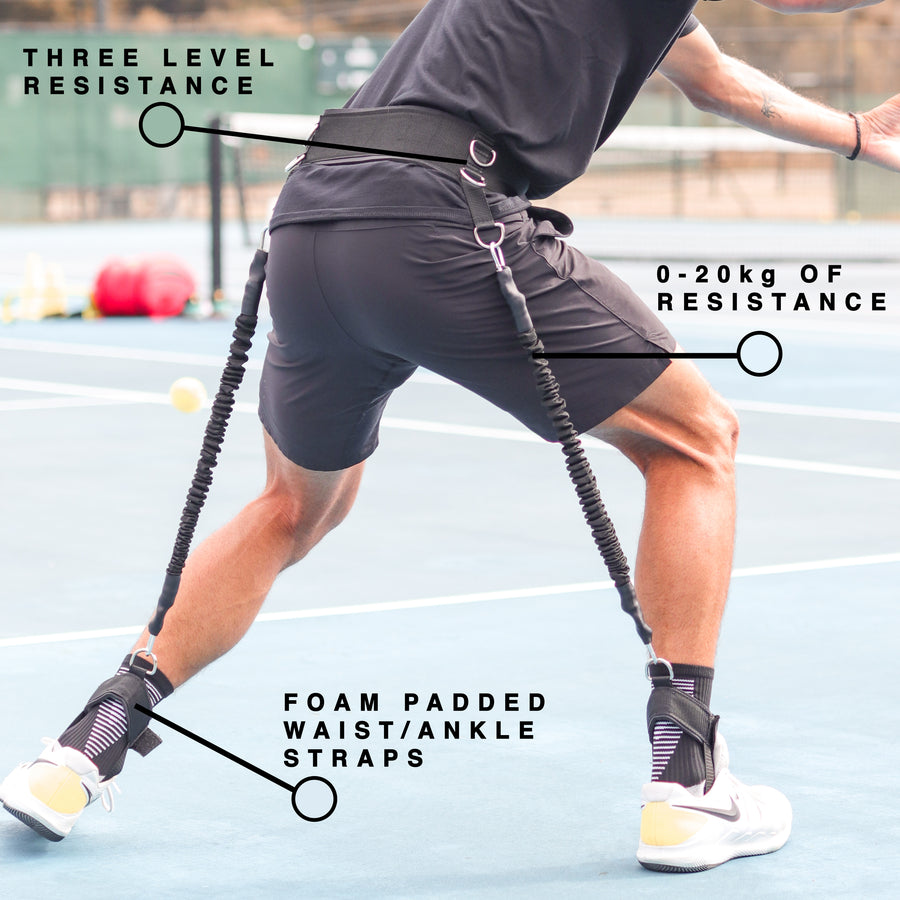
Reactive Neuromuscular Training (RNT) is one of the most effective methods for this. The principle is simple: apply a gentle external force that amplifies the fault, so the body instinctively corrects to find balance and stability. Over time, that correction becomes automatic. The brain builds a new default.
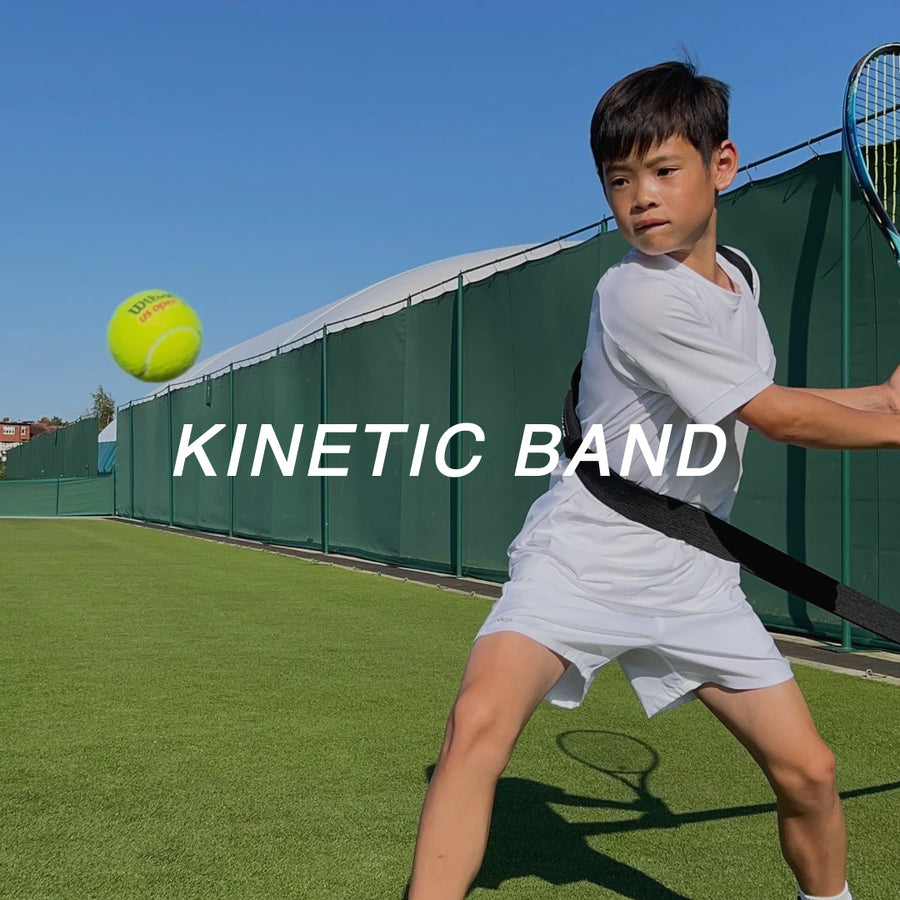
This is the approach behind the XPAND Gravity Belt 2.0. Worn during on-court or movement training sessions, it creates proprioceptive feedback through resistance that pulls against poor positioning. When your hips shift out of the athletic stance, you feel it immediately. The body responds. The correction happens without conscious thought, which is exactly how motor patterns need to be trained if they are going to hold up during a competitive match.
Beyond RNT-based tools, there are specific practices worth building into your training:
Hip hinge drills before every session. A simple bodyweight Romanian deadlift movement, performed for two sets before you hit, reinforces the loaded hip position your groundstrokes depend on.
Split-step posture checks. During shadow footwork drills, pause at the split-step and consciously verify your position. Soft knees, hips loaded, weight forward. Repeat this enough times and it begins to automate.
Video review. Film yourself from the side during a practice match. The difference between what you think your posture looks like and what it actually looks like is often significant. Seeing it clearly accelerates the correction process.
Making Posture a Long-Term Performance Habit
Posture improvements in tennis are not quick fixes. They are adaptations. They require consistent, deliberate repetition across weeks and months of training. But the return on that investment is substantial.
Players who train correct positioning report more consistent ball striking, better court coverage, reduced injury rates particularly in the lower back and knees, and a greater sense of control under pressure. These are not small gains. They are the kind of improvements that change where you sit in your club rankings or how you perform in the third set of a tough match.
The players who plateau are usually the ones who keep adding technical complexity without addressing the foundational issue. Posture is the foundation. Everything else is built on top of it.
If you are serious about moving better and playing more consistently, start here. Build the habit in training, use the right tools to reinforce it, and let your body learn what correct really feels like.
The XPAND Gravity Belt 2.0 was designed specifically to support this kind of deep, lasting postural training for racket sports players. If you want to understand how reactive neuromuscular feedback can accelerate your development on court, explore what it does and how players are using it in their practice.