


Resistance Training for Tennis Players: How to Build Power That Actually Shows Up on Court

Resistance Training for Tennis Players: How to Build Power That Actually Shows Up on Court
Most club-level players who hit the gym are working hard. They're doing the squats, the lunges, the cable rows. But then they step on court and nothing feels different. Their serve is the same speed. Their groundstrokes still fade in the third set. Their footwork still breaks down under pressure.
The problem is rarely effort. It's transfer. General resistance training builds muscle. Tennis-specific resistance training builds the kind of strength your body can actually access mid-rally, at pace, under fatigue. These are very different things.
Why Generic Strength Training Falls Short for Tennis

Tennis is a rotational, multidirectional sport played in short explosive bursts. The movements are asymmetric, reactive and rarely follow a straight line. A conventional gym programme built around bilateral, slow-tempo lifts does develop base strength. But it doesn't teach your body to produce force quickly, or to express that force through the specific patterns tennis demands.
Think about what actually happens on a tennis court. You push off laterally from a split-step. You load your hip and rotate through the ball. You decelerate hard to recover position. None of those movements look like a leg press or a seated cable row. If your training never mimics those demands, your strength stays locked inside the gym.
Effective resistance training for tennis players has to bridge that gap. It needs to develop raw strength and teach the body to use it in athletic, sport-specific ways.
The Role of Hip Drive and Rotational Force in Every Shot
Ask any coach where tennis power comes from and they'll tell you the same thing: the ground up. Legs, hips, core, arm. In that order. The problem is most players understand this intellectually but don't train it that way.
Rotational force production is the engine behind every groundstroke and every serve. When your hips are restricted, stiff or simply untrained to fire in sequence, your arm has to compensate. You end up muscling the ball instead of swinging through it. The result is inconsistency, reduced pace and higher injury risk in the shoulder and elbow.
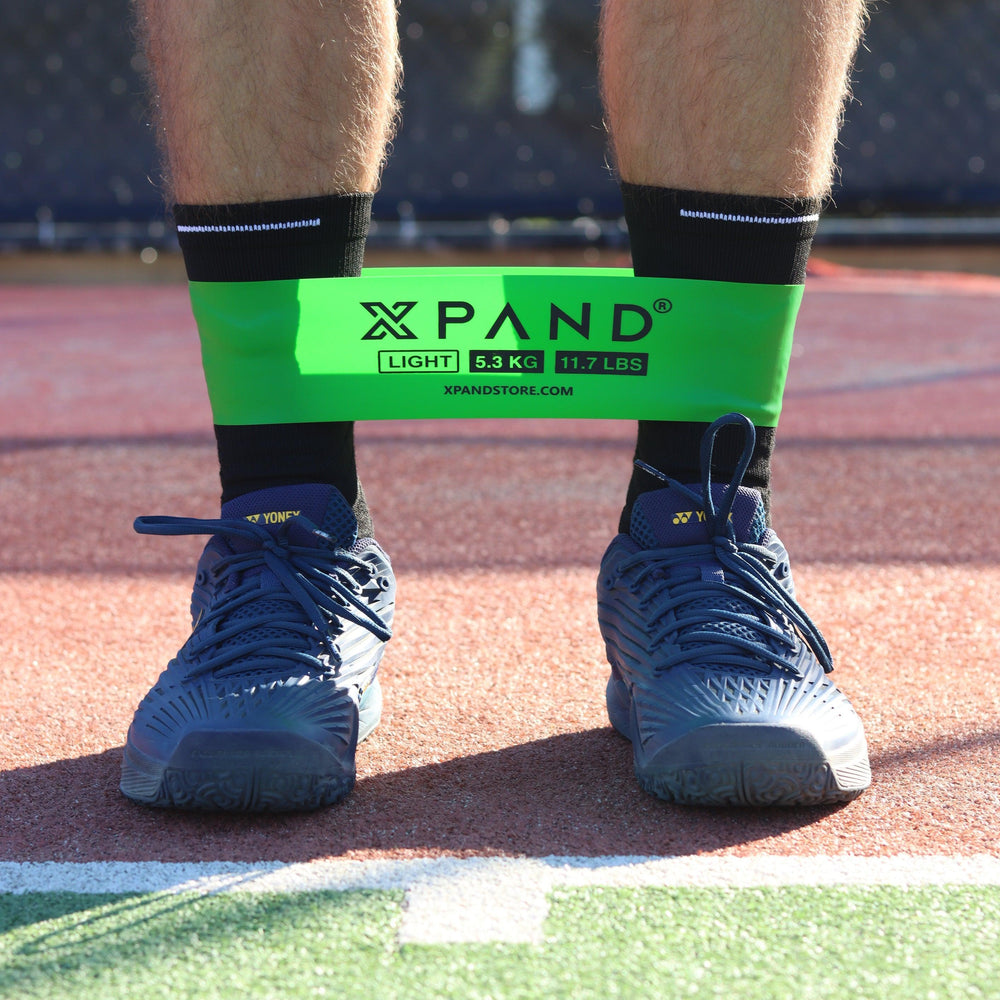
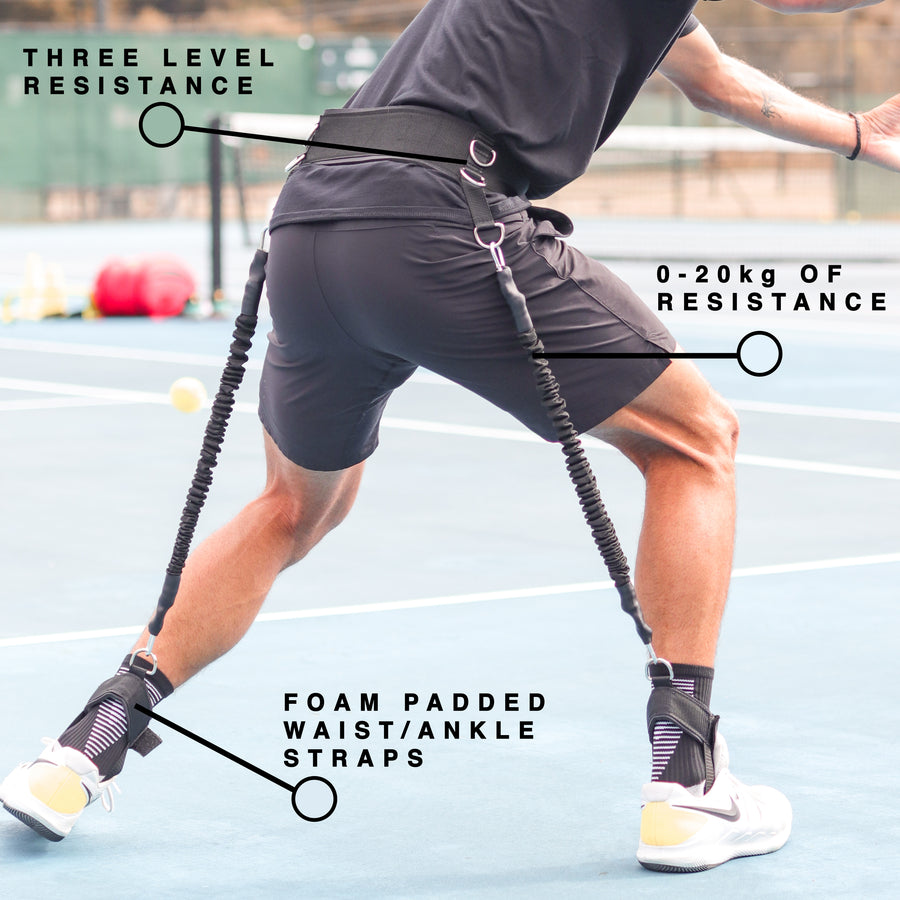
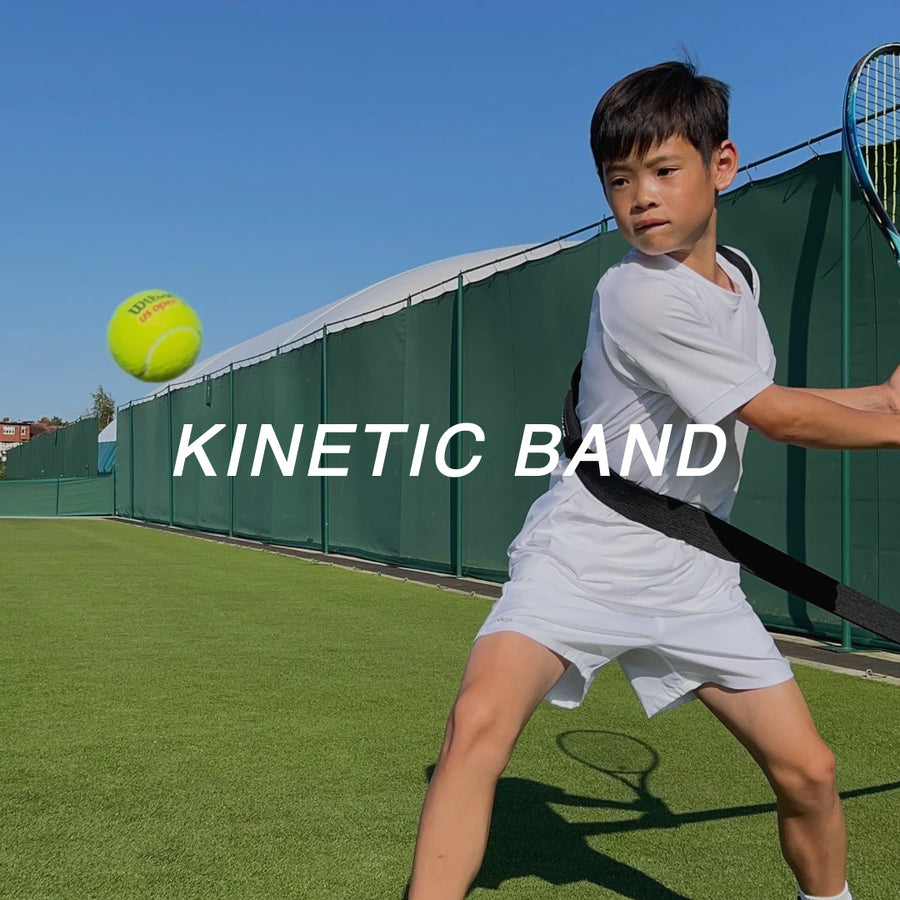
This is exactly the gap the Kinetic Band is designed to close. It trains torsional force production directly, placing resistance around the hips and pelvis to teach your body to engage and sequence the rotation that generates effortless power. Used consistently in training, it builds the neural patterns that make hip drive automatic. Players who add it to their resistance work often notice the difference in their groundstrokes within weeks, not because they're swinging harder, but because they're finally swinging correctly.
Building a Resistance Training Programme Around Tennis Demands

A well-designed tennis resistance programme has three priorities. First, it builds the posterior chain. Glutes, hamstrings and the muscles around the hip are the foundation of every explosive movement on court. Romanian deadlifts, single-leg work and hip hinge patterns all belong here.
Second, it develops rotational and anti-rotational core strength. This isn't crunches. It's Pallof presses, cable chops, landmine rotations. The core's job in tennis is to transfer force, not just produce it. Training it under load and through rotation reflects what it actually has to do during a match.
Third, it trains explosive force expression. Strength alone isn't enough. You need to produce that force quickly. This is where medicine ball work, trap bar jumps and resisted sprints come in. These exercises teach the nervous system to recruit muscle fast, which is exactly what you need when you're tracking down a wide ball and loading for a down-the-line winner.
The training week itself matters too. Two to three resistance sessions per week is typically the right volume for competitive club players, leaving enough recovery between sessions and between court time. Trying to layer heavy gym work on top of daily on-court sessions without structure leads to fatigue, not progress.
The Transfer Problem: Making Gym Gains Work on Court
Transfer is everything. You can build impressive numbers in the gym and still show up on court as the same player. The reason is usually that gym training and court training have been kept completely separate, never reinforcing each other.
The most effective approach integrates resistance stimulus with athletic movement. Using tools that apply resistance during sport-specific patterns rather than isolated exercises is one of the most efficient ways to accelerate transfer. This is the principle behind reactive neuromuscular training and why coaches who work with high-performance players have moved toward it.
It also means your warm-up and activation work matters. Getting the right muscles firing before you train or play, specifically the glutes, hips and core, means your resistance sessions actually reinforce correct movement patterns rather than building compensations.
Start With the Right Foundation
Resistance training for tennis players doesn't need to be complicated. It needs to be specific. Build the posterior chain. Train rotational power. Develop the ability to express that strength quickly. And find ways to bridge the gap between the gym and the court.
If your current training isn't showing up in your game, the answer isn't to train harder. It's to train with more intention about what tennis actually demands from your body.
Start there, and the court will start to feel very different.