


how to improve tennis footwork

How to Improve Tennis Footwork: The Foundations Serious Players Can't Ignore
You're hitting the ball well in practice. Your technique looks clean. But in a match, you're arriving late, reaching for balls you should be in position for, and recovering a step slower than you need to be. The problem isn't your swing. It's your feet.
Footwork is the element that separates players who look good hitting balls in a controlled environment from those who perform under pressure. And yet, most club-level players spend the majority of their training time on stroke mechanics, leaving movement almost entirely to chance. If you're serious about raising your level, that has to change.
Why Tennis Footwork Is More Than Just Speed
The instinct when addressing poor movement is to train faster. More ladder drills, more shuttle runs, more conditioning work. Speed matters, but it's rarely the core issue for competitive players. The real problem is usually positioning and balance at the moment of contact.
Elite movers in tennis share one consistent trait: they arrive at the ball early, set their base, and strike from a position of stability. They're not faster in a straight-line sprint. They're faster to the right position because their body reads the court better and their default athletic stance allows them to load and push efficiently in any direction.
This is the distinction between reactive movement and mechanical movement. Mechanical movement is drilled in isolation. Reactive movement is trained in context, where the body learns to respond to real stimulus without conscious thought. If your footwork only works when you're thinking about it, it isn't trained deeply enough.
The Three Components of Elite Court Movement
1. The ready position. Everything starts here. Your weight should be forward on the balls of your feet, knees slightly bent, hips hinged. A flat-footed ready position is the single most common reason players are slow to the first step. From a passive stance, there's a measurable delay before your body can generate lateral push. From an active, loaded stance, that push is immediate.
2. The split step. Timed correctly, the split step is what converts your opponent's contact into your movement. Land just as they strike the ball, stay light, and your body can redirect instantly. Land too early or too late and you've lost the advantage before the ball has even crossed the net. Most players know they should split step. Far fewer do it consistently in match play under pressure.
3. Recovery. Getting to the ball is only half the equation. Where you recover to, and how quickly, determines whether you're defending the next shot or dictating it. Poor recovery footwork is often invisible until a player is already in trouble, pulled wide, off balance, and scrambling. Deliberate recovery training — returning to an optimal court position after every ball — builds the habit that makes a player difficult to break down.
How to Train Footwork That Actually Carries Into Matches
The challenge with footwork training is transfer. You can run ladders for months and see minimal improvement in how you move on court during a competitive point. The reason is that isolated footwork drills don't replicate the neuromuscular demands of actual play. Your body is responding to visual cues, managing balance under load, and making micro-adjustments in real time. Training needs to reflect that complexity.
A few approaches that produce real results:
Shadow movement with intentional positioning checkpoints. Move through patterns — side to side, in and out, diagonals — stopping at each endpoint to consciously check your stance. Are you balanced? Could you change direction again immediately? Are your hips low? Over time, the correct position becomes automatic.
Ball machine work with movement focus. Remove the cognitive load of an opponent and use ball machine sessions to drill specific movement patterns repeatedly. Focus entirely on the footwork, not the outcome of the shot.
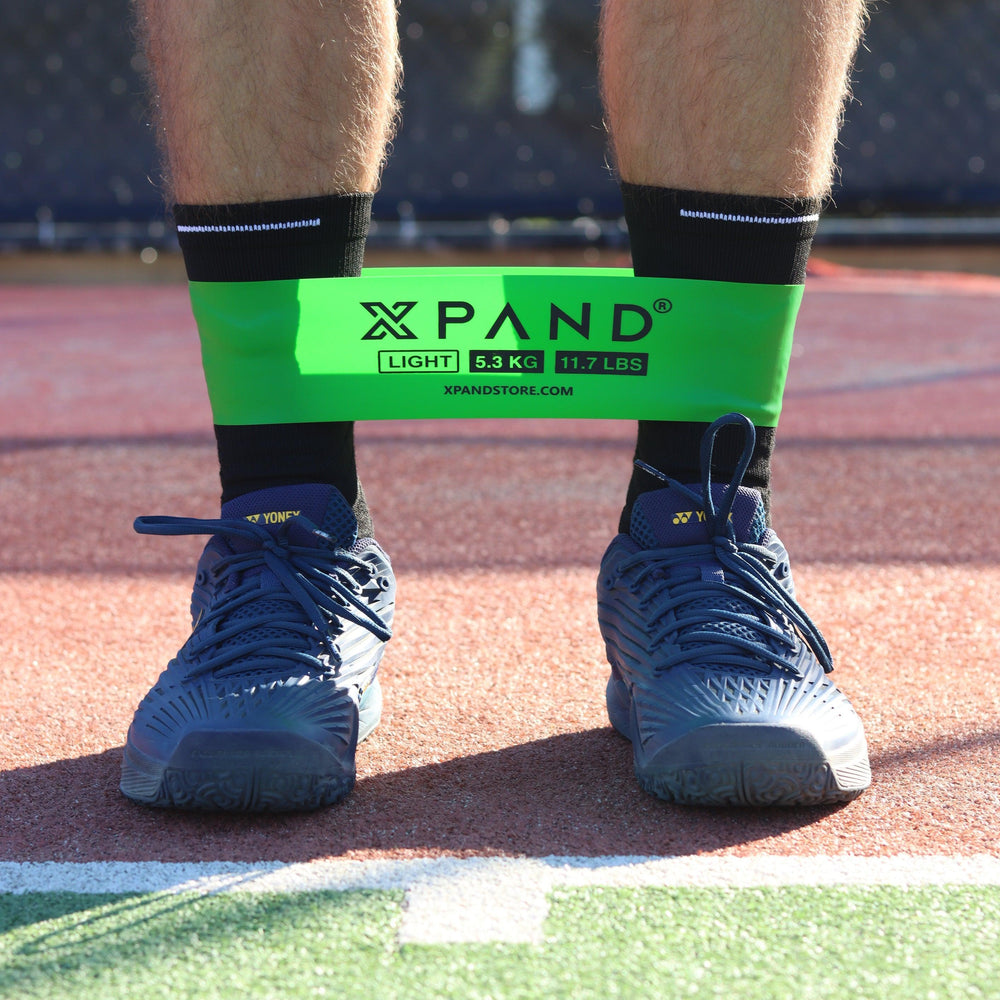
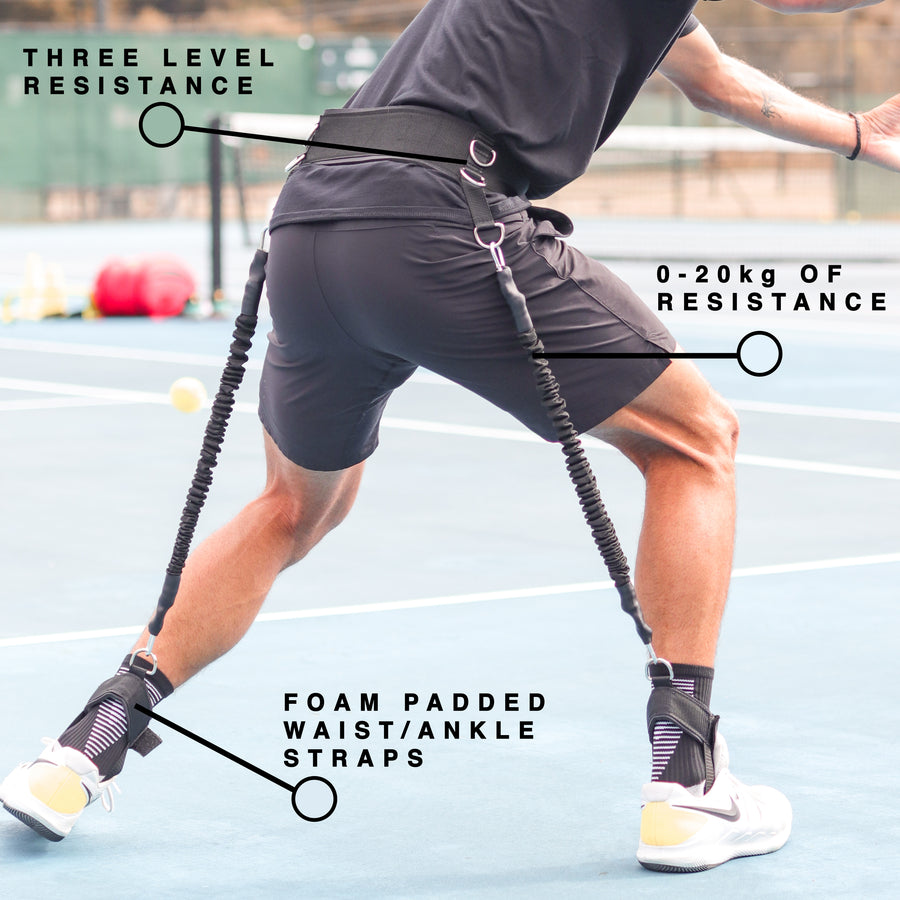
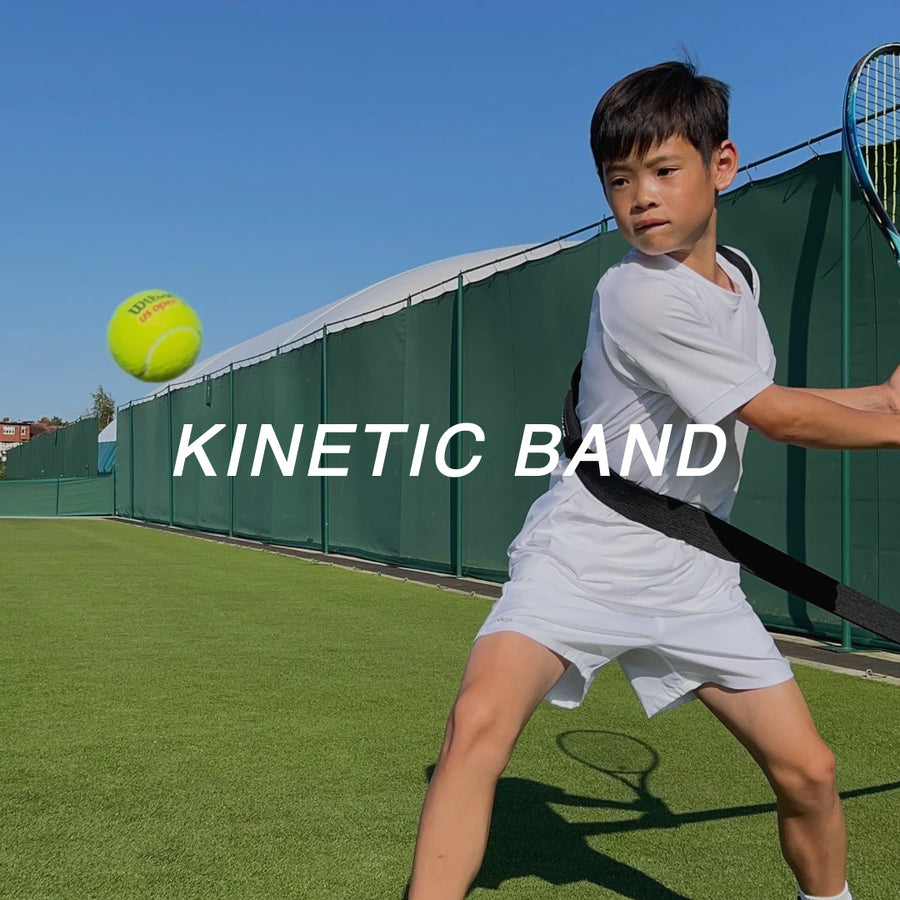
Resistance-based training for positional awareness. One of the more effective tools for building correct athletic positioning is Reactive Neuromuscular Training, or RNT. The principle is simple: apply light resistance that pulls the body out of correct alignment, forcing the neuromuscular system to actively resist and find the right position. The XPAND Gravity Belt 2.0 applies this principle specifically for racket sports, training the body to maintain a low, stable, ready position through resistance that mirrors the demands of real court movement. The result is a player who defaults to better positioning instinctively, not just when consciously thinking about it.
Match play with movement as the only metric. Play practice sets where the sole focus is footwork. You're not trying to win the point. You're tracking whether you split stepped, whether you recovered, whether you were balanced at contact. This retrains your attention during competitive situations.
The Long Game: Building Movement as a Weapon
Good footwork doesn't just prevent errors. It creates opportunities. A player who consistently arrives early has time to be selective with shot placement. They put pressure on opponents without hitting harder. They stay in rallies that should be lost. Over a three-set match, that margin compounds into something significant.
Movement is also one of the few elements of your game that degrades most visibly under physical and mental fatigue. Players who have trained their footwork at a deep, automatic level maintain quality when tired. Players who rely on conscious effort fall apart.
If you're serious about improving your level, footwork isn't a supplementary concern. It's foundational. Start with your ready position. Audit your split step. Train recovery deliberately. And build the kind of neuromuscular awareness that makes correct positioning your body's default, not an afterthought.
If you want to understand how the XPAND Gravity Belt 2.0 can support that training process, explore how Reactive Neuromuscular Training works and whether it fits where you are in your development.