


Pickleball Off Court Training That Actually Transfers to Your Game

Pickleball Off Court Training That Actually Transfers to Your Game
Most pickleball players plateau not because they stop playing, but because they never train the physical qualities that playing alone cannot develop. You can drill dinks for hours. You can grind out rec games every weekend. But if your hips are stiff, your base is unstable, and your rotational power is untrained, your ceiling stays exactly where it is.
Pickleball off court training is where serious players separate themselves. It is not about becoming an athlete in the gym for its own sake. It is about building the physical foundations that make every shot easier, every transition faster, and every long match feel manageable.
Why Pickleball Demands More Than You Think

The sport looks compact. The court is small, the paddle is light, and the ball travels at a fraction of the speed of a tennis ball. But watch a high-level pickleball match and you see something different. You see explosive lateral bursts, rapid direction changes, deep athletic stances held at the kitchen line, and rotational power generated from the ground up on every drive.
The physical demands are real. Weak hips mean lost power on groundstrokes and drives. A high, upright stance means slow reactions and missed volleys. Poor rotational mechanics mean arm-heavy shots that fatigue quickly and never quite have the pace you want. These are physical problems. They need physical solutions, and those solutions happen off the court.
Build Rotational Power From the Ground Up
The most common misconception in pickleball is that power lives in the arm and wrist. It does not. It lives in the hips. Every effective drive, every aggressive third-shot drop that opens up the point, every overhead finish comes from torsional force that starts in the lower body and travels through the kinetic chain.
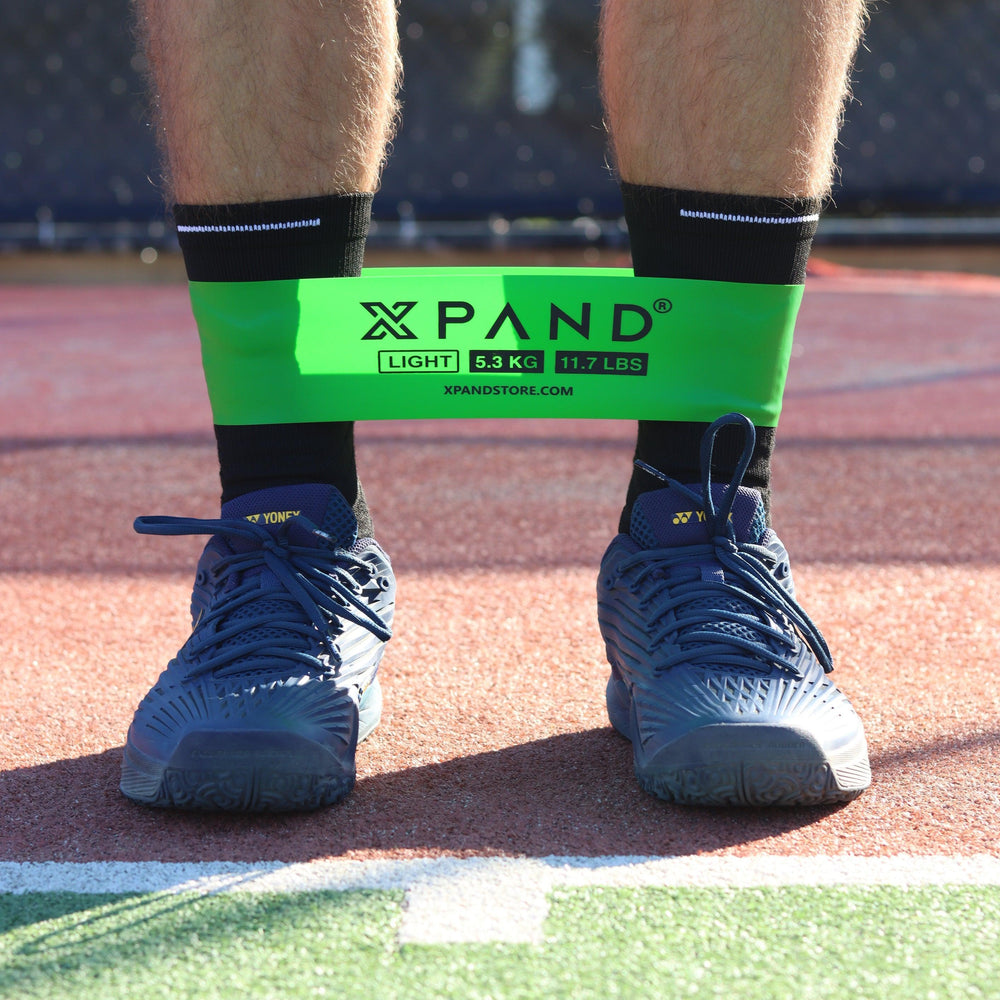
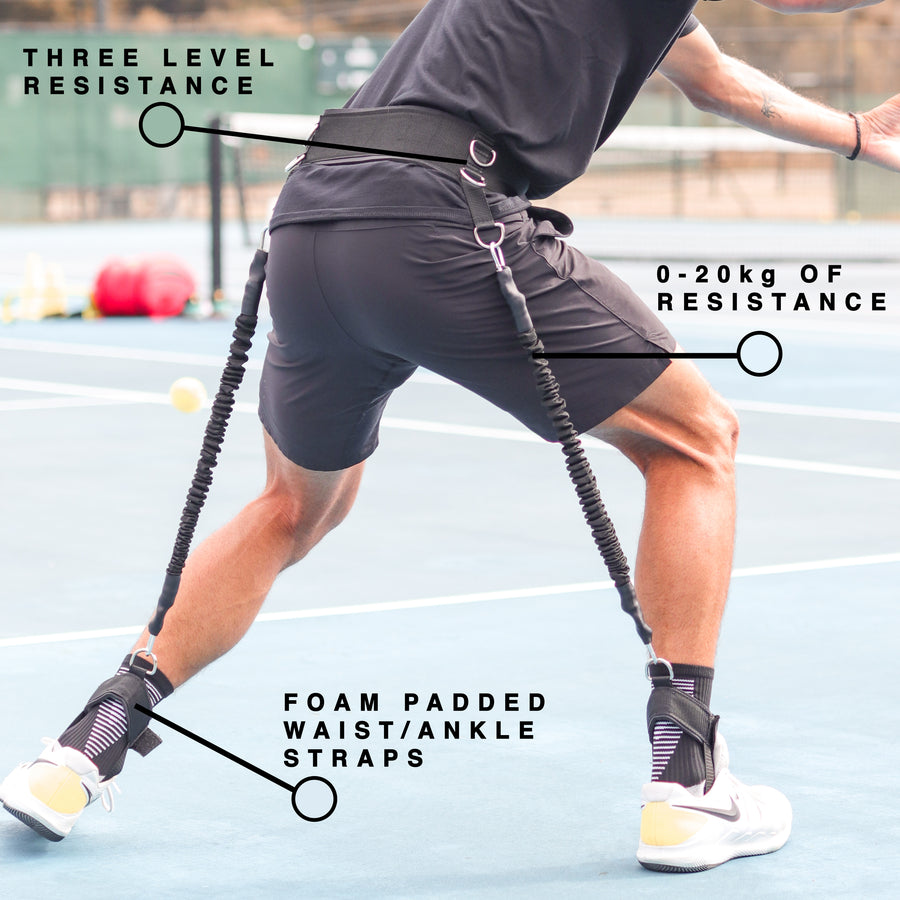
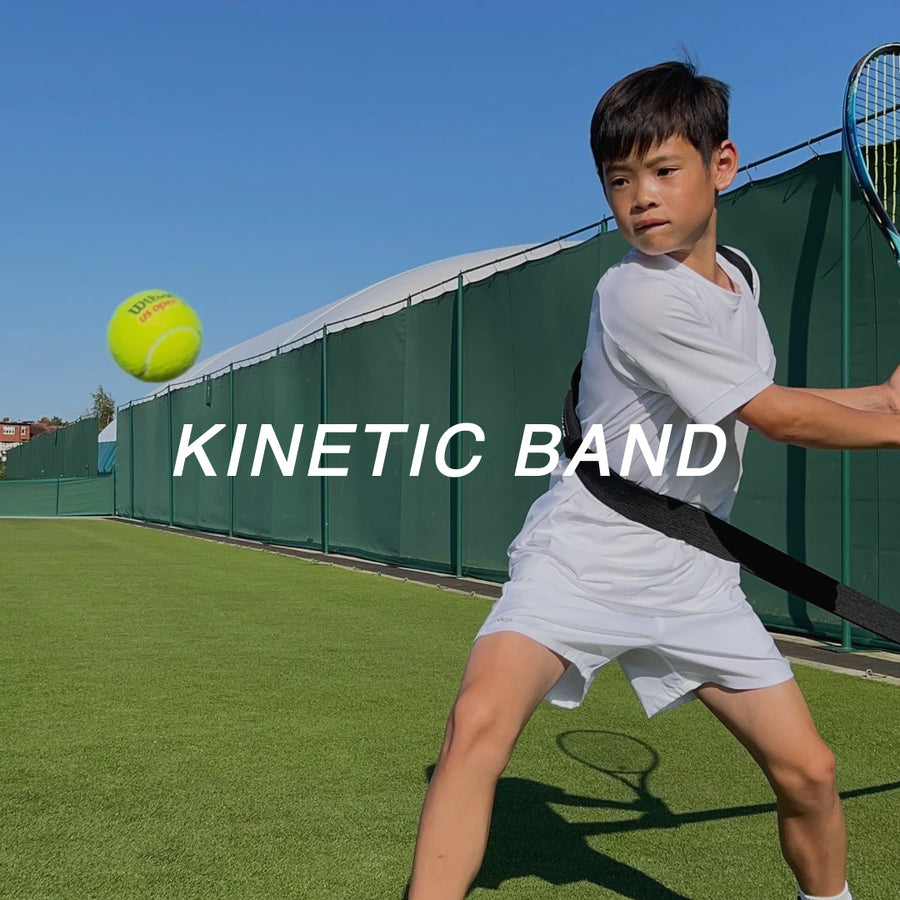
Off court, the goal is to train that chain deliberately. Hip mobility work, rotational medicine ball exercises, and resistance-based training that teaches the body to load and unload through the hips all contribute to this. One tool that translates directly is the Kinetic Band, which uses targeted resistance to unlock hip rotation and train the exact torsional mechanics that power your drives and serves. Players who use it consistently report that their shots stop feeling muscled and start feeling effortless, because the power source finally matches what the technique is asking for.
Pair that with bodyweight rotational drills, single-leg hip hinges, and lateral band walks, and you are building a foundation that the court cannot give you.
Stability and Stance: The Hidden Performance Variable

Kitchen line play is won and lost in milliseconds. The player who is already low, already balanced, and already ready to react will win that exchange almost every time. Stance is not a technique cue you remind yourself of mid-point. It is a deeply ingrained physical habit, and off court training is where you build it.
Stability training for pickleball should target the posterior chain, the glutes, the deep core, and the ankle complex. Think single-leg squats, stability ball work, and reactive balance drills that force the body to find and hold a low athletic position under pressure. The goal is to make that low, ready stance feel natural, not effortful.
This is also where court movement improves. Players who complain about being a half step slow are often dealing with a stability deficit, not a speed deficit. When your base is solid and your centre of gravity is controlled, your first step becomes sharper and your recovery between shots becomes cleaner.
Structure Your Off Court Week Around Transfer
The trap with off court training is doing work that feels productive but never shows up in your game. The fix is to train with transfer in mind at every step.
Two to three sessions per week is enough for most club-level pickleball players. Each session should include a short activation phase, a rotational power block, a stability and movement block, and some lighter mobility work to close. Keep sessions to 45 minutes. Quality of movement matters far more than duration.
Progression matters too. Start with controlled, bodyweight versions of every pattern. Add resistance only when the movement is clean. Rushing load onto a faulty pattern just reinforces the problem. Be patient with the process, and be consistent. The compound effect of two honest sessions per week over three months is dramatic.
The Players Who Train Off Court Are the Players Who Improve
There is a clear difference between the pickleball player who has played for five years and the one who has trained for five years. Playing accumulates experience. Training builds capacity. You need both, but most players only do one.
Pickleball off court training does not have to be complicated or time-consuming. It has to be purposeful. Train the hips to rotate. Train the base to stay low and stable. Train the body to move efficiently under fatigue. Do that consistently, and every session on the court starts to feel different. Shots that used to be a grind start to flow. Movements that used to feel late start to feel early.
That is the point of all of it. Not fitness for its own sake, but performance that shows up exactly when you need it.
If you are ready to close the gap between where your game is and where it could be, start with your training. The court will reflect it.