


Why Tennis Off Court Training Is the Missing Piece in Most Club Players' Games

Why Tennis Off Court Training Is the Missing Piece in Most Club Players' Games
You practise your serve. You drill your backhand. You play matches on weekends. But your movement still breaks down late in the third set, your power drops when you're tired, and your consistency deserts you under pressure. The problem is rarely your technique. It's what you're not doing away from the court.
Tennis off court training is where real performance gains are made. The players who improve fastest are not always the ones hitting the most balls. They are the ones building the physical foundation that makes every technical skill more reliable under match conditions.

What Off Court Training Actually Means for Tennis Players
Off court training is not about becoming a gym athlete. It is about developing the specific physical qualities that tennis demands. Rotational power. Lateral explosiveness. Postural stability under fatigue. Hip mobility. These are the qualities that separate players who look good in warm-up from those who execute under pressure in long rallies.
The best way to approach this is to identify your weaknesses on court and trace them back to physical limitations off court. Slow first step? That is a reactive strength problem. Shots falling short in long rallies? That is a power endurance issue. Inconsistent groundstrokes? Often a rotational control problem, not a technique one.
When you train with that kind of specificity, every session off court directly translates to something you can feel in your next match.

Building Rotational Power That Shows Up in Your Groundstrokes
Most club players generate power from their arms. The best players generate it from their hips and trunk, with the arm simply delivering what the body has already created. That shift does not happen automatically. It requires deliberate off court work to build the pattern and the strength to sustain it.
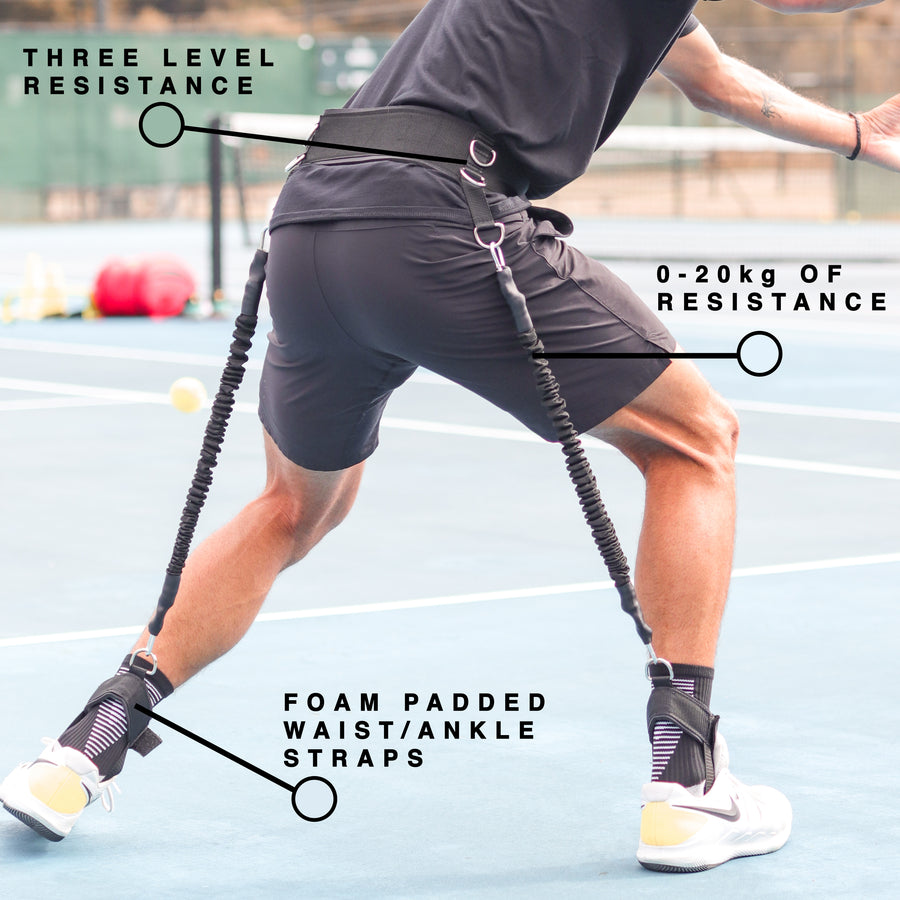
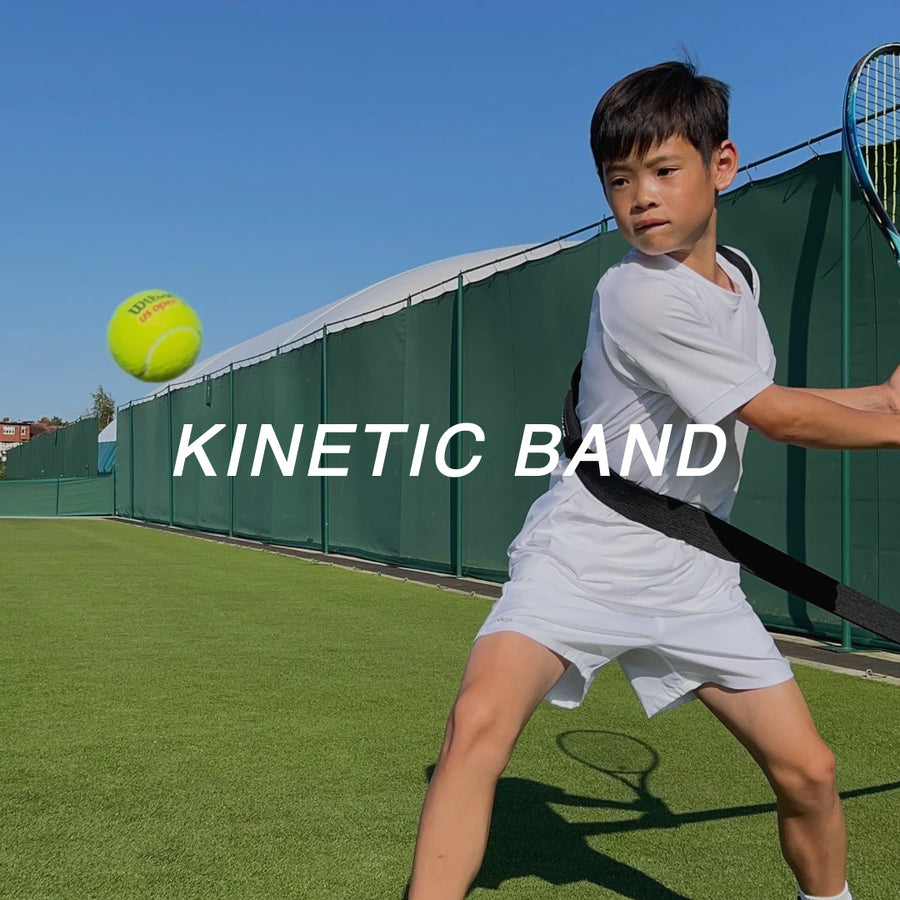
Hip-driven rotation is trainable. But it takes loaded, movement-specific exercises to unlock it properly. One of the most effective tools for this is the Kinetic Band, which trains torsional force production by creating resistance through the rotational movement itself. When you wear it during shadow swings or movement drills, your body learns to recruit the hips first rather than compensating through the shoulder and arm.
The carryover to groundstrokes is direct. Players who develop genuine hip drive find that their shots become heavier without swinging harder. That is the difference between muscled power and connected power.
Movement and Athletic Base: The Part Most Players Ignore

Footwork drills on court are useful. But if your athletic base is not solid, you will revert to poor movement habits the moment the point gets difficult. A low, stable stance under pressure is a physical skill before it is a technical one. You have to build it off court.
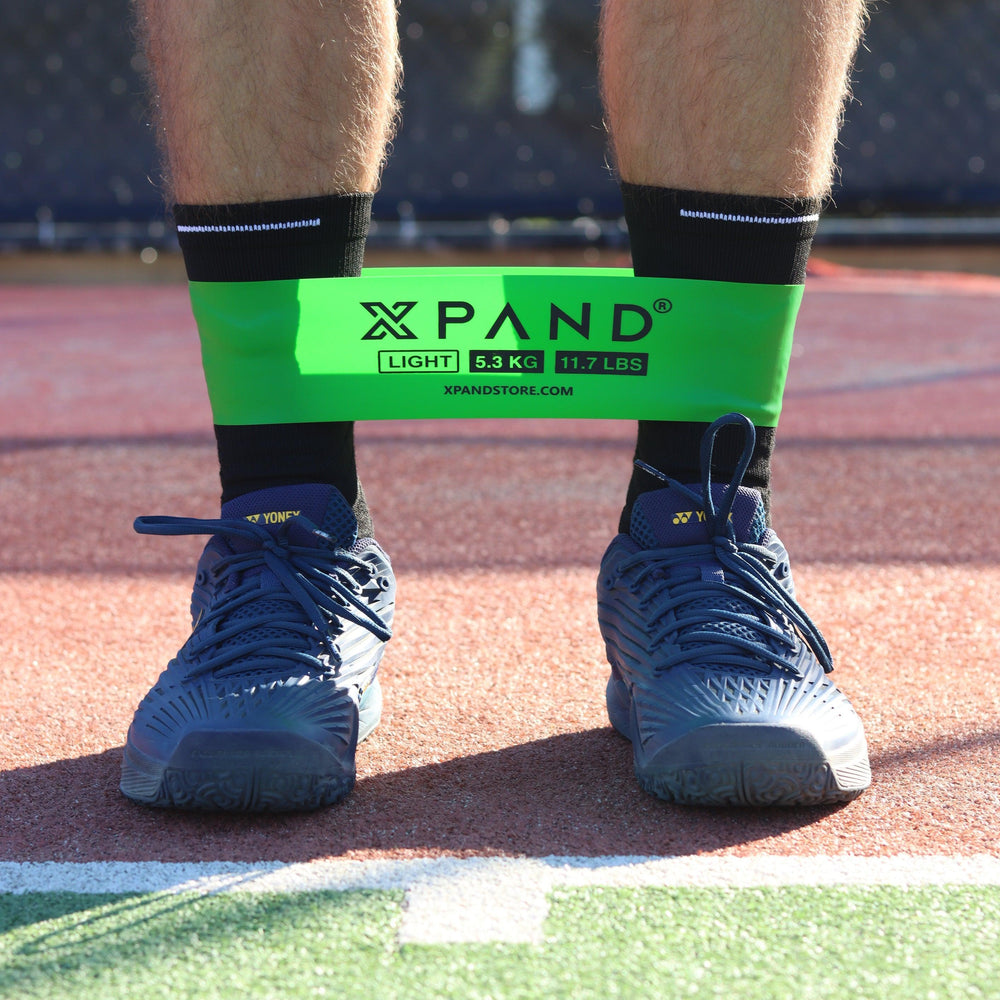
This means single-leg stability work, lateral banding exercises, and postural loading that teaches your body what a proper ready position actually feels like under effort. Many players stand too tall in between shots and only drop down when they remember to. The goal is to make the low position your default, not something you consciously apply.
Agility ladder work, when done with intention and proper mechanics, also builds the quick, precise foot contacts that make split-steps and direction changes feel automatic. The ladder is not about speed for its own sake. It is about training the feet to be quiet, accurate and reactive.
Programming Off Court Work Around Your Match Schedule
The most common mistake is treating off court training as optional, something you do when you have extra time. It should be planned first, with court time built around it. Two or three focused sessions per week is enough to see real change. The key is consistency over intensity.
A practical structure for club players looks like this. Two days of strength and rotational work, with exercises that mirror the demands of your groundstrokes and serve. One day of movement and footwork specific training. Recovery built in, not bolted on as an afterthought.
Keep sessions short and purposeful. Forty minutes of focused, tennis-specific training beats ninety minutes of unfocused gym work every time. The more your off court session resembles the physical demands of your game, the faster the transfer.
Track how you feel in matches two to three weeks into a new training block. That is when adaptations start showing up. Your legs will feel fresher in the third set. Your groundstrokes will feel more effortless late in long rallies. Your movement will feel more automatic under pressure. These are not coincidences. They are the results of consistent off court work done with specificity.
Start with One Habit, Build from There
You do not need to overhaul your entire routine overnight. Pick one physical quality that is limiting your game right now and address it directly. If power is the gap, start building rotational strength with a tool like the Kinetic Band. If movement is the issue, add two footwork sessions per week with real structure behind them.
The players who make the biggest improvements are not always the most talented. They are the ones who take off court preparation seriously and treat it as an extension of their court work, not a separate activity. Build the physical foundation, and your technique will have something solid to stand on.