


Tennis Practice Drills for Club Players That Actually Translate to Match Performance

Tennis Practice Drills for Club Players That Actually Translate to Match Performance
Most club players practice regularly. They hit with partners, book court time, show up consistently. And yet something stays stuck. The forehand that works beautifully in a rally drill falls apart under match pressure. The footwork feels fine until the opponent changes pace. The effort is there. The results are not.
The problem is rarely commitment. It is usually the gap between how players practice and what match play actually demands. The drills are too comfortable. The patterns are too predictable. The body never gets pushed into the positions that matter most when the score is tight.
These tennis practice drills for club players are built around closing that gap. Each one is designed to train a real match skill, not just to fill court time.
Build Your Baseline With Cross-Court Consistency Drills

Cross-court groundstroke rallies are the foundation of club-level match play. The geometry is forgiving, the net is lower at the centre, and the margin for error is greatest. But most players rally cross-court without any real target or intention. That is where the drill breaks down.
Set a cone or marker in each deuce and ad corner, roughly one metre inside the baseline and one metre inside the sideline. The goal is to land every ball between the marker and the corner. Not just in the court. In the zone.
Rally cross-court for five minutes per side. Count consecutive balls in the target area. Reset the count on any error or ball outside the zone. This forces concentration on every single shot, which is exactly what match play requires.
Once consistency builds, add a movement element. After each shot, recover to the centre mark before the next ball arrives. This trains the return-to-position habit that separates players who hold serve from those who get pulled wide and scramble.
Train Transition With the Inside-Out Attack Drill
Most club matches are decided not by winners, but by who handles the short ball better. Players who recognise a weak reply and attack it confidently win more matches. Players who wait for perfection keep feeding the rally until the opportunity disappears.
This drill trains that transition moment. One player feeds from the service box. The other starts at the baseline centre mark. The feed drops short and slightly to the forehand side. The baseliner moves in, hits an inside-out forehand to the deuce corner, and immediately closes to the net for a put-away volley.
Run ten repetitions per side. Focus on the footwork into the ball, the hip rotation through contact, and the recovery step forward after the shot. The movement pattern is more important than the outcome of any single ball.
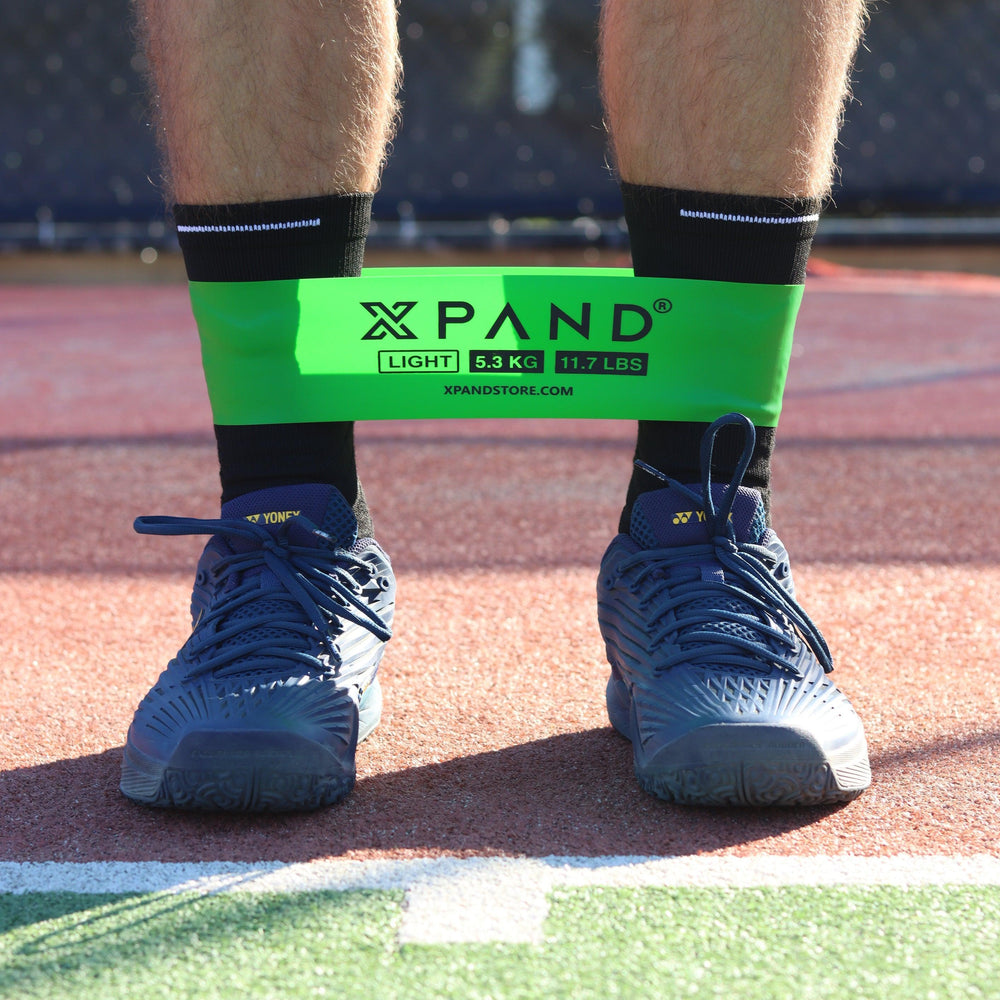
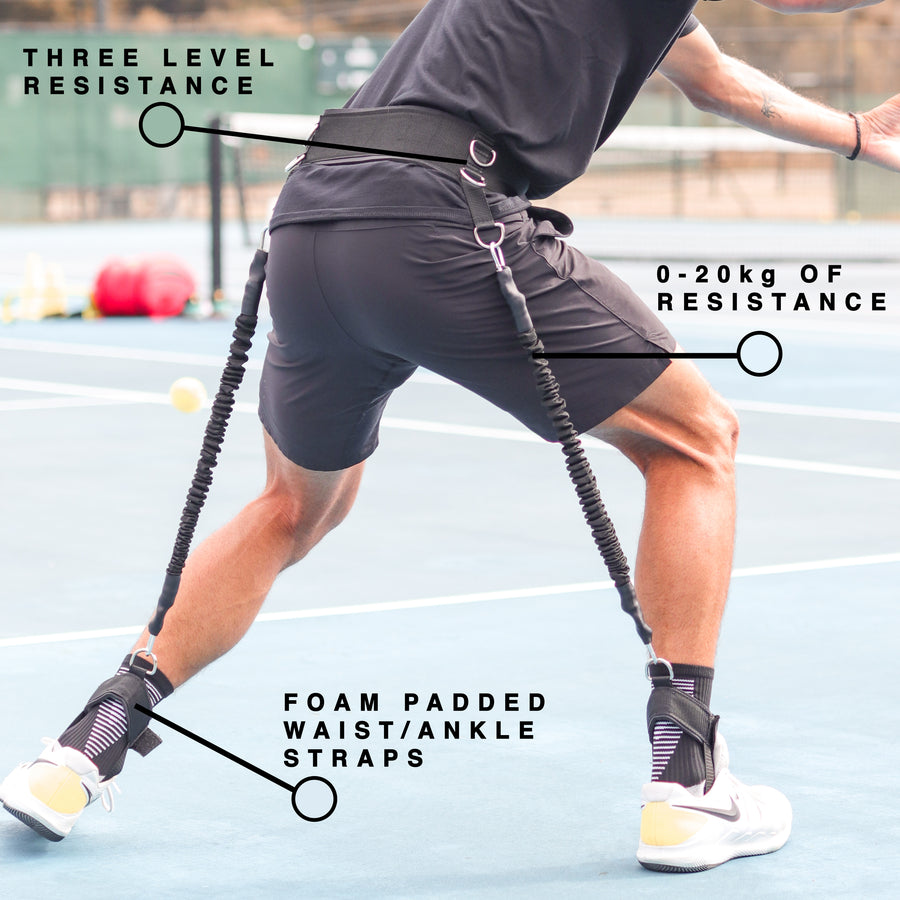
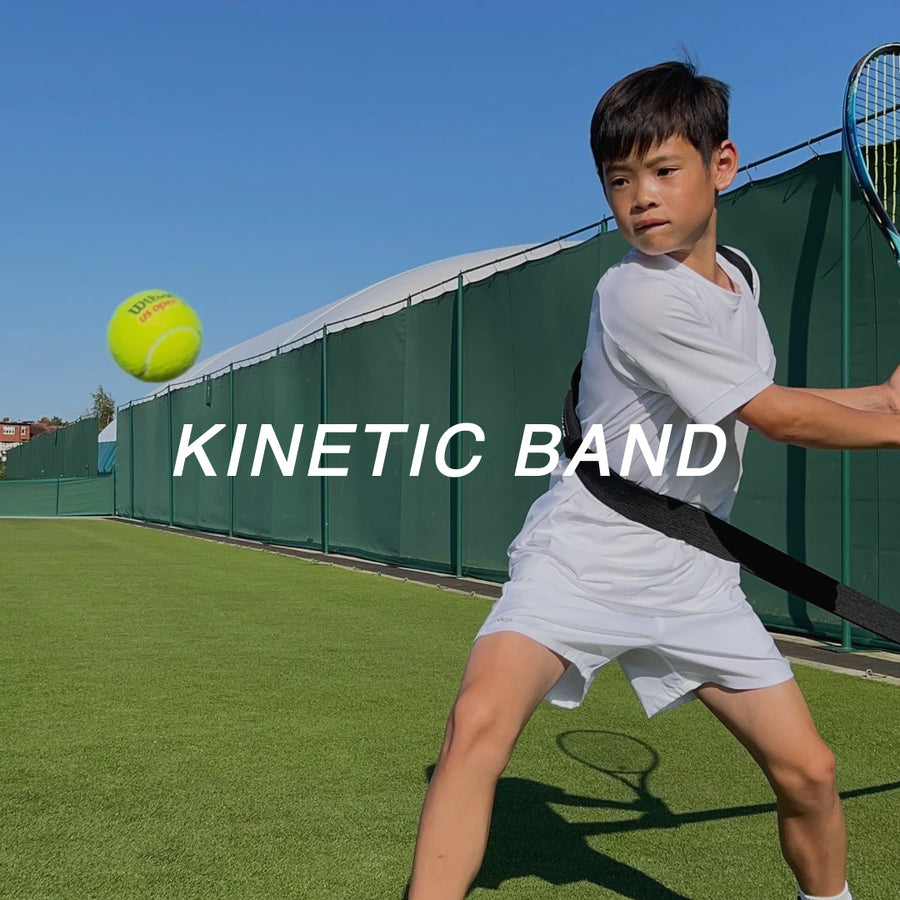
If your hip drive into the inside-out forehand feels restricted or inconsistent, it is worth addressing that directly in training. The Kinetic Band is built for exactly this. It trains torsional force production through the hips, helping you generate effortless rotation rather than muscling the ball with your arm. Players who use it regularly find their groundstroke power becomes more consistent because it is coming from the right place.
Sharpen Serve and Return With Pressure-Based Repetition

Serving a basket of balls in isolation is useful early in development. But it does not replicate the tension of serving at 30-40 in a match. Pressure-based repetition does.
The drill is simple. You must hit three serves in a row to a target cone before moving to the next target. Miss two in a row and you start that target again from zero. The consequence is small, but the accumulated focus across a session is significant. Your body learns to produce the serve under mild stress rather than in a vacuum.
For returning, stand behind the baseline and have your partner serve at 70 to 80 percent pace. Your only goal is to return cross-court with margin. No winners. No angles. Just depth and direction. Do this for fifteen minutes and your return consistency in matches will improve faster than almost any other drill.
Use Competitive Games to Lock In Every Skill
The best way to end any practice session is with competitive mini-games. These apply the skills you have just trained under real scoring pressure.
Two formats work particularly well for club players. First, first to eleven playing only cross-court, with the winner being whoever makes the fewest errors. This rewards the consistency work done earlier in the session. Second, a serve and first-two-shots game where points are only scored on the first three shots of each rally. This rewards aggressive but controlled play off the serve and return.
Keep score every time. Unscored drills are useful for volume and repetition. But competitive games force decision-making, emotional regulation and shot selection under pressure. These are the skills that actually win matches.
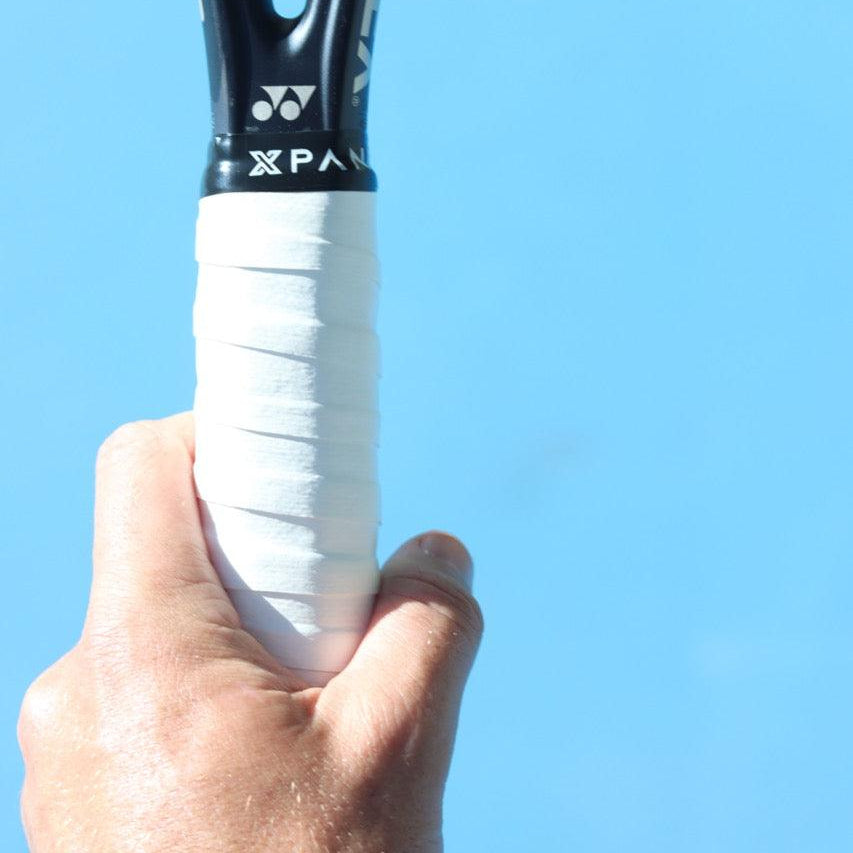
Small physical details matter here too. If your grip becomes slippery during long sessions, it affects shot selection and confidence on key points. Keeping your hands dry and your grip secure with something like finger tape is the kind of marginal detail that serious players do not overlook.
Practice With Purpose, Play With Confidence
The club players who improve fastest are not the ones with the most court time. They are the ones who treat every drill as a simulation of a real match situation. They set targets, keep score, add consequences, and train the movements that matches actually demand.
Start with the drills above. Run them consistently over four to six weeks. Watch what happens to your match play when the patterns you trained become the instincts you trust.
Explore the full range of training tools at XPAND to support your development on and off the court.