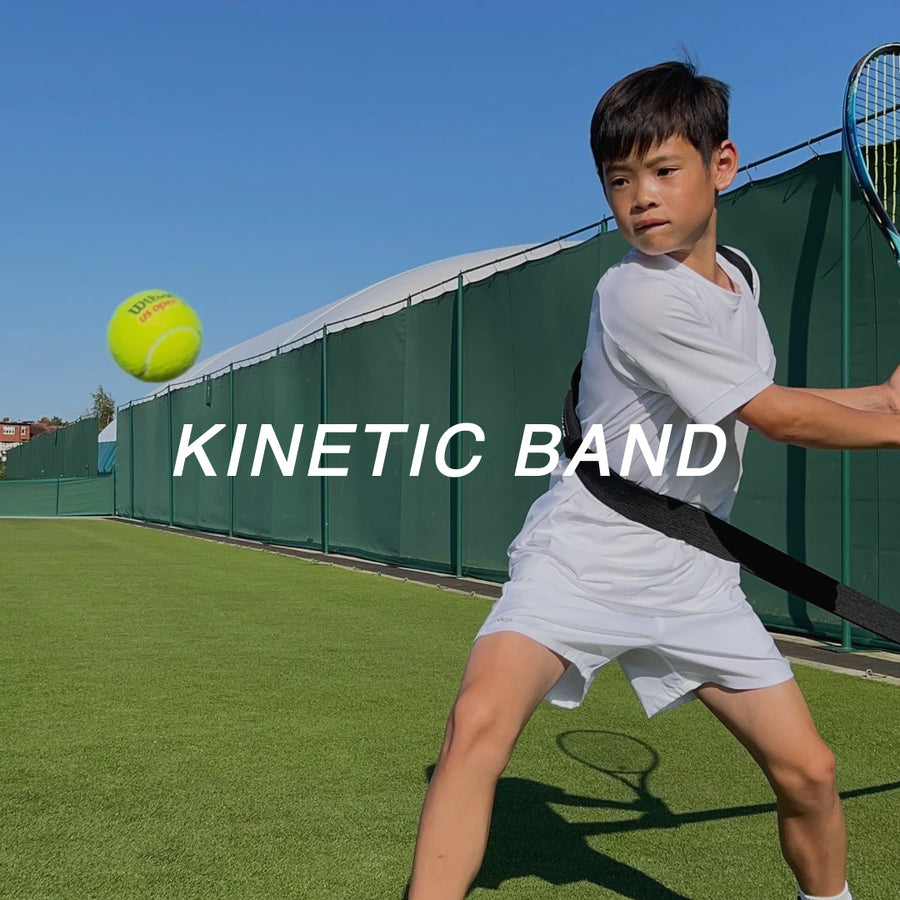



Why Junior Athletes Should Train Movement Early

Watch elite tennis players closely and you’ll notice something incredible:
They don’t just move fast. They move efficiently.
Balance, coordination, reaction speed, body control - these are the athletic foundations developed over years of smart training.
And the earlier those foundations are built, the bigger the long-term payoff.
That’s why movement training for junior athletes is becoming one of the most important focuses in modern tennis development.
The Junior Years Matter More Than Most People Think
Young athletes aren’t miniature adults.
Their bodies, brains, muscles, and nervous systems are constantly adapting and developing. This makes childhood and early adolescence one of the most important windows for athletic learning.
During these years, the body becomes highly responsive to training involving:
- Coordination
- Balance
- Spatial awareness
- Reaction speed
- Movement mechanics
- Rhythm and timing
Sports scientists often refer to this as a period of high neuromuscular plasticity - meaning the brain and body are extremely efficient at learning movement patterns.
Simply put: what kids practice repeatedly, their bodies become better at naturally.
Why Movement Training Is SO Important in Tennis
Tennis is one of the most movement-demanding sports in the world.
Players constantly:
- Accelerate
- Decelerate
- Change direction
- Stabilise under pressure
- Recover balance after shots
And this all happens in seconds.
When young athletes improve movement quality early, they develop:
- Better footwork habits
- More efficient movement patterns
- Improved body control
- Faster reactions
- Greater confidence in athletic situations
These adaptations don’t just help now - they create better movers for years to come.
The Science of Progressive Resistance for Young Athletes
For years, resistance training for juniors was misunderstood.
Now, research consistently shows that properly supervised, progressive resistance training is both safe and highly beneficial for young athletes.
The key word is progressive.
That means:
- Starting light
- Prioritising technique
- Gradually increasing challenge
- Focusing on movement quality over load
Done correctly, this type of training helps improve strength, stability, coordination, injury resilience and overall movement efficiency.
Importantly, junior athletes don’t need heavy weights to get these benefits. In fact, lighter resistance often teaches better movement patterns and body awareness.
Why Body Awareness Is a Hidden Superpower
One of the biggest separators in young athletes is proprioception - the body’s ability to sense movement, positioning, and balance.
Athletes with strong body awareness:
- React quicker
- Move more smoothly
- Stay balanced under pressure
- Learn skills faster
- Reduce awkward movement patterns
This becomes especially important during growth spurts, where coordination can temporarily feel “off” as the body changes rapidly.
Movement-based resistance training helps bridge that gap.
Introducing the XPAND Junior Gravity Belt 🎾
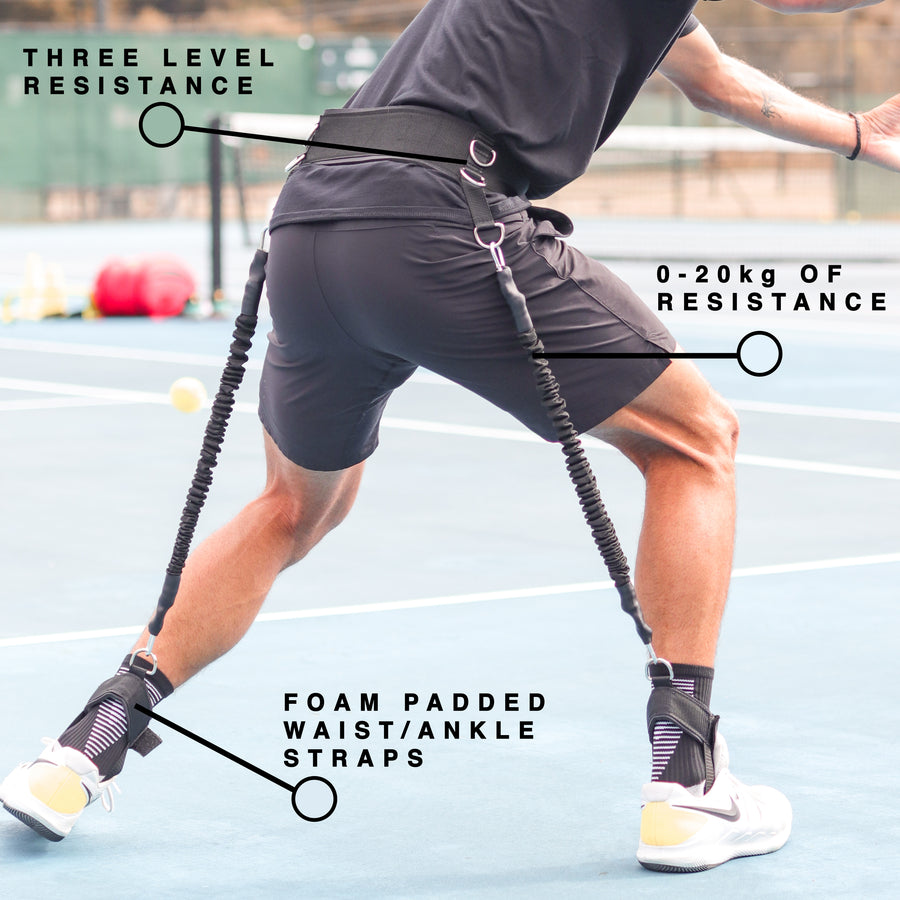
The XPAND Junior Gravity Belt was designed specifically for developing athletes.
With:
- Lighter resistance
- A smaller waist belt
- Junior-sized ankle straps
…it allows younger players to safely develop movement mechanics, balance, coordination, and lower-body strength without excessive load.
Most importantly, it helps young players learn how to move well - not just move fast.
Build the Athlete Before the Player
The best junior athletes don’t just develop strokes early. They develop movement habits, balance, coordination, and body control that stay with them for life.
Because when movement becomes natural, everything else in the game becomes easier to build on top of it.
Strong foundations create stronger athletes.
And stronger athletes keep XPANDING.