


The Tennis Athletic Stance Most Club Players Get Wrong

The Tennis Athletic Stance Most Club Players Get Wrong
You've watched the professionals. You've seen how effortlessly they move, how quickly they recover, how they seem to always be in the right position before the ball even arrives. And yet, when you're on court, something feels off. You're late. You're reaching. Your footwork feels scrambled.
The problem often isn't fitness. It isn't even technique. It's posture. Specifically, it's the tennis athletic stance you're holding, or more accurately, not holding, between shots.
This is where most club-level players lose points before a rally even begins.
What the Tennis Athletic Stance Actually Means
The athletic stance in tennis is the foundational ready position you return to after every shot. Feet roughly shoulder-width apart, weight balanced across the balls of your feet, knees softly bent, hips hinged slightly forward, and your racket up and centred in front of you.
It sounds simple. It is simple, in theory. But maintaining it consistently throughout a match requires genuine body awareness, and that awareness is something most players never actively train.
The stance isn't just about looking correct. It's a biomechanical preparation state. When your hips are loaded and your knees are bent, you can react faster. Your first step becomes explosive rather than sluggish. Your split-step lands with intention rather than habit. Every element of your movement quality traces back to this one position.
When the stance breaks down, the consequences spread quickly. A raised centre of gravity means slower direction changes. Straight knees mean your first step costs you an extra fraction of a second. That fraction is enough to turn a comfortable forehand into a defensive scramble.
Why Players Lose Their Stance Mid-Match
Here's something coaches rarely address directly: players don't forget their athletic stance because they don't know what it is. They lose it because fatigue and focus pressure pull attention away from the body.
As a point gets longer, as the score gets tighter, as you start thinking about tactics, your postural awareness quietly switches off. The brain allocates resources to decision-making and your body defaults to its most ingrained patterns. For most players, those ingrained patterns involve standing too upright, letting the hips rise, and shifting weight back onto the heels.
This is a neurological issue as much as a physical one. You can drill the correct stance for an hour in a warm-up and still revert to poor habits the moment the match pressure rises. Knowing the right position isn't the same as owning it.
That gap between knowing and owning is exactly where training needs to focus.
How Reactive Neuromuscular Training Builds Real Postural Habits
Reactive Neuromuscular Training, or RNT, works by using resistance to create instant physical feedback when your body drifts out of position. Rather than relying on a coach calling out corrections, or stopping to check yourself in a video, RNT gives you real-time sensory information during the movement itself.
When you feel resistance pulling you out of alignment, your nervous system responds instinctively. You correct. You stabilise. Over time, that correction becomes automatic. The body learns to recognise and return to the correct position without conscious effort.
This is how genuine postural change happens. Not through repetition alone, but through repetition with feedback.
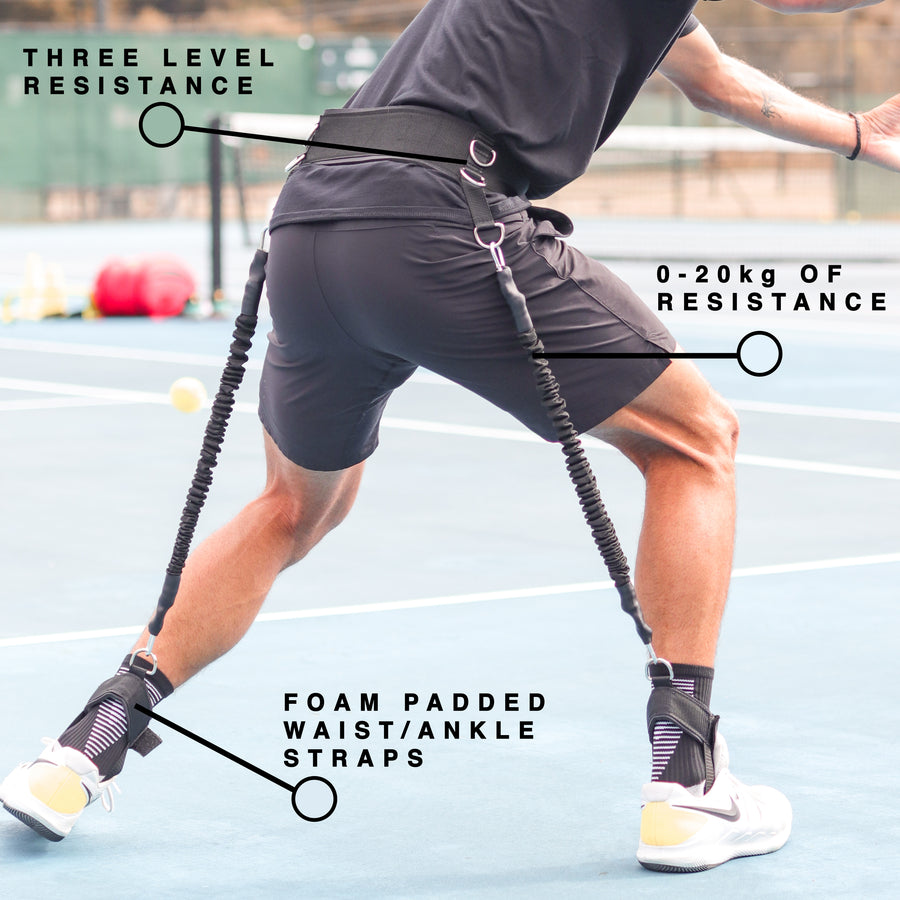
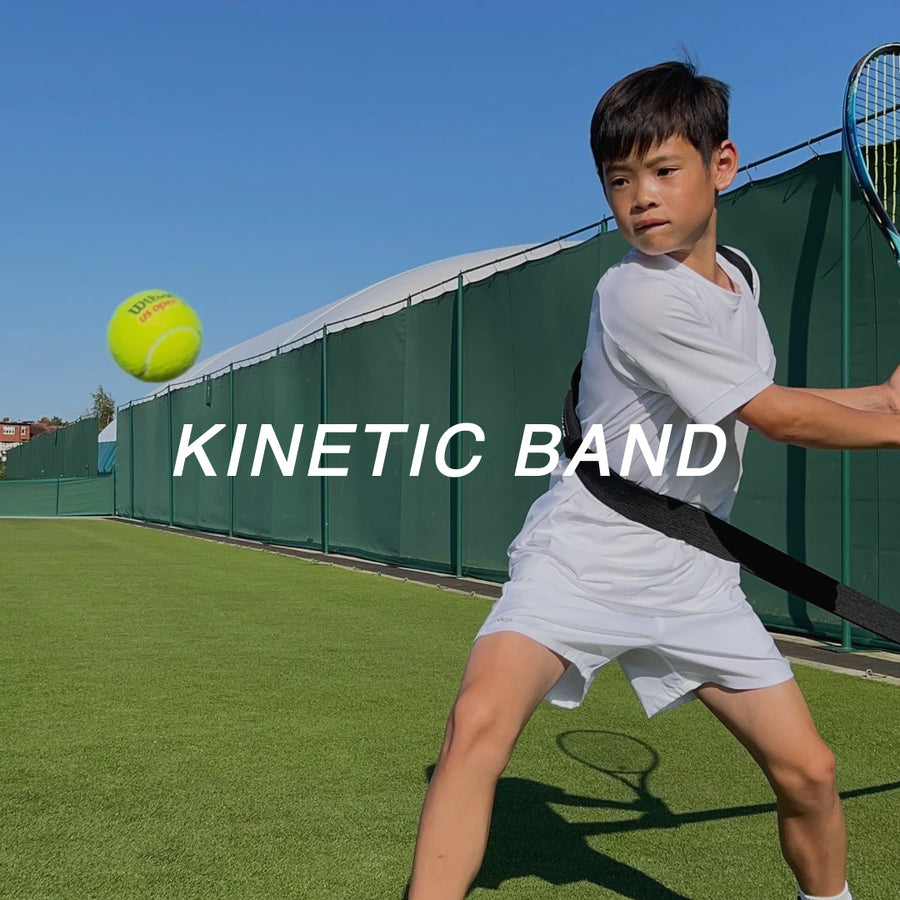
The Gravity Belt 2.0 applies this principle directly to the tennis athletic stance. By creating resistance that activates your core and encourages the hips to stay low and loaded, it trains your body to recognise what the correct stance actually feels like from the inside. After consistent use, players report that the ready position starts to feel natural rather than forced, even under match pressure.
It doesn't replace technique coaching. It accelerates the process of making good technique permanent.
Building Your Stance Into Every Training Session
Improving your tennis athletic stance doesn't require a complete overhaul of how you train. It requires intentionality in the moments most players treat as passive recovery.
Between every drill repetition, return actively to your stance. Don't just wait for the next ball. Reset deliberately. Feet wide, knees bent, hips loaded, weight forward. Make the reset part of the drill, not a pause between drills.
During match play, use your split-step as a trigger. Every split-step is a chance to land in your athletic stance. If your split-step lands with straight legs or flat heels, the stance is already compromised before the point begins. Work with your coach to make the quality of your split-step a measurable focus, not just its timing.
Add postural holds to your warm-up. Spending sixty seconds in a correct athletic stance position before a session primes your nervous system. It reminds your body what loaded and ready feels like before the demands of play begin.
And if you want to accelerate how quickly your body internalises these habits, train with tools that give you continuous feedback rather than occasional correction. The difference is compounding over months and seasons.
The Stance Is Where Performance Begins
The players who move best on a tennis court aren't necessarily the fittest or the most technically gifted. They are the players who have trained their bodies to stay in the right position consistently, even when tired, even when distracted, even when the match is on the line.
That consistency doesn't come from talent. It comes from building body awareness so deeply that good positioning becomes the default, not the goal.
Start with the stance. Build the habit. The movement quality you're looking for follows from there.
If you want to understand how the Gravity Belt 2.0 supports this kind of postural training, explore how RNT works and whether it fits where your game currently needs to develop.